Why We Love Stand-Up Comedy: The Science Behind the Laughter
June 3, 2025
Are Paper Tickets Still a Thing in 2026?
June 3, 2025What is an Open Mic Night? A Beginner’s Guide
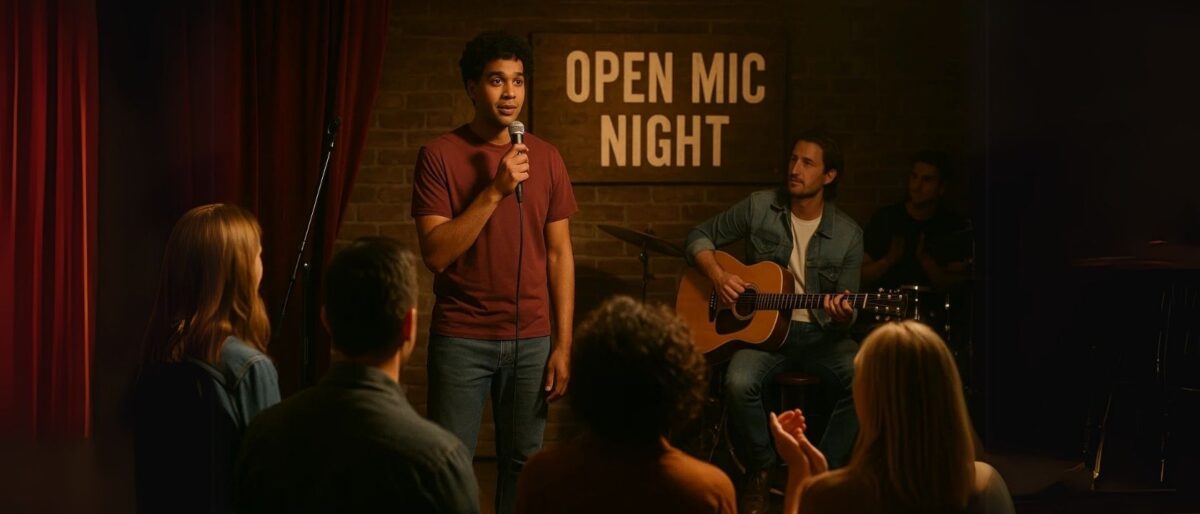
Open mic night: part talent show, part chaos, all heart. Whether you’re itching to grab the mic or just curious what all the buzz is about, this guide breaks down what to expect, how to prepare, and why these low-key nights are the secret launchpads for bold, brilliant, and messy beginnings.
What Exactly Is an Open Mic?
Picture this: a cozy stage, a spotlight, and a crowd sipping drinks—waiting to be surprised. That’s the essence of an open mic. At its core, it’s a come-one, come-all performance night where just about anyone can step up and share their stuff. Think of it as the creative community’s testing ground.
Open mics aren’t just for stand-up comedy (though that’s a popular draw). You’ll also hear acoustic guitar ballads, spontaneous slam poetry, personal storytelling, or someone bravely reading their journal-turned-memoir. It’s the kind of place where you can hear an awkward breakup turned into a punchline—or a protest turned into verse.
The best part? Most open mics are free—both to watch and to perform. No agent, no audition, no velvet rope. Just sign up, show up, and maybe (nervously) throw up a little in your mouth before walking onstage. That’s the charm: it’s raw, real, and wide open to possibility.
For many artists, this is where it starts. Not with a spotlight at Madison Square Garden, but with a creaky mic stand at a coffeehouse open mic on a Tuesday night. It’s not glamorous—but it’s where the spark begins.
How Open Mic Nights Work
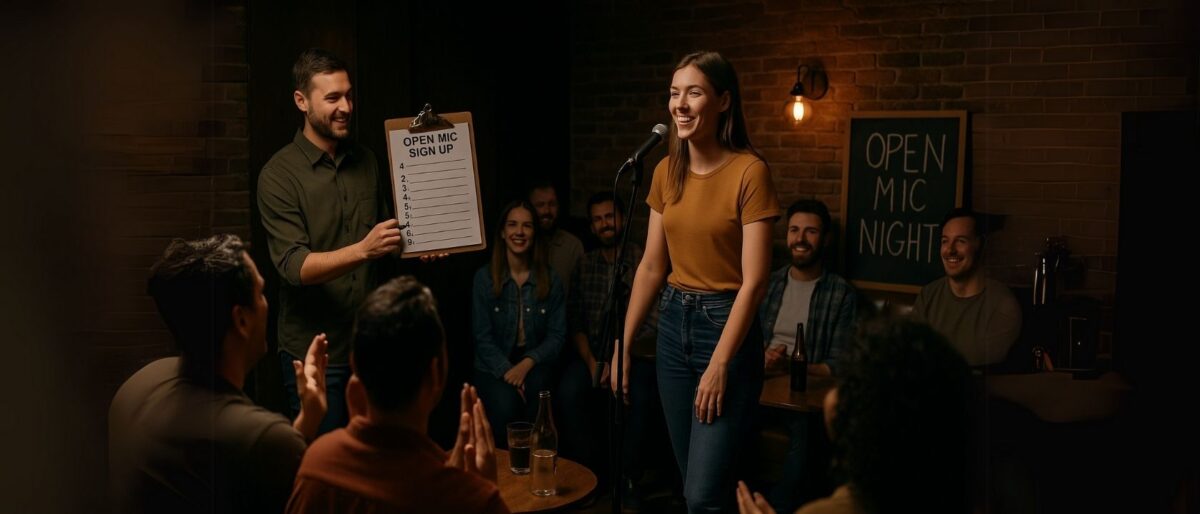
So, how does one actually *do* an open mic night? It’s more organized than a free-for-all, but still pretty chill. Most shows start with a sign-up sheet—either online beforehand or at the door, first-come-first-served. If you’re early, you might score a prime slot; show up late, and you’re either closing the night or getting bumped entirely.
Each performer usually gets a tight time limit—think 3 to 7 minutes. That’s just enough time to belt out a song, drop a tight five minutes of stand-up, or share a slice of your soul in spoken word. And yep, someone’s keeping track. The host or MC isn’t just there to crack jokes—they’re the glue, keeping the show moving and the crowd engaged between acts.
The audience? It’s a fascinating mash-up. Half are nervous performers waiting their turn. The rest? Friends, fans, curious strangers, and that one guy who claps way too hard. The vibe can be wildly unpredictable—supportive, rowdy, awkward, even electric. One minute you’re cringing through a pun about squirrels, the next you’re nearly in tears over a heartbreaking acoustic ballad.
That chaotic magic is the heartbeat of open mic culture. Everyone’s got a shot, and anything can happen.
Why People Love It (Even If They Don’t Perform)
You don’t need to be clutching a mic to love an open mic night. In fact, for many of us, it’s the watching that’s the real joy. It’s the human version of flipping through random radio stations—raw, unfiltered, and occasionally brilliant.
One minute you’re witnessing a future star’s first-ever set. The next? A middle-aged dad rapping about avocados. And that’s exactly the charm. These nights pulse with unpredictability—whether it’s a slam poem that stirs your soul or a stand-up bit that crashes so hard, it circles back to funny.
There’s something magnetic about watching people put themselves out there with zero filter. You see nerves, heart, guts—sometimes glitter. It’s vulnerability with a side of cheap drinks.
The settings are often small and personal: backrooms, bars, cafés. That intimacy makes every laugh feel louder, every awkward silence more delicious. You’re not just an audience—you’re part of the night’s rhythm. And best of all? Most of it’s free or budget-friendly. No overpriced cocktails, no black-tie pressure, just good weird fun.
Open mic nights are like a talent show where nobody gets voted off the island. That mix of chaos and charm? Unforgettable.
Thinking About Performing? Here’s What to Know
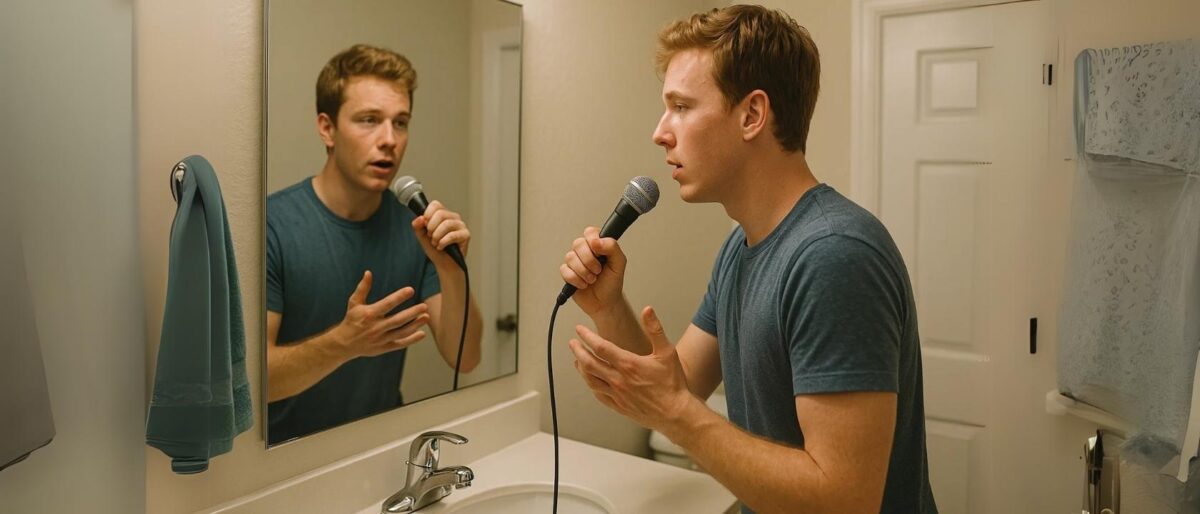
If your palms are sweaty just *thinking* about stepping on stage, you’re not alone—and you’re also halfway there. Open mic nights aren’t about perfection. They’re about showing up, standing up, and giving it a go. But a little prep goes a long way.
Start by writing your material in advance. Whether it’s jokes, poems, or a heartfelt story, don’t wing it your first time. Structure matters, even if you plan to riff. Practice out loud—yes, to your dog or your bathroom mirror. Time your set so you don’t ramble past your five minutes and get the awkward cut-off signal.
Come ready with your name, your opener, and your sense of humor. Not everything will land—and that’s okay. The goal is progress, not perfection. Keep your expectations low and your energy high. A groan-worthy pun today could be your crowd-pleaser next month.
Mic etiquette tip: Don’t tap it. Don’t shout “Is this on?” Trust the host. Keep the mic at chin level, don’t wave it like a wand, and watch your posture. Eye contact helps. And smile—even if it’s fake at first, it softens the vibe.
Stage presence isn’t about being loud. It’s about being present. Own the moment—even if you trip on the mic cord. The crowd’s seen it all and they’re rooting for you.
What to Expect as an Audience Member
Walking into an open mic night as an audience member is a bit like stepping into a grab bag of emotions—awkwardness, brilliance, hilarity, and the occasional cringe, all wrapped into one unpredictable night. You won’t love every act—and that’s kind of the point. It’s a patchwork of talent, nerves, and raw ambition.
First rule? Be patient. Some acts will bomb, and that’s okay. Everyone’s got to start somewhere. Even today’s top comedians had their early flops in dimly lit backrooms. So when a joke tanks or a poem trails off awkwardly—offer polite applause. It takes guts to get up there.
Always cheer respectfully. You don’t have to pretend it’s your favorite act of the night, but a little kindness goes a long way. Your energy helps the performer—especially if they’re visibly nervous. And no, this isn’t the time to channel your inner Simon Cowell. Don’t heckle. Unless you’re at a dive bar and the comic clearly invites it (and you’re witty enough to keep up)—keep it zipped.
Open mics are a great way to support local artists without dropping serious cash. Think of it as a live arts incubator. Bring a friend, order a drink, and settle in. The best moments are often the weird ones—and when you look back, you’ll be glad you shared the ride.
Common Mistakes First-Timers Make

Stepping up to the mic for the first time is a big deal—but it’s also a minefield of rookie mistakes. Some are harmless, others are… well, unforgettable for the wrong reasons. Here’s what to steer clear of if you want to survive your debut with dignity (and maybe a few laughs).
Going over your time limit: This is the open mic equivalent of running a red light. Most spots have a strict time cap (usually 3–7 minutes), and trust me, you’re not the exception. Rambling past your slot risks getting cut off mid-sentence—or worse, annoying the host and crowd. Time yourself beforehand and stick to it.
Apologizing too much: “Sorry if this isn’t funny” is like handing your audience a reason to tune out. Nerves are normal, but don’t undercut yourself before you even begin. Confidence isn’t about being cocky—it’s about owning your five minutes, imperfections and all.
Getting drunk before going on stage: Liquid courage sounds appealing… until you’re slurring punchlines or forgetting your own setup. A single drink to loosen up? Maybe. But if you’re using the bar to pre-game your set, odds are you’re setting yourself up for a trainwreck.
Trying to be someone you’re not: Don’t mimic your favorite comic’s vibe if it’s not yours. Your best material will always come from your voice, your stories, your weird little take on things. Authenticity beats imitation every time.
Forgetting to enjoy the moment: You’ve made it this far—breathe, smile, and take it in. It’s supposed to be fun. Even if you bomb, you did something most people are terrified of. That’s a win.
Tips to Make the Most of It
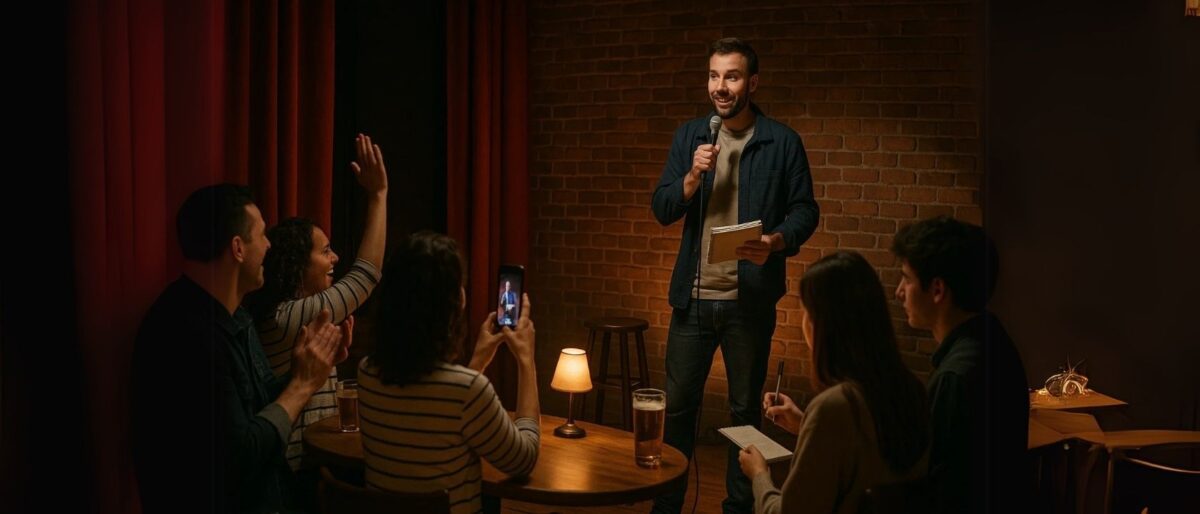
Whether you’re performing, watching, or just testing the waters, open mic nights offer more than five minutes of fame—they’re mini masterclasses in risk, rhythm, and raw connection. Here’s how to squeeze every drop of goodness from the experience:
Show up early: First come, first slotted. Arriving early means you can choose a better spot in the lineup—and avoid the dreaded dead zone when half the audience has left. It also gives you time to scope out the vibe, grab a drink, and settle your nerves.
Support other performers: Don’t be the person who does their set and bounces. Clap, laugh, nod, cheer. Community is what makes these nights thrive. You’ll make friends, find collaborators, and build good karma. Plus, who knows who’s watching—you might be on someone else’s radar next time.
Record your set (if performing): This isn’t about ego—it’s about growth. Listen back. What worked? What fell flat? You’ll improve way faster when you can hear your pacing, tone, and crowd reaction.
Bring friends—but tell them the rules: A personal cheering section helps ease stage fright. Just make sure they know it’s not karaoke night. Respect the space. No heckling, no filming other acts without permission, and no loud talking during someone’s big moment.
Take notes (mentally or literally): Watch how seasoned comics or performers work the room. Note their body language, timing, and how they recover from awkward moments. It’s not about copying—it’s about learning what stage confidence really looks like.
Ultimately, open mic nights are wild, unpredictable, and often electric. Go in with curiosity, kindness, and a touch of courage, and you’ll walk away with way more than you came for.
Conclusion
Open mic nights are part playground, part proving ground—a space where vulnerability and creativity collide under a dim spotlight and a borrowed mic. Whether you’re testing a punchline, sharing a song, or just clapping from the back row, you’re part of something real and electric. These nights thrive on imperfection, spontaneity, and community. They’re where the seasoned pros warm up, and the rookies get brave. They’re messy, magical, and sometimes totally bonkers—but that’s the beauty of them.
So if you’ve been thinking, “Could I do that?”—the answer is yes. Bring your notebook, your nerves, and your sense of humor. Worst case? You bomb and eat fries after. Best case? You discover your voice, your people, or just a killer story to tell. Either way, that mic is open for a reason—go grab it.