Why Your Mobile Ticket Might Be Delayed (And What to Do)
June 3, 2025
Is Concert Merch Worth It? Pros, Cons & Collectible Picks
June 3, 2025Why Seeing a Show Live Feels So Different (The Experience Gap)
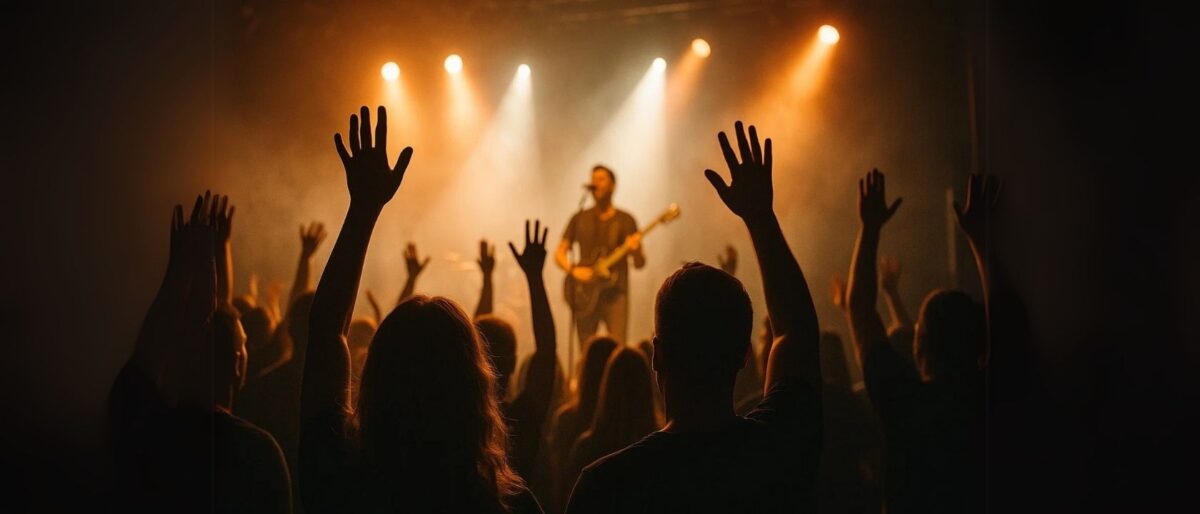
Watching a concert on your phone and being in the crowd? Two totally different beasts. Live shows don’t just entertain—they electrify. There’s a reason your heart races, your skin tingles, and you leave buzzing. This isn’t about volume—it’s about presence. Let’s unpack why live feels so wildly, wonderfully alive.
That First Note: When the Room Comes Alive
There’s a moment—right before the lights drop—when everything goes still. Then boom: the bass hits, the lights explode, and the crowd erupts. That first note doesn’t just start the show—it ignites it. And your body knows it before your brain can catch up.
It’s a full-on sensory flood. The heat from the stage lights. The thud of bass vibrating through your chest. The sound of thousands of voices yelling in unison. Every sense is on high alert—not just hearing, but touch, sight, even smell (yes, that beer-and-popcorn fog counts). Unlike watching from a couch, you’re in the experience—not just observing it.
There’s also a kind of emotional wiring that live shows flip on. Your brain’s limbic system—aka the emotion center—lights up in shared spaces. You feel more. Anticipate more. Your nervous system registers the crowd’s energy as a kind of social signal: this matters. Pay attention. Be here.
That’s why live shows feel like a jolt of adrenaline with a side of magic. From the very first note, you’re not just hearing the music or dialogue—you’re soaking in every beat with your whole body.
The Energy Exchange Between Performers and the Audience
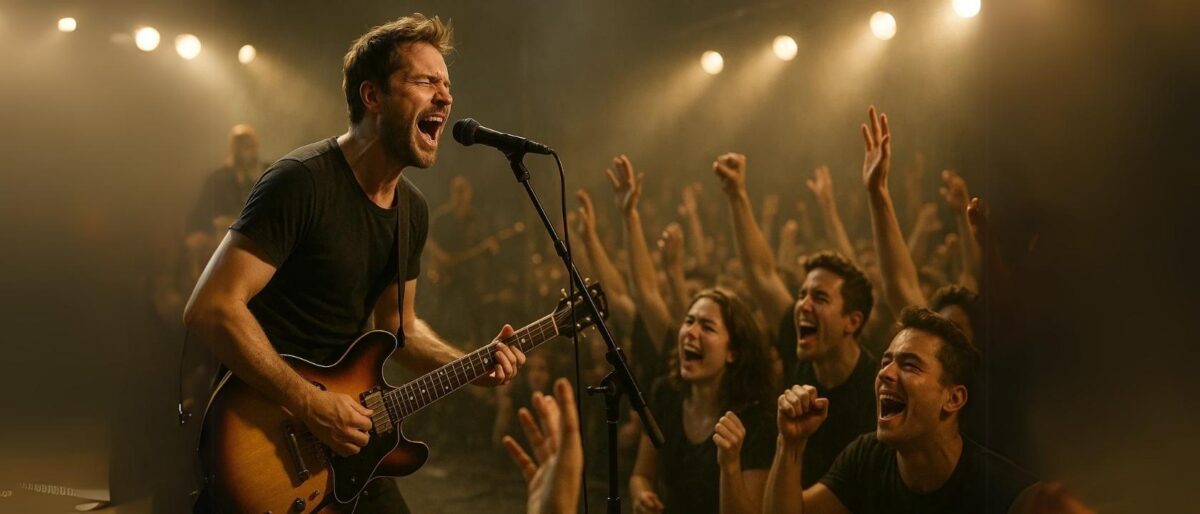
At a live show, something electric pulses between the stage and the crowd—it’s not scripted, not rehearsed, and not reproducible. That energy? It’s a loop. You cheer louder, the band plays harder. The comedian pauses, hears your laughter, then riffs a line they’ve never said before. That’s not just performance—it’s collaboration.
Performers feed off real-time feedback. A standing ovation mid-act? Expect a longer solo. Dead silence before a punchline? They might tweak the delivery on the fly. Whether it’s a symphony conductor sensing the hush of awe, or a punk singer diving into the pit because the energy’s that high, your reactions shape the moment.
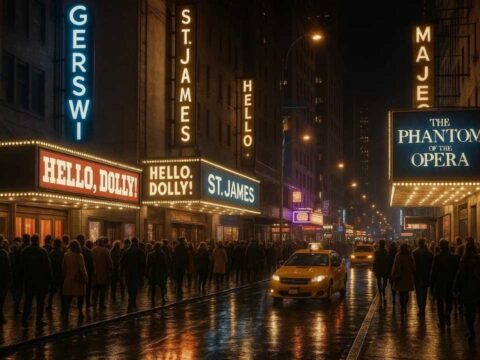
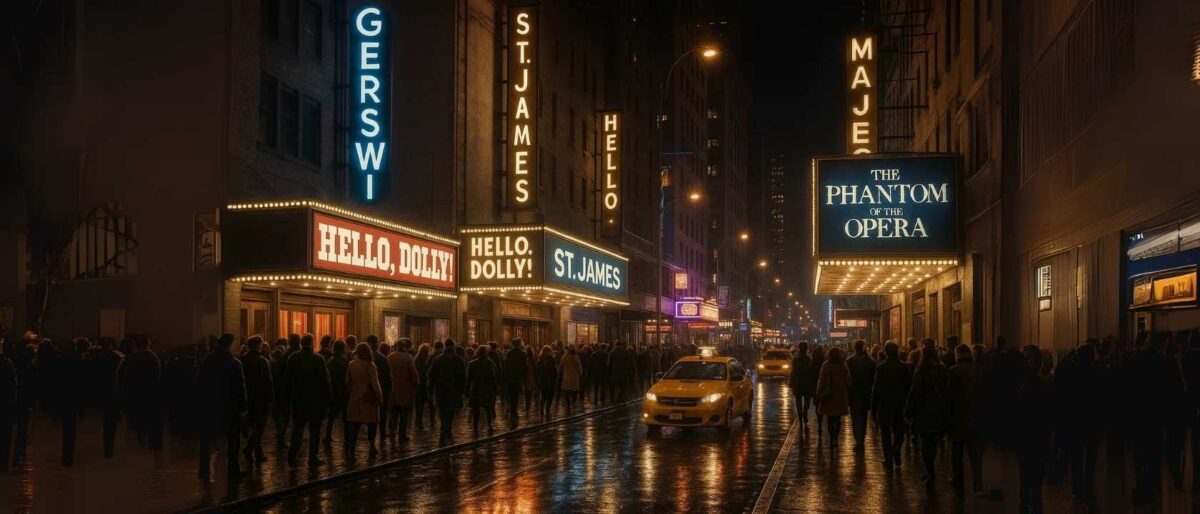
And it’s those moments that make live experiences unforgettable. The Broadway actor who breaks character after a rogue sneeze in row five. The surprise second encore that wasn’t on the setlist. The unexpected shout-out to someone’s homemade sign. These ad libs, cracks, and reactions are born from the room—and they never happen the same way twice.
When you’re part of the crowd, you’re part of the show. That shared emotional investment—the give and take, the laughs and gasps—is impossible to duplicate on a screen. You’re not just witnessing a performance; you’re helping create it in real time.
It’s Not Just Hearing—It’s Feeling
Live shows don’t just enter through your ears—they crash into your whole body. That bass? You don’t just hear it. You feel it thump through your chest, ripple through your feet, and vibrate up your spine. It’s like your body becomes another instrument in the room, resonating with every beat.
There’s also visual depth and real movement that screens flatten. On stage, every gesture, lighting cue, costume shimmer, and shift in posture carries weight. The way a spotlight grazes a violinist’s bow or a dancer’s leap lands with that perfect thud—those are sensations you absorb in 3D, not through pixels.
Then comes rhythm—the great unifier. You clap in sync with strangers. You sway in time with thousands. At concerts, comedy shows, and even plays, your body syncs with the flow. That shared tempo builds connection and releases oxytocin, the “bonding” chemical. That’s why dancing in a crowd feels weirdly euphoric—it’s neuroscience, not just good vibes.
Touch, motion, sound, sight—they work together to unlock emotional highs. You’re flooded with dopamine and adrenaline. That’s not entertainment—it’s embodied experience. And you carry it long after the curtain call.
Connection and Community: You’re Part of Something
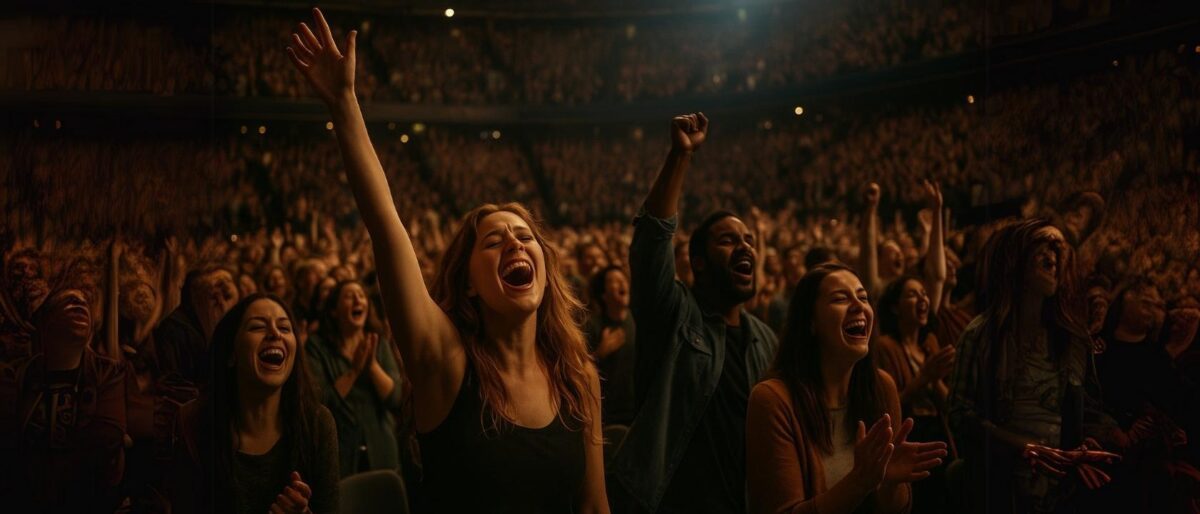
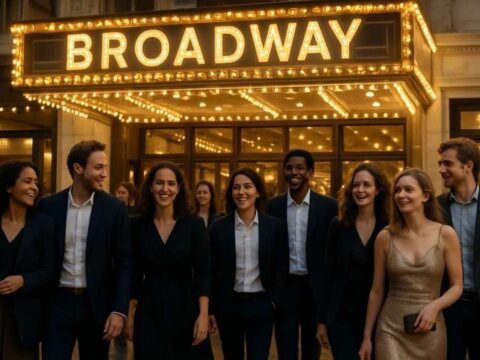
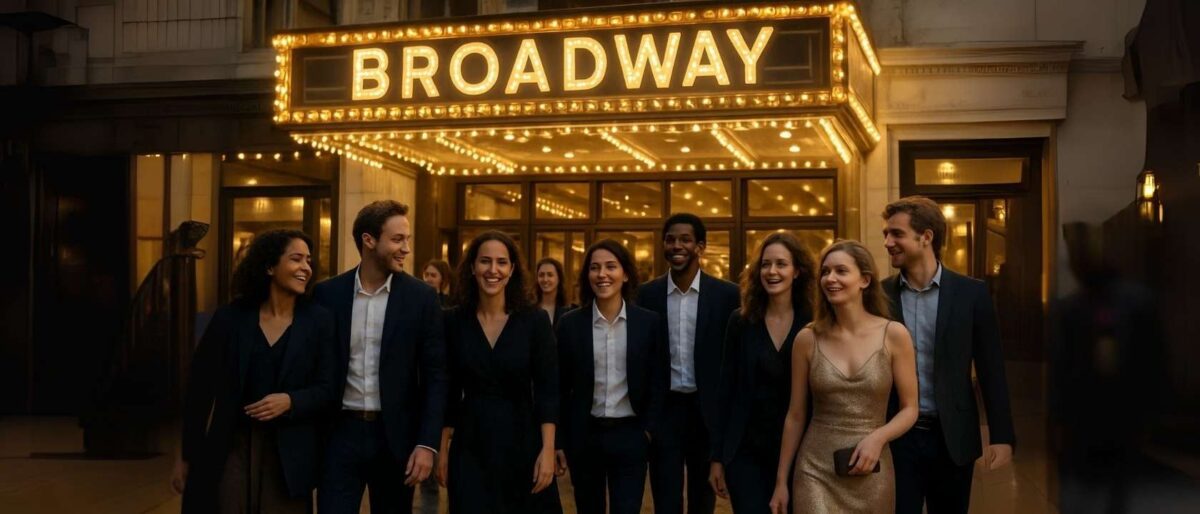
There’s a strange and beautiful thing that happens in a crowd. For a few hours, you’re not just you—you’re part of something bigger. A sea of strangers singing the same lyrics, finishing the same punchlines, wiping away the same tears. That’s not just entertainment. That’s collective memory in motion.
Bonding happens fast when you’re shoulder-to-shoulder with people who feel the same thing you do. That guy in the vintage band tee? He knows every lyric you do. The woman laughing three rows up? She’s losing it at the same improv moment you’ll retell tomorrow. These fleeting connections turn a solo experience into something shared, even sacred.
Crowd dynamics amplify emotions. One person starts clapping, and within seconds, it’s thunder. Someone screams the opening chord—and the whole arena erupts. That emotion grows louder, bolder, more intense when you’re surrounded by others feeling the same thing. It’s empathy in stereo.
And let’s be honest—belting out a chorus with 10,000 people hits different. It’s loud, imperfect, and entirely magical. No livestream can recreate the goosebumps you get when everyone chants the same words like they’re casting a spell. Even if you never speak to the person next to you, you leave with a memory you somehow made together.
In that moment, you’re not just an audience—you’re a chorus, a rhythm, a vibe. You’re part of something real.
The Experience Gap: Why It Can’t Be Replicated on Screen
You can stream the concert. Watch the Broadway bootleg. Replay the comedy special. But no matter how crisp the video or flawless the audio, something’s missing. That “something” is the experience gap—the space between witnessing and being there. And it’s huge.
Screens flatten everything. The depth of the stage becomes a frame. The energy in the room? Gone. That gasp from the crowd? Muted. Emotion becomes a visual cue, not a shared force. You might be able to see it, but you can’t feel it—not the same way.
At home, your attention is on a short leash. You’ve got texts coming in, a cat walking across the couch, the urge to check your phone during the slow part. You’re safe, comfy, distracted. But in a theater or arena? You’re locked in. The lights dim, your phone goes dark, and suddenly—nothing else matters. It’s a rare kind of presence.
And then there’s the risk. Live performers are walking a tightrope—no do-overs, no edits, no filters. A cracked voice, a missed cue, a perfect improv joke—they’re exposing themselves to you in real time. That vulnerability adds weight. You’re watching something that could go wrong… but doesn’t. Or does, gloriously. Either way, it’s real.
That’s the thrill: knowing this moment only happens once. No rewind. No replay. Just right here, right now—with you in the middle of it.
When It’s Over… It Stays With You
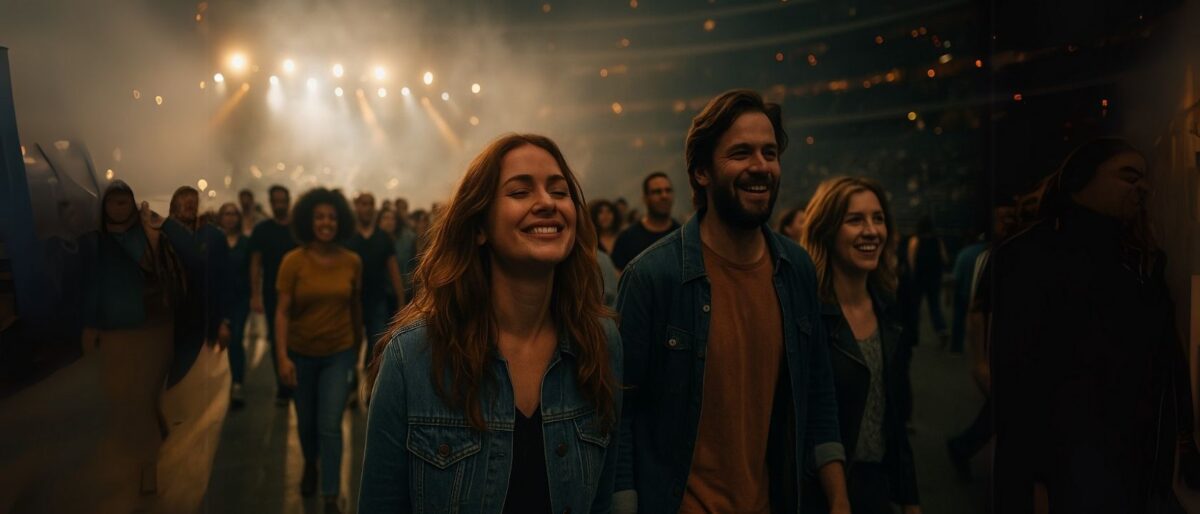
The lights come up. The applause fades. You’re shuffling out with the crowd, maybe a little hoarse, maybe a little stunned. But inside? You’re still buzzing. That’s the aftershock of a powerful live moment—and it sticks with you far longer than you expect.
Live shows leave emotional footprints. A guitar solo that caught you off guard. A monologue that cracked something open. A laugh that made your stomach hurt. Those moments settle in and loop back days, weeks, even years later. It’s like your brain presses “save” without asking.
Enter the afterglow effect: that post-show high where everything feels a little lighter, brighter, more alive. You walk out into the night air and somehow the world feels different. You’re more connected, more charged. That’s not just sentiment—it’s chemistry. Dopamine and endorphins don’t lie.
And when nostalgia kicks in? It hits harder if you were there in person. Rewatching a clip doesn’t compare to remembering the way the floor shook during the encore. Or how your friend grabbed your arm during that one line. Live memories are sensory memories, and that makes them personal.
That’s why people go back—even to the same show. Not because they forgot what happened, but because they want to feel it again. The experience doesn’t end when the curtain falls. It follows you. It lives with you.
Virtual Can Be Good—But It’s Not the Same
Let’s be honest—livestreams and recordings have their perks. You can watch in pajamas, pause for snacks, skip to your favorite part, and even rewind a solo just to feel it again. Virtual shows are more accessible, way cheaper, and come without the crowds, parking nightmares, or nosebleed seats. And for many fans, that convenience is gold.
Technology has come a long way. Multiple camera angles, hi-fi sound, backstage footage—virtual concerts and recorded performances can be beautifully produced. They offer a glimpse into shows we can’t physically attend, breaking down barriers of distance, budget, and ability. For fans across the world, this is a lifeline to moments they’d otherwise miss.
But here’s the truth: they’ll never replace being there. You don’t feel the bass in your ribs. You don’t laugh in sync with 1,000 strangers. You can’t make eye contact with a performer, catch an unscripted glance, or feel the electricity of a crowd on its feet. Screens can’t duplicate presence. They translate it. And in the process, something gets lost.
That’s why, even with every streaming platform at our fingertips, people still chase tickets. They want to be there. To risk the traffic, the prices, the sore feet—because they know what they’ll get back is more than a show. It’s a moment that lives inside them.
Virtual is a substitute. Live is an experience. And that’s the gap technology just can’t close.
Conclusion: The Power of Presence
In a live setting, you’re not just a spectator. You’re a pulse in the crowd. A voice in the chorus. A heartbeat synced to the rhythm of the room. You’re part of the show, not just someone watching it unfold from the outside. And that changes everything.
That’s why people spend money they probably shouldn’t, travel hours, wait in lines, and squeeze into packed venues. Because the trade-off is something priceless: presence. Not just physically, but emotionally. Fully. When you’re there, you’re in it—undistracted, unfiltered, unforgettable.
The real magic of a live performance isn’t in the perfect execution or flawless sound. It’s in the sweat, the spontaneity, the silence between notes. It’s in the unpredictable alchemy of humans sharing time and space—and walking out a little different than they walked in.
That’s the power of presence. That’s the gap no screen can close. And that’s why seeing a show live will always feel different—because in that moment, you’re not just alive… you’re awake.