
Are Ticket Bots Legal in 2025? Understanding the Controversy
June 6, 2025
Should You Buy Resale Tickets for Sold-Out Events?
June 6, 2025Eventbrite vs Fever vs Dice: Best Event Apps Compared
From candlelit concerts to indie club nights, event apps have changed the way we find and book unforgettable experiences. But not all platforms are built the same. Eventbrite, Fever, and Dice each bring something different to the table. So, which one fits your vibe—or your venue? Let’s compare.
What These Apps Do
At first glance, Eventbrite, Fever, and Dice might all seem like ticket apps doing the same job—selling access to stuff you want to go to. But dig a little deeper, and it’s clear: each one has a different personality, purpose, and priority. Whether you’re organizing a local workshop, planning a spontaneous night out, or chasing down underground gigs, one of these platforms is likely built with you in mind.
- Eventbrite – The all-purpose workhorse. Eventbrite is the most flexible of the three, handling everything from TED-style conferences to yoga classes, food festivals, and arena concerts. It’s used by professionals, small businesses, nonprofits, and everyday folks planning community events. If it involves tickets, Eventbrite can probably handle it.
- Fever – Your guide to the curated and quirky. Fever specializes in themed, immersive events—think candlelight string quartets in historic churches, rooftop movie nights, or art experiences in unexpected places. You don’t just search for events—you browse vibes. It’s built for people looking to be wowed without having to plan too hard.
- Dice – The cool kid in the crowd. Dice is a music-first app that emphasizes discovery and fairness. It focuses on live shows, club nights, and DJ sets, and often works directly with artists and venues. No hidden fees, no resale markup, no paper tickets. Just fan-first simplicity, right on your phone.
App Experience and Interface
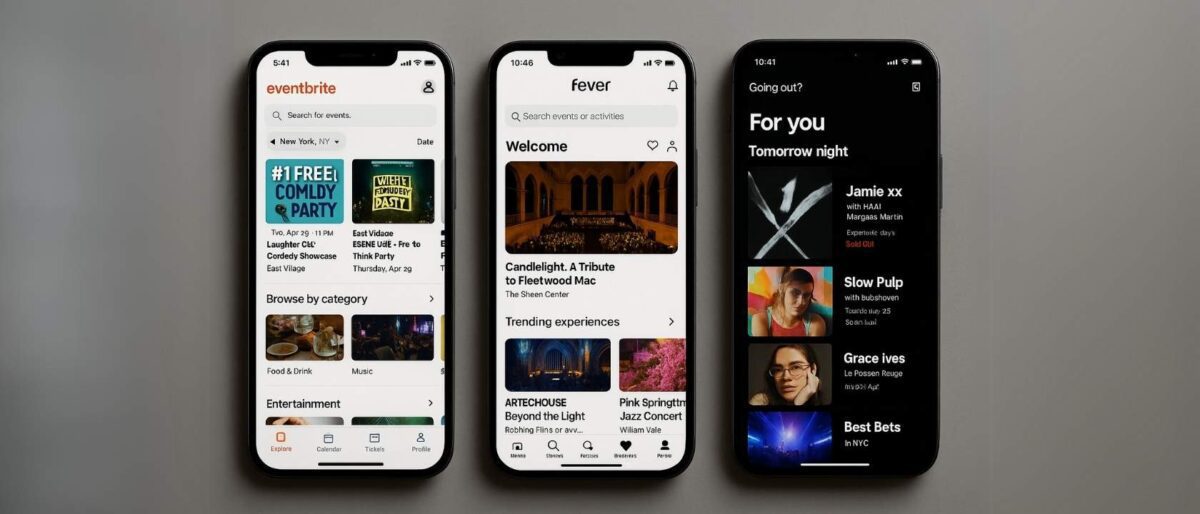
Great events start with great UX. The smoother the app, the faster you can find, book, and brag about your next night out. When comparing Eventbrite, Fever, and Dice, the differences in design philosophy become clear—some go for broad utility, others for sleek vibes. Here’s how they stack up on usability and feel.
- Eventbrite – Function over flash. Eventbrite’s interface is clean and fairly intuitive, though it leans more utilitarian than exciting. Navigation is straightforward, especially on desktop, but the mobile app can feel a bit cluttered if you’re browsing lots of event types. Ticket purchasing is easy, but personalization is minimal. Logging in is quick via email or social, and sharing events with friends is just a tap away—though social integrations aren’t front and center.
- Fever – All about the scroll. Fever nails the “browse and be inspired” vibe. The homepage feels like a curated lifestyle feed, complete with sleek visuals and themed collections. The buying process is smooth, and many experiences are bookable with just a few taps. The app uses your location and past activity for suggestions, which are usually spot-on. Logging in is seamless, and social features (like sharing events via WhatsApp or Instagram) are integrated elegantly.
- Dice – Minimalist, mobile, music-first. Dice’s design is stripped down in the best way. No noise, no fluff. Events load fast, recommendations feel personal, and you can buy tickets with almost no friction. No paper tickets—everything lives in the app. Login is simple (email or Apple ID), and inviting friends is built right into each event. Bonus: the “waiting list” feature is super intuitive, making it easy to stay hopeful for sold-out gigs.
Event Discovery Features
In a world full of choices—and ticketed distractions—event discovery is everything. A good app doesn’t just show you what’s happening. It shows you what you’ll love, even if you didn’t know it existed. So how do Eventbrite, Fever, and Dice help you uncover your next great plan? Let’s break it down.
- Eventbrite – Think of Eventbrite as the Swiss Army knife of event search. It offers robust filters by location, date, category, and price. You can refine down to “free events this weekend near me” in seconds. But while it’s great for structured search, the personalization is minimal. Suggestions are more reactive than intuitive. Event listings vary in quality—some have detailed descriptions and slick images, others feel like someone copy-pasted a flyer.
- Fever – Fever is built around curation over chaos. It leans into what’s trending, what’s immersive, and what looks good on Instagram. Filters are simple but effective: you can browse by tags like “Candlelight,” “Foodie Favorites,” or “Date Ideas.” The app uses location and past behavior to surface themed experiences that align with your vibe. Descriptions are polished, and visuals are consistently high-quality—it’s part marketplace, part mood board.
- Dice – Dice is where music discovery meets machine learning. Its recommendation engine serves up artists, DJs, and gigs based on who you follow and what you’ve attended. You can search by city, genre, or venue, and the algorithm gets sharper the more you use it. Listings are tight: name, date, venue, and a preview track or link. No fluff, just vibes. It feels like Spotify met Ticketmaster and had a stylish, no-BS child.
Types of Events Offered

Not all event apps play in the same sandbox. Some cast a wide net, while others double down on a specific scene. Whether you’re booking a conference room, craving a secret show, or planning your next artsy night out, knowing what each platform prioritizes can save you serious scroll time.
- Eventbrite – The jack-of-all-trades. Eventbrite is the most versatile of the three, offering a buffet of event types: business conferences, tech meetups, local workshops, wellness retreats, community fundraisers, and large-scale concerts. It’s especially strong for corporate or professional gatherings and serves both free and ticketed events. Great for planners, but sometimes overwhelming for casual users hunting for something fun.
- Fever – The curator of cool. Fever keeps its lane tight and trendy, spotlighting immersive, themed, and high-aesthetic experiences. Expect candlelight concerts in cathedrals, pop-up dining events in greenhouses, Van Gogh VR exhibits, rooftop cinema nights, and other Instagram-worthy outings. It’s not the place for your neighborhood town hall—but it’s perfect for a surprise date night or friend hang with flair.
- Dice – The backstage pass to the music scene. Dice focuses almost exclusively on live music, underground gigs, DJ sets, and club nights. If you want to discover that band before they blow up, or dance until 2 a.m. in a neon-lit warehouse, this is your app. It doesn’t dabble in wellness expos or business luncheons. Instead, it’s laser-focused on nightlife, indie, and youth-driven culture.
Ticket Pricing and Fees
The ticket might say $25, but by checkout, it somehow reads $34. Sound familiar? Fees and fine print can make or break the buying experience. Here’s how Eventbrite, Fever, and Dice handle pricing—and what you really end up paying.
- Eventbrite – Known for its flexibility, Eventbrite also comes with some of the highest service and convenience fees, especially on paid events. Organizers can pass those fees on to you or absorb them, so it varies. Pricing is generally transparent up front, but you’ll still want to double-check totals before clicking “buy.” On the plus side, refund and exchange policies are often set by the organizer, which means some events offer full refunds, while others are strict no-goes. Eventbrite also allows printable tickets and PDF versions—great for old-school attendees or backup plans.
- Fever – Fever tends to bake service fees into the ticket price, which makes checkout feel more straightforward—what you see is usually what you pay. However, refunds can be tricky. Many events are marked as non-refundable unless canceled by the organizer, though Fever sometimes offers credit for future events. Some users may get access to exclusive deals or early releases through newsletters or in-app alerts, especially for trending experiences. Tickets are mobile-based, but PDFs are sometimes available depending on the event.
- Dice – Dice wears its pricing on its sleeve. The app is proudly anti-hidden-fees, and the price you see is almost always the price you pay. No “gotchas” at checkout. Tickets are mobile-only, tied to your account to prevent scalping and duplication. This system works well for digital-native users, but might frustrate those who like physical tickets or gifting passes. Dice offers generous refund options via its waitlist feature: if a show is sold out and someone buys your returned ticket, you get a full refund.
Want paper flexibility? Eventbrite’s your pick. Want zero surprise fees? Dice takes it. Looking for curated experiences at mostly face value? Fever keeps it clean.
Event Hosting & Promotion Tools

If you’re the one throwing the party—or the panel, or the pop-up—you need more than just a ticketing link. You need reach, insight, and control. Whether you’re an indie artist, a professional planner, or just testing the waters, these three platforms offer very different tools for event creators. Let’s see which one does the heavy lifting best.
- Eventbrite – A powerhouse for organizers who like full control. Eventbrite offers a robust dashboard with tools for everything: event creation, tiered ticketing, discounts, waitlists, custom registration forms, and more. Its built-in email marketing tools, integrations with platforms like Mailchimp and Zoom, and detailed analytics give hosts a clear view of performance. Whether you’re running a yoga class or a multi-day festival, Eventbrite lets you manage it like a pro.
- Fever – More of a closed ecosystem. Instead of open DIY tools, Fever focuses on curated event partnerships. They work with creators to package and promote experiences—handling design, branding, and even location scouting in some cases. It’s ideal for those seeking hands-off collaboration, but less so for indie organizers who want to run things solo. You pitch it, they refine it—but you won’t be tweaking the backend yourself.
- Dice – Designed with artists and indie venues in mind. Dice keeps things streamlined but powerful. You can upload your event, sell tickets directly through the app, promote to fans who follow you, and even use waitlists to optimize for sold-out shows. The app handles everything mobile-first—no clunky dashboards, just clean functionality. It’s not built for conferences or business expos, but if you’re a band, DJ, or club promoter, Dice is gold.
Want full autonomy and analytics? Go with Eventbrite. Prefer curated, stylish support? Fever’s your lane. Booking gigs or shows? Dice has your back.
Audience and Market Reach
Even the slickest event app won’t help if it isn’t where your people are. Regional reach, cultural cachet, and the crowd each platform attracts matter just as much as features. Whether you’re planning an international tour or just want a busy Friday night, here’s where Eventbrite, Fever, and Dice shine—and where they’re still catching up.
- Eventbrite – Ubiquitous and global. Eventbrite is available in over 180 countries and supports dozens of currencies. Its user base spans corporate professionals, educators, nonprofits, and casual event-goers. While not flashy, it dominates in cities large and small thanks to its flexibility. Major metros like NYC, LA, London, and Sydney use it across everything from tech summits to wine tastings. If you want an app that works anywhere, this is the one.
- Fever – Fast-expanding with a niche focus. Fever is available in over 100 cities, with growing popularity in NYC, LA, Chicago, London, Madrid, and Paris. Its curated format appeals most to millennials and urban Gen Z—especially couples, friend groups, and travelers looking for something visually striking or Insta-worthy. The company partners with museums, venues, and immersive artists to build buzz around themed experiences. Not for rural areas or DIY organizers, but dominant in trend-conscious cities.
- Dice – Urban, underground, and artist-forward. Dice’s reach is smaller, but highly targeted. It thrives in music capitals like London, NYC, LA, Berlin, and Barcelona. Its user base skews younger—mostly Gen Z and indie-leaning millennials who want real-time discovery, fair prices, and intimate venues. Dice has strong relationships with artists, clubs, and labels, often working directly with promoters to sell mobile-only tickets. If you’re in its city zone, the experience is seamless. Outside that? Coverage thins out fast.
Eventbrite wins on reach. Fever wins on aesthetics and curated culture. Dice wins the hearts of the music-obsessed. Each one has a map—and a vibe.
Strengths and Weaknesses
Every app has its superpower—and its blind spot. Depending on what you’re looking for (or looking to promote), one might feel like a perfect fit while another completely misses the mark. Here’s the no-fluff breakdown of what Eventbrite, Fever, and Dice get right—and where they come up short.
- Eventbrite
Strength: Flexibility and feature depth. Eventbrite is built to handle everything from a backyard poetry slam to a global business conference. Its dashboard, integrations, and promotional tools are second to none for DIY organizers and pros alike.
Weakness: It can feel generic and clunky, especially for users looking for curated or creative events. Its higher fees can also drive away budget-conscious attendees, particularly for smaller shows or community events. - Fever
Strength: Beautifully curated experiences with serious visual appeal. Fever excels at creating buzz around immersive, themed, and Instagrammable events. If you want something polished and memorable, it likely lives here.
Weakness: Limited for creators who want to post their own event without collaboration. It’s a closed ecosystem, so you don’t have much control unless you’re part of a Fever campaign or partner network. - Dice
Strength: A fan-first model that makes music discovery feel exciting, personal, and fair. With no hidden fees, mobile-only tickets, and strong artist partnerships, it’s a go-to for club nights and indie gigs.
Weakness: The focus is sharp—but narrow. Dice offers a limited variety of event types outside of music. Looking for a food festival or business workshop? You’ll need another app.
Who Should Use Each App?

No app is one-size-fits-all—and that’s a good thing. Whether you’re planning a local fundraiser, chasing immersive art, or tracking your favorite DJ’s next set, the best platform depends entirely on your goals. Here’s who should hit download on each of the big three:
- Eventbrite – This one’s made for the doers, planners, and community organizers. If you’re hosting anything from a networking brunch to a citywide parade, Eventbrite’s toolkit helps you build, promote, and manage with ease. It’s also great for attendees who want a wide range of events—from business to nightlife, and everything in between. Perfect for those who want variety, structure, and reliability.
- Fever – This is the app for experience seekers. If your ideal night includes candlelight concerts, rooftop cinema, or a date night that feels straight out of Pinterest, Fever’s for you. Couples, tourists, and theme-night lovers will feel right at home here. It’s not where you’ll find your neighborhood book club, but it’s absolutely where you’ll discover your next Instagram-worthy night out.
- Dice – Calling all music fans, indie scenesters, and nightlife lovers. If you love discovering new bands, hate surprise fees, and want to support artists directly, Dice is your app. Its mobile-only, transparent approach is tailor-made for Gen Z and millennial fans who are always up for the next underground show, DJ set, or sweaty club night. Bonus: it rewards early adopters with access and waitlist perks.
Final Verdict: Which Event App Wins?
So—Eventbrite, Fever, or Dice? The truth is, each app wins in its own lane. They weren’t built to battle each other head-on. They were built to serve different kinds of people, parties, and plans. Here’s how it breaks down, plain and simple:
- Use Eventbrite if you’re an event creator, organizer, or community builder who needs reliable tools, broad reach, and full control. It’s great for everything from workshops to major festivals and is the best bet for managing logistics at scale.
- Use Fever if you’re into immersive experiences, romantic date nights, and curated vibes. It’s ideal for couples, travelers, and groups who want to discover cool things without having to dig. If aesthetics and atmosphere matter, this is your app.
- Use Dice if you’re a music head, nightlife fan, or indie scene regular who’s tired of surprise fees and janky ticketing. It’s fast, fan-friendly, and built for people who just want to see the show and support the artist.
That said, you don’t have to pick just one. Mix and match based on your mood or your mission. Organize your next event with Eventbrite, plan your weekend with Fever, and catch that secret gig with Dice. Your calendar—and your wallet—will thank you.
Conclusion
Digital ticketing has come a long way from clunky PDFs and inbox scavenger hunts. Today’s event apps are sleek, smart, and increasingly personal—designed to help you discover, plan, and experience life in real time. But they’re not created equal.
Your choice depends on what matters most. Craving variety and control? Go Eventbrite. Obsessed with curated, vibe-forward outings? That’s Fever’s specialty. All about fair prices and finding the next breakout band? Dice has your back.
Whether you’re planning a party or chasing one, the right app turns possibilities into plans. And in a world of endless scrolls and last-minute decisions, that difference? It’s everything.