Why Live Music Feels So Powerful (The Psychology of Concerts)
June 11, 2025
Sensory-Friendly Broadway Shows for All Audiences
June 11, 2025How Broadway Lighting Systems Bring the Stage to Life
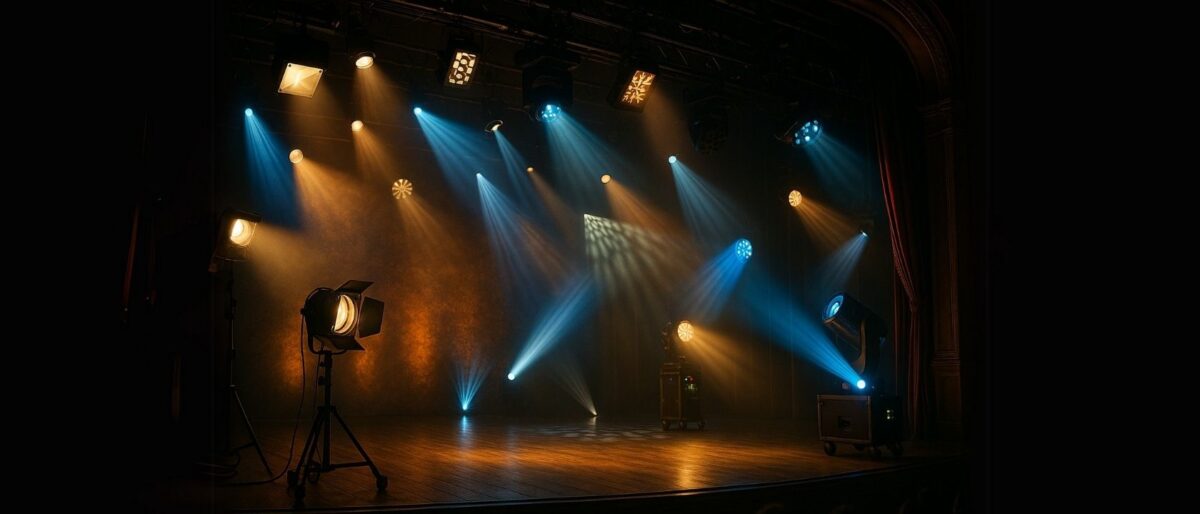
The curtain rises, but before a single word is spoken, the lights tell a story. On Broadway, lighting does more than brighten the stage—it sculpts emotion, sets pace, and directs the gaze. In this guide, we’ll explore how lighting systems truly bring every Broadway production to life.
What Is The Role of Lighting in Broadway Shows?
Lighting on Broadway isn’t just about helping the audience see the stage—it’s about helping them feel it. While it may seem subtle at times, it’s one of the most powerful storytelling tools in live theatre. Great lighting doesn’t simply illuminate; it shapes mood, sets tone, and drives pacing from scene to scene.
Every flicker, glow, or wash of color nudges the audience’s focus. Lighting tells us where to look—spotlighting a solo performer or pulling our eyes to a quiet corner during a tense moment. It also cues us how to feel: soft amber might suggest nostalgia, while sharp blue might cut in with tension. Without a word, the lighting shifts the emotional gears of a show.
In many productions, the lighting becomes a character of its own. It reacts, provokes, and evolves. A slow fade can stretch a final note into a heartbeat. A sudden blackout can land a joke or heighten suspense. Lighting dances with the actors, syncing breath with brightness and silence with shadow. It’s not just support—it’s a partner in performance.
Key Components of Broadway Lighting Systems
Behind every glowing spotlight and dreamy wash of color is a finely tuned system of tools working in harmony. Broadway lighting isn’t just about flipping a switch—it’s a complex blend of hardware and artistry, built to shape mood, rhythm, and space with precision.
- Spotlights: These follow performers, isolate solo moments, and pull the audience’s attention like a magnet. They’re often controlled live by trained operators perched high above the stage.
- Floodlights: Used to bathe the stage in an even glow, they create depth and warmth across wide scenes, especially when large ensembles or full-stage moments are involved.
- LEDs and Intelligent Fixtures: These tech-savvy lights can change color, direction, and intensity on the fly. Controlled by lighting boards, they bring dynamic range to modern productions without the heat or weight of traditional bulbs.
- Gobos: Metal templates that sit in front of lights to project patterns like leaves, windows, or rain. They instantly add texture and setting without physical props.
- Moving Lights: These fixtures can pivot, pan, tilt, and change effects mid-scene. They chase action, follow choreography, and adapt to emotional shifts in real time.
- Dimmers and Controllers: These handle the subtle (or dramatic) intensity changes that shape the emotional contour of a show. The magic of a soft fade or hard blackout lives here.
Every cue is a conscious choice—and every tool in this system works toward one goal: immersing the audience in the story.
The Lighting Designer’s Creative Process
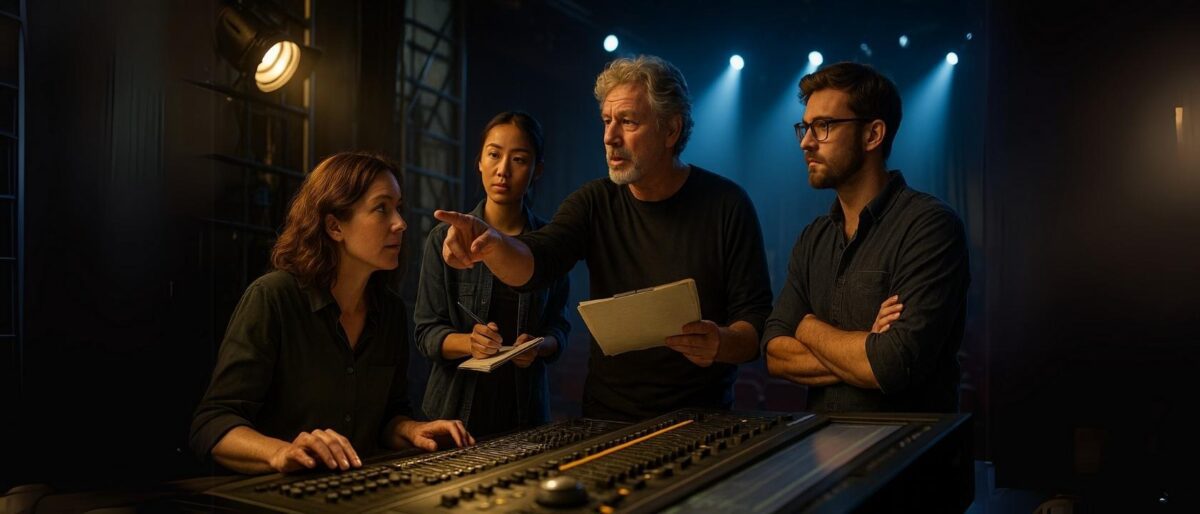
Before the lights shine onstage, the vision begins offstage. A Broadway lighting designer doesn’t work alone—they’re part of a team shaping the show’s soul. The process starts with deep collaboration. Directors, set designers, and costume designers all bring their visions, and lighting has to complement—and sometimes challenge—each one.
The designer reads the script like a map. Where are the emotional peaks? The quiet beats? The transitions that need smoothing? From there, they create cue sheets—detailed plans marking every shift in lighting, moment by moment. These sheets are the blueprint for the operator running the show live.
Then comes the choice of style: Is the lighting gritty and realistic? Dreamy and surreal? Does it reflect the inner world of a character or the literal one? This visual “language” must stay consistent, even as it adapts scene by scene.
Finally, there’s the tricky dance between dream and reality. Some ideas look stunning in theory but are tough in practice. The designer constantly balances artistic ambition with technical limitations—rigging height, power limits, safety, and timing. Because when the curtain rises, the lights must not only inspire—they must work, every single night.
How Lighting Shapes Mood and Atmosphere
Lighting isn’t just decorative—it’s deeply psychological. A single color choice can change the emotional temperature of a scene. Whether it’s a fiery red wash or a soft blue glow, lighting sets the emotional stage before the actors even speak a line.
Start with warm vs. cool tones. Warm lighting—think amber, gold, soft pink—feels inviting, nostalgic, or romantic. Cool lighting—icy blue, pale lavender, stark white—can signal isolation, tension, or clarity. The color palette alone nudges the audience toward a specific feeling without a word being spoken.
Shadows and silhouettes add an entirely different layer. A shadowy stage suggests secrecy or danger. A single silhouette can evoke loneliness, strength, or suspense. By hiding details or revealing just enough, lighting manipulates our sense of closeness and distance—emotionally and physically.
Speed matters, too. A rapid flash of light—like a strobe—creates panic or chaos. A slow fade, in contrast, allows the moment to linger. The way light arrives or disappears can quicken our pulse or let us breathe, depending on the intent.
Then there’s color symbolism. Green might whisper envy or magic. Red often screams danger, desire, or urgency. Blue can calm or isolate. These associations aren’t random—they’re baked into our cultural consciousness and leveraged by lighting designers with surgical precision.
Lighting doesn’t just show us what’s happening. It tells us how to feel about it. That’s the kind of power that transforms a scene into an experience.
Scene Changes and Transitions
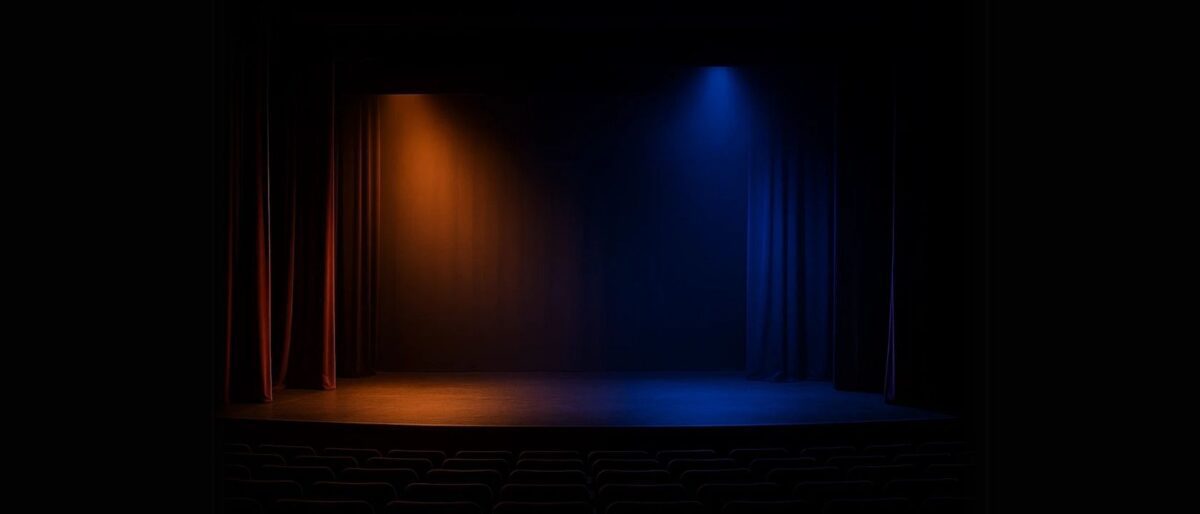
In Broadway theatre, not all scene changes involve moving set pieces or props. Sometimes, all it takes is a shift in light. Lighting acts as a silent scene partner—working behind the dialogue, bridging story beats, and guiding the audience from one emotional or physical place to another.
When the curtain doesn’t fall, lighting does the heavy lifting. A gentle fade to black might signal the end of a chapter, a hard snap of darkness could imply shock or urgency, and a crossfade—a sweep from one color or focus to another—might shift us forward in time or across the globe in just seconds.
This is especially important in shows where sets remain minimal or fixed. Lighting can create entire new worlds with nothing more than a shift in tone, angle, or hue. Want to suggest nightfall? Drop the lights to cool blue and add a subtle shadow. Sunrise? Bring in amber and edge it upward gradually. No scenery change required—just light.
Lighting also helps with emotional transitions. In a single song, a character might move from joy to grief. As their voice shifts, so does the lighting—supporting that arc and resetting the mood in real time. Between acts, lighting is often the final and first word, closing the curtain emotionally even when the physical curtain stays open.
It’s the unspoken storyteller that helps scenes flow like water—quietly carrying the audience across time, space, and state of mind.
Iconic Broadway Lighting Moments
Some Broadway moments are unforgettable not because of the dialogue or the set—but because of the lighting. When done right, it elevates a scene into legend. Let’s look at a few landmark examples where lighting didn’t just enhance the show—it defined it.
- Hamilton’s Turntable and Spotlight Choreography: In *Hamilton*, the rotating stage is iconic—but the lighting takes it further. Spotlights isolate characters as they move through time, emotion, and power. During “Satisfied,” the lighting rewinds the scene in sync with the music and stage movement. It’s part time machine, part emotional compass.
- The Phantom of the Opera’s Chandelier Crash: As the chandelier rises and later crashes, lighting drives the suspense. Flickers of lightning, dramatic blackouts, and golden glows build tension long before the crash. It’s theatrical foreshadowing by light—and when it falls, the synchronized lighting makes the chaos feel real.
- Hadestown’s Red and Amber Underworld: Color is storytelling in *Hadestown*. The underworld is painted in fiery reds and molten ambers, signaling danger, heat, and emotional weight. It’s not just aesthetic—it’s a psychological shift. When the lights dim to blood red, you feel the descent, even before the lyrics confirm it.
- Wicked’s “Defying Gravity” Lift and Green Light: As Elphaba rises into the air, the lighting lifts with her. A green spotlight beams down, symbolizing both her transformation and isolation. The lights below darken while the green intensifies—a visual metaphor for her choosing her own path. Chills, every time.
These moments show how lighting isn’t just support—it’s central to the storytelling. It shapes the way we remember musicals long after the curtain closes.
Technology Behind the Magic
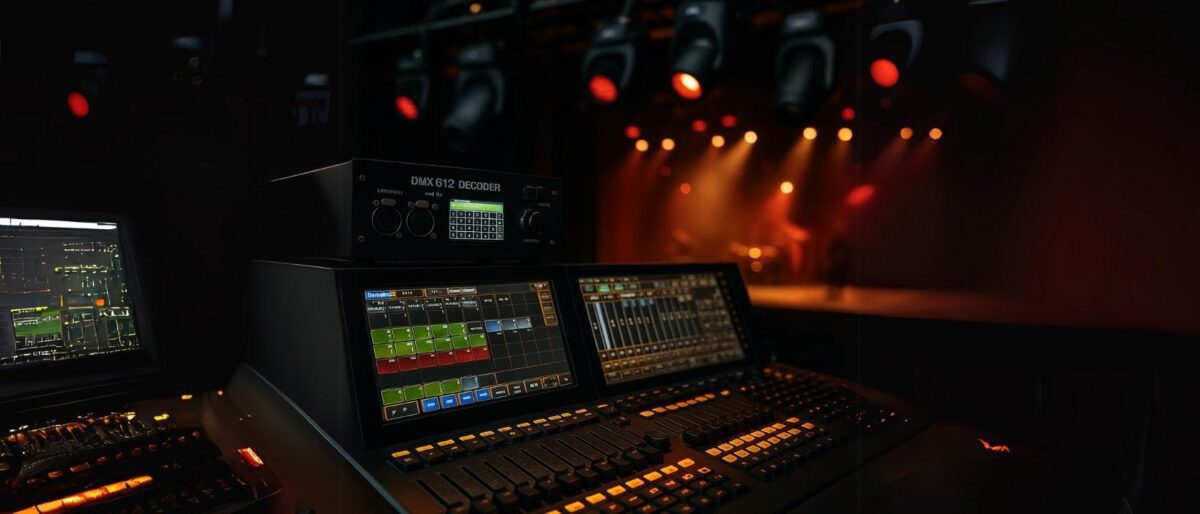
For all its artistry, Broadway lighting also runs on serious tech. Behind every perfectly timed spotlight and color shift is a high-powered system making it all possible—fast, flawless, and repeatable. This is where engineering meets emotion.
At the heart of Broadway lighting is the DMX protocol—a digital language that tells lights what to do. Every cue, color change, dimmer adjustment, or movement command travels through DMX, allowing hundreds of fixtures to operate in perfect harmony. It’s the backbone of modern stage lighting, and it’s remarkably precise.
These signals are managed by lighting consoles like ETC’s EOS series or the GrandMA boards, which let operators trigger complex lighting sequences with the push of a button. During live shows, every fade, snap, and glow is executed in real time by a human technician following a cue sheet to the second—or, increasingly, by pre-programmed sequences timed to music and blocking.
Many productions also integrate lighting with sound and stage automation. The lights don’t just follow the actors—they sync with music, special effects, and moving set pieces. This cross-departmental coordination creates immersive, seamless storytelling without missed beats or clunky transitions.
And like the rest of the industry, Broadway is getting greener. LED technology has replaced many traditional incandescent fixtures, cutting down on heat, power usage, and rigging weight. Some systems even use wireless control, giving designers more flexibility and faster setup times—especially valuable for touring productions.
All that glow and grandeur? It’s powered by a complex mix of circuits, software, and creative brilliance. And when it works right, you don’t notice the tech at all—you just feel the magic.
Challenges of Broadway Lighting Design
While Broadway lighting dazzles onstage, behind the scenes it’s a constant juggling act. Designers don’t just have to be creative—they have to be strategic problem-solvers. From tight spaces to unpredictable touring venues, the job is as technical as it is artistic.
One of the biggest hurdles is limited space and complex rigging. Broadway theaters are often older buildings with oddly shaped fly systems and low ceilings. Designers must fit dozens—sometimes hundreds—of lighting instruments into cramped grids, navigating around speakers, set pieces, and safety lines without compromising the vision.
Then there’s the challenge of lighting around costumes and materials. A dazzling white dress may glow beautifully under warm light—but under blue LEDs? It could look muddy or flat. Reflective surfaces can bounce light where it’s not wanted. Designers must adjust angles and intensities to flatter the costumes, the set, and the actors—all at once.
Balancing visibility with dramatic effect is another dance. You want the audience to see the performers clearly—but too much light can wash out mood and make the scene feel sterile. The sweet spot is somewhere between storytelling and spectacle, and it often takes dozens of rehearsals to get just right.
And for touring shows, the challenge doubles. Each theater has its own layout, ceiling height, and lighting inventory. Designers must create flexible lighting plots that can be adapted city by city—sometimes overnight—while still preserving the show’s signature look and emotional beats.
In short: it’s not just about flipping switches. It’s about navigating the chaos, solving puzzles in the dark, and making sure the audience sees something unforgettable—every single night.
Audience Perspective: How Lighting Guides Your Eyes
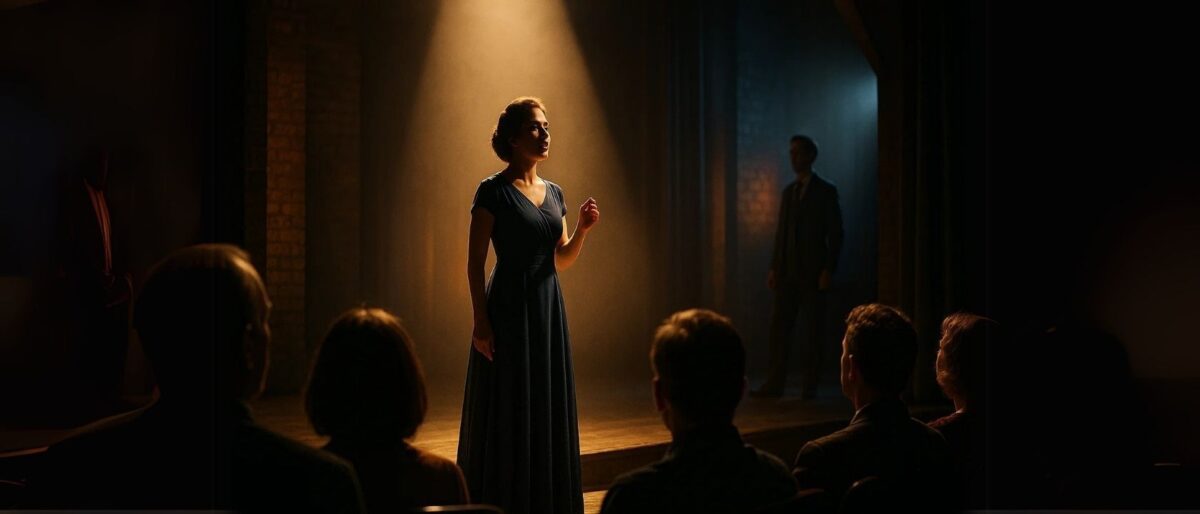
When you’re watching a Broadway show, your eyes don’t wander by accident—they’re being led. Lighting designers act like visual choreographers, subtly telling you where to look, what to notice, and how to feel. It’s not mind control—but it’s close.
Lighting draws your focus by highlighting action, expressions, or movement. A solo spotlight during a monologue pulls the room into stillness. A quick crossfade to another side of the stage silently signals, “Watch here now.” Without needing to be told, your gaze follows the light—and with it, the story.
Lighting also manipulates perspective and depth. By carefully layering light levels—bright foregrounds and dimmer backgrounds—designers create a sense of space that can make small stages feel vast or tight spaces feel intimate. It’s like painting with brightness and shadow.
Then there’s the illusion of 3D. With the right angles, lighting can contour actors’ faces, highlight costume texture, or cast dramatic silhouettes. Shadows aren’t flaws—they’re tools. They sculpt the performers and set, helping them pop off the stage like a live painting.
And perhaps most impressive? The magic stays hidden. The lighting may shift dozens of times in a single scene, but if done right, you won’t notice any of it. You’ll just feel pulled in deeper. The lights don’t scream for attention—they whisper directions, guiding your experience without ever breaking the illusion.
The Future of Lighting on Broadway
The lights of Broadway aren’t just bright—they’re evolving. As technology races forward, lighting design is stepping into a bold new era. The future isn’t just about more spectacle—it’s about smarter, greener, and more immersive experiences that blur the line between stage and reality.
First up: AI-assisted lighting design. Designers are beginning to use artificial intelligence and pre-visualization software to map out complex lighting plots before a single instrument is hung. These tools simulate entire scenes in 3D, allowing creative teams to tweak color, timing, and focus digitally—saving time and opening new creative possibilities.
As immersive theater continues to grow, we’re seeing lighting step off the stage. 360° audience experiences require lighting that adapts in every direction. Think overhead projectors, floor lighting, even wearable tech synced to the performance. In these setups, the audience isn’t just watching—they’re inside the story.
Augmented reality and projection mapping are pushing visual storytelling even further. Imagine a bare stage transformed into a forest, a dreamscape, or a bustling street—all through light. These effects allow lighting to blend seamlessly with digital visuals, offering endless scenery shifts without a single physical change.
And as Broadway goes green, sustainability is becoming center stage. LEDs are replacing traditional bulbs to reduce power use and heat output. Wireless and battery-powered fixtures are cutting cable clutter and installation time. The goal? Beautiful lighting with a lighter footprint.
The future of lighting is flexible, creative, and conscious. And as it becomes more intelligent and interactive, audiences won’t just see the show—they’ll feel surrounded by it.
Conclusion
Lighting may not sing or dance, but on Broadway, it’s a star in its own right. From subtle shifts in tone to breathtaking bursts of color, lighting is the silent storyteller—guiding emotion, setting the pace, and drawing our eyes exactly where they need to go.
Every flicker, every fade, every carefully cast shadow is intentional. It’s not just about seeing the stage—it’s about feeling every heartbeat of the story. Lighting doesn’t just support the show—it shapes it, elevates it, and sometimes even steals the scene.
So next time you’re in the audience and the lights dim—watch closely. Notice how the glow frames a face, how the color signals a shift, how a blackout leaves you breathless. The story doesn’t start with the first line. It starts with the light.