
Stadium vs Arena Concerts: What’s the Better Experience?
May 28, 2025
Hamilton vs Wicked: Which Broadway Show Should You See First?
May 28, 2025Broadway Show Etiquette: What You Should & Shouldn’t Do

Broadway isn’t just about lights, lyrics, and standing ovations—it’s about respect. Whether it’s your first show or your fiftieth, knowing what to do (and what not to) makes the magic smoother for everyone. From phone etiquette to when to clap, here’s your pre-show primer on proper Broadway behavior.
Before You Go: Preparing for the Experience
Before the velvet curtain rises and the overture begins, a little prep can go a long way. Think of it as your pre-show warmup—not for the stage, but for the audience seat you’re about to sink into. A smooth Broadway experience starts long before you clap your first clap.
Start by checking the time, date, and venue—and yes, triple-check if you need to. Broadway theaters are sprinkled all over Midtown, and showing up at the wrong one is more common than you’d think (especially when shows have similar names). A quick glance at your ticket and a Google Maps pin drop now can save you a whole lot of running later.
Double-check your tickets, too—whether they’re printed, digital, or app-based. Know where to pick them up if needed, and scan through any arrival instructions. Some shows have timed entry slots or separate entrances based on seat location. If you’re meeting friends, make a clear plan. Nothing dampens pre-show excitement like frantic texting at the theater doors.
It also helps to know the show’s structure. Is there an intermission? How long is the runtime? Is it suitable for younger kids? Some performances clock in at nearly three hours, and not every show is geared toward little ears or short attention spans.
And one more thing—if you’re under the weather, it’s not just about you. Staying home when you’re sick is a courtesy to everyone around you. No one wants a soundtrack of sniffles, sneezes, or coughing during the show’s most tender moments. The cast deserves your full attention, and your fellow theatergoers deserve to enjoy it without worrying about catching a bug.
A few thoughtful steps before you leave the house can make the difference between a chaotic night and a magical memory. Show up prepared, and Broadway will do the rest.
Dress Code: What to Wear (and What Not To)
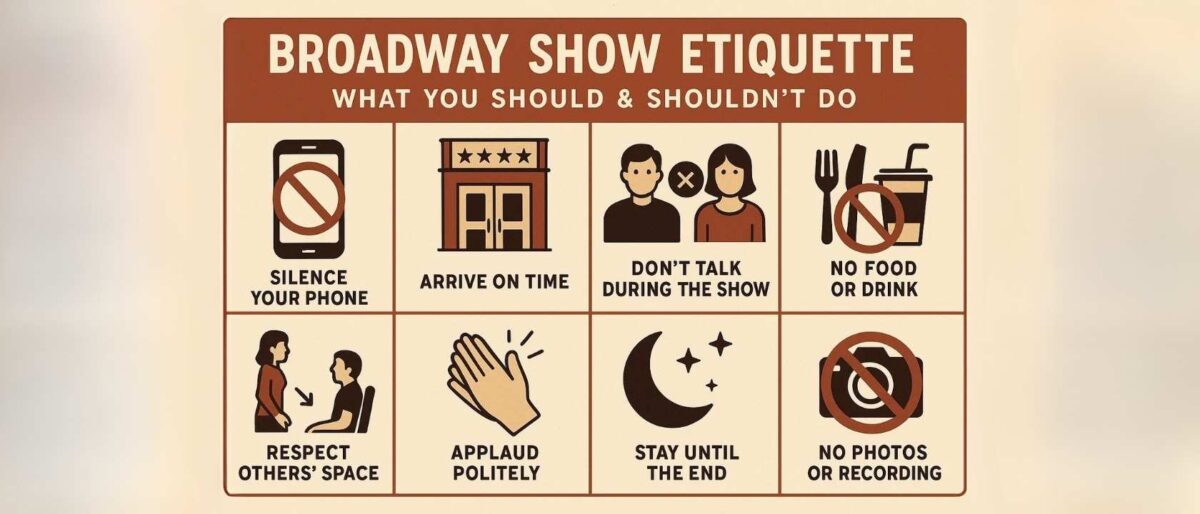
Broadway isn’t the Met Gala, but it’s not a backyard barbecue either. There’s no strict dress code posted at the door, but there is an unspoken agreement: show a little respect for the experience—and for the people sharing the row with you. What you wear doesn’t need to scream glam, but it shouldn’t whisper “laundry day” either.
Think smart-casual or semi-formal. For women, a nice dress, tailored pants with a blouse, or a jumpsuit works beautifully. For men, slacks and a button-down—or even a clean polo—do the trick. Flats, loafers, boots, or clean sneakers are all fair game. You don’t need heels or a suit unless you want to go the extra mile. A little polish goes a long way—and makes intermission photos look that much better.
Whatever you wear, comfort matters. Broadway shows usually run 2 to 3 hours, sometimes more. You’ll be sitting elbow-to-elbow with strangers, shifting in your seat during dramatic monologues, and potentially climbing stairs to reach your row. Make sure your outfit breathes, stretches, and doesn’t make you count down the minutes to curtain call.
As for what not to wear? Skip the hats, oversized hairstyles, or anything with flashy lights or loud accessories. Someone behind you paid good money to see the stage—not your novelty cowboy hat. If you’re tall, be mindful of how you sit. If you’re wearing perfume or cologne, go easy—scent sensitivity is real, and a strong spritz can overpower even the best ballad.
The goal isn’t to impress the ushers—it’s to blend in gracefully, feel good in your own skin, and show a little flair without upstaging the cast. When in doubt, dress like you’re going to a nice dinner—just with better music.
Arriving on Time: Punctuality Matters
If Broadway had a golden rule, it might just be this: don’t be late. Arriving after the lights dim isn’t just awkward—it’s disruptive. The audience is settled, the overture has started, the cast is in rhythm… and then here you come, side-stepping over knees, apologizing under your breath, blocking someone’s view just as the lead hits their first high note.
To avoid that moment, aim to arrive 30–45 minutes early. This buffer gives you time to scan your tickets, get through security, use the restroom, grab a drink or a snack, and actually find your seat without sprinting. Most theaters open their doors 45 minutes before showtime, and trust us—early birds enjoy the vibe, not the stress.
Be warned: latecomers aren’t always seated immediately. Many shows have a “holding period” where you’ll be asked to wait until a natural break—usually after the first scene or musical number. In some cases, especially in small or historic theaters, you may be directed to stand or sit in the back until intermission. Either way, it’s not ideal.
And it’s not just about you. Arriving late pulls focus—for the actors, the orchestra, and every audience member whose immersion gets snapped by your sudden shuffle. A perfectly timed entrance onstage is powerful. A poorly timed entrance into the row? Not so much.
Make arriving early part of your ritual. Soak in the scenery, scan the Playbill, take a selfie if you must, and settle in. That moment when the lights fade and the curtain lifts? It hits differently when you’re already in your seat, ready for the magic.
Talking & Noise: Silence is Golden
Broadway may be live, but it’s not interactive—at least not in the way some audiences seem to think. When you’re sitting in that velvet seat, silence isn’t just polite—it’s sacred. It allows everyone, including the cast, to stay immersed in the moment. Break that silence, and you’re not just talking over a scene—you’re dimming someone else’s spotlight.
Let’s start with the basics: no talking. That means no whispered play-by-plays, no “Wait, what did she say?” and absolutely no full-volume commentary. Even hushed whispers carry in a theater. Same goes for humming, beatboxing, or low-key singing along. If the performers wanted backup vocals, they’d have auditioned you.
Your phone? It should be completely off. Not “silent.” Not “vibrate.” Off. A buzzing phone in a coat pocket is just as distracting as a ringtone, especially during a tense monologue or quiet ballad. And that screen glow? Actors can see it. So can the people around you. If you need to check the time, try the old-fashioned way—look at your watch.
Got a cough or tickle in your throat? No shame. Just unwrap your cough drops before the show starts. That little crinkly sound might seem harmless, but it becomes a spotlight-stealing crackle during a pin-drop scene. If you forget, wait for applause or a loud number to open it discreetly.
And yes, we know it’s tempting to sing along, especially when your favorite showstopper kicks in. But unless it’s a designated sing-along performance (and those are rare), leave the vocals to the professionals. There’s a fine line between being a fan and becoming the distraction everyone wishes would take a bow… and exit.
Bottom line? If it makes sound, think twice. Respect the silence, and you’ll help protect the magic that everyone came to experience.
Phones & Photos: Tech Rules You Can’t Break
We get it—you’re excited. You’re dressed up, the marquee is glowing, and your seat is perfect. It’s totally natural to want to snap a pic and capture the moment. And you can… before the show starts or during intermission. But once the house lights dim and the curtain rises? That phone belongs in your pocket—or better yet, turned completely off.
Let’s make it crystal clear: no photos, no video, and no sneaky recordings during the performance. Not even a quick boomerang for your story. Broadway productions are protected by copyright, and capturing any part of the performance—on purpose or by accident—is a serious breach of etiquette (and sometimes, the law).
Even if you’re not recording, screen glow is a buzzkill. Theaters are dark by design, and a bright screen lighting up from Row H feels like a spotlight in a cave. It pulls focus from the stage, annoys everyone around you, and distracts the performers, who can absolutely see you.
Want to take a selfie before the show, during intermission, or with the Playbill? Go for it. Snap away while the stage is empty and the house lights are up. Just make sure your flash is off, and be mindful of blocking aisles or stairways.
And one more thing—turn off all alarms and notifications. Yes, even the calendar ping or fitness tracker buzz. Nothing breaks the spell of a silent, emotional scene like a “reminder to hydrate” vibrating from your purse.
Respecting tech etiquette isn’t about being strict—it’s about preserving the immersive power of live theater. Broadway happens in real time. The only screen you need is the one behind the curtain.
Eating, Drinking, and Wrappers

Broadway isn’t a dinner-and-a-show situation—it’s just the show. While some theaters have loosened up and allow food and drinks inside the auditorium, that doesn’t mean you should treat your seat like a picnic blanket. There’s an art to snacking in the theater… and it mostly involves not snacking at all.
First things first: avoid loud snacks at all costs. That bag of chips? It’s basically a megaphone. Hard candy wrappers? They sound like thunder in a quiet scene. Even ice from drinks can turn into a crunch-fest that rivals the percussion section. If you must bring something in, think soft and silent. But really, your best bet is to finish your food and drinks before the curtain rises.
If the theater allows drinks inside (and many now do), use the provided cups with lids. They’re spill-resistant and discreet. Sipping quietly during the show is generally okay—just don’t slurp or set your drink down noisily during a dramatic pause. And please, don’t crack open that bag of popcorn as the orchestra swells.
And when the show’s over? Take your trash with you. Seriously. Don’t leave wrappers, empty bottles, or snack shrapnel under the seat. The ushers are there to help, not to wade through your candy graveyard. It’s basic courtesy—and good karma.
In short: if your snack makes noise, skip it. If your drink doesn’t have a lid, finish it early. And if you’re thinking of sneaking in a burrito? Don’t. Your seatmate (and the entire row) will thank you.
Respecting Performers and Staff
Broadway might look effortless on stage, but behind every curtain call is a cast and crew giving it their all. The least we can do as audience members? Show some respect. Theater is a shared experience—between performers, staff, and audience. Everyone plays a role, and yours doesn’t involve shouting from Row G.
Let’s start with the good stuff: applause. It’s more than a courtesy—it’s how performers feel your energy. Clap after big musical numbers, key moments, and definitely at the end of acts. If the cast delivers a showstopping number that makes you want to leap out of your seat, go ahead and stand for a well-earned ovation. But save the standing O for something truly special—not just because others are doing it. Think of it as giving a round of applause that actually means something.
Booing, heckling, or shouting at performers? Hard no. Even if you’re not a fan of a character, the actor playing them deserves your respect. You’re not at a sports game—this isn’t the time for running commentary or jokes hurled at the stage. It’s disruptive, it’s disrespectful, and it ruins the moment for everyone around you.
The same rule applies to the hardworking team you don’t see under the spotlight. Ushers, coat-check staff, merch vendors, and concession workers are all part of the experience. They keep the place running. Treat them with kindness. They’re not the reason your seat is cramped or the show started five minutes late.
And finally—this really shouldn’t have to be said, but here we are—don’t try to rush the stage. Don’t wave your arms, shout personal messages, or pull out signs mid-performance. Broadway isn’t a meet-and-greet. You’re there to watch, not to perform. Let the pros do their job, and enjoy the show as it was meant to be seen: without distractions, derailments, or drama from the audience.
Intermission Etiquette
Ah, intermission—that magical fifteen to twenty-minute window where you can stretch your legs, refresh your drink, and debate Act One theories with your seatmate. But even this short break comes with its own set of unspoken rules. Handle it right, and it’s a breather. Handle it wrong, and you become the hallway traffic jam nobody asked for.
First and foremost: use the time wisely. If you need the restroom, go. If you’re eyeing that sparkling wine or a snack, grab it early before the lines snake around the lobby. Want merch? Head to the booth quickly—but don’t expect to do a full fashion haul before curtain. This isn’t a shopping spree; it’s a strategic break.
Don’t loiter in the aisles or block doorways. You may be deep in conversation or figuring out who really hit that last high note, but the people trying to get by would prefer not to elbow their way through your debrief. Keep moving or step aside—it’s a tight ship out there.
When the five-minute bell sounds, head back to your seat promptly. If Act Two starts and you’re still in line for candy, you’re not only missing key moments—you’re disrupting everyone else trying to focus. Ushers may hold you back until a break, and scrambling back in late isn’t a good look.
If you’re staying seated during intermission, great. But keep conversations low. Remember, the mics may be offstage, but the theater’s still echo-prone. Some audience members use the break to relax or read their Playbills, not catch up on your hot take from Scene Three.
Intermission is a pit stop, not a pause button. Treat it with the same awareness as the show itself, and you—and everyone around you—will have a smoother Act Two experience.
Leaving the Theater: The Exit Dance
The lights are dimming back up, the final note’s hanging in the air, and the cast is taking their bows—but you’re already reaching for your coat? Don’t be that person. How you exit a Broadway show says just as much about your theater manners as how you entered. So here’s how to leave with grace, not groans.
First rule: don’t bolt during the final scene or curtain call. Yes, we know—you’re trying to beat the crowd or catch the last train. But when you leave mid-finale, it’s not just rude. It’s distracting, disrespectful, and, let’s be honest, a bit deflating for the cast giving their all. That standing ovation? It’s part of the show. Stay, clap, and honor the moment—you won’t regret it.
Once it’s time to leave, wait your turn. Shoving your way down the aisle like it’s a flash sale at a department store doesn’t make the crowd move faster. Be patient, smile at your fellow theatergoers, and move in step. It’s a post-show parade, not a race.
If you’re seated in the middle of the row and need to step over others, do it with courtesy. A quiet “Excuse me” goes a long way. Mind your bag, watch your feet, and avoid stepping on toes—literally and figuratively. If someone’s moving slow, take a breath. The sidewalk isn’t going anywhere.
And one more thing—save the full show breakdown for outside. People around you might still be soaking in the moment, or maybe they haven’t even processed the ending yet. Loud opinions and spoilers in the aisle kill the mood. Give the story a moment to settle before you dissect it over street hot dogs or subway transfers.
Leaving the theater gracefully wraps up the experience the way it deserves—with class, calm, and maybe just a little jazz hand flourish.
Bringing Kids: Age-Appropriate Etiquette
Introducing kids to Broadway can be a beautiful thing—pure wide-eyed wonder, gasps at glittering costumes, and memories they’ll never forget. But let’s be real: not every show is kid-friendly, and not every child is ready to sit quietly through a two-and-a-half-hour live performance. Etiquette matters double when you’ve got little ones in tow.
First, check the age guidance for the show. Many Broadway productions have minimum age recommendations (some set the bar at 4, others at 8 or older). If the show’s content or runtime isn’t suitable for your child, it’s better to wait than risk mid-show meltdowns and side-eye from every direction.
Once you’ve picked a kid-appropriate show, prep them like a mini theater pro. Talk about what to expect—dim lights, quiet scenes, no talking, no standing up, and clapping only when everyone else does. Set clear expectations: this is not a movie theater with talking animals and popcorn runs. It’s an experience that deserves stillness and respect.
If your child’s still in the squirmy stage, quiet distractions like coloring books, a soft toy, or silent fidgets can help—but use them sparingly and only if truly needed. Glowing tablets and noisy gadgets? Big no. They’ll distract half the balcony before you even realize the brightness is up.
And here’s the crucial bit: be ready to step out. If your kid becomes noisy, restless, or can’t sit still, quietly exit the theater until they calm down. It’s not a failure—it’s courtesy. Everyone around you came for the show, not the sound of a toddler mid-tantrum.
Bringing kids to Broadway is a gift—but it’s also a responsibility. With a little planning and a lot of patience, you can turn it into a magical memory for them and everyone else in the theater.
Special Accessibility Etiquette
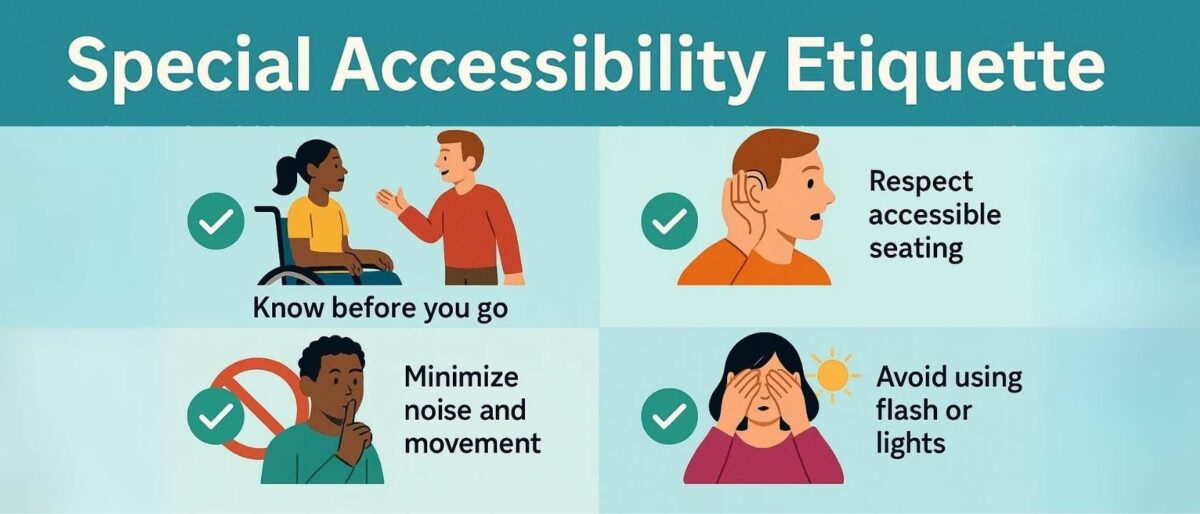
Broadway should be magical for everyone. That includes theatergoers with mobility challenges, hearing impairments, sensory sensitivities, and other accessibility needs. Theaters work hard to accommodate all guests, but fellow audience members play a big role too. A little awareness goes a long way.
First and foremost, don’t block accessible seating or aisles. These areas are clearly marked for a reason. Even if it looks like an open spot or seems convenient to lean or stash your bag, don’t. That space might be essential for someone arriving late or needing room to transfer from a wheelchair. Give it the same respect you’d give someone’s reserved seat.
When navigating the theater, be patient with those using mobility devices like canes, walkers, or wheelchairs. The aisles are narrow, the crowds are thick, and rushing past someone isn’t just rude—it can be dangerous. Slow your pace, offer a smile, and if needed, give space rather than pressure.
If someone appears to need assistance, always ask theater staff, not other guests. It’s respectful, avoids awkwardness, and ensures help is offered correctly and safely. Ushers are trained for these situations, and they’re there to keep everyone comfortable and supported.
Some venues also offer assisted listening devices, captioning services, or designated quiet zones. If you’re seated near someone using these, don’t stare, comment, or ask intrusive questions. These tools help more people enjoy the show—and that’s something worth applauding, not pointing out.
In short? Accessibility etiquette is about empathy and inclusion. Everyone deserves the same breathtaking experience, and your small actions can make a big difference in ensuring Broadway stays open, inviting, and magical for all.
Common Mistakes to Avoid
Even the most well-meaning theatergoers can fumble the etiquette ball once in a while. Some slip-ups are harmless. Others? Not so much. If you want to blend in with Broadway regulars and not become an unintentional villain in someone’s Playbill story, here are a few common mistakes worth dodging.
Overdressing or underdressing tops the list. Broadway isn’t a gala, but it’s also not your living room. A sequined ballgown might turn heads—but not in a good way. And flip-flops with a tank top? Save them for the beach. Aim for polished and comfortable without stealing the spotlight.
Taking flash photos is a big no-no. Flash not only distracts the performers but also yanks the audience out of the moment. Plus, it’s usually prohibited for copyright reasons. Your memory will last longer than that blurry, overexposed snap ever will.
Unwrapping cough drops during a whisper-quiet scene? You may as well fire a starter pistol. If you need one, unwrap it before the show or during applause—never while the entire theater is holding its breath.
Checking your phone—even for just a second—during a poignant monologue or love song sends a loud message: “I’m somewhere else.” That screen glow? It’s a theater mood killer. Unless it’s an emergency, it can wait.
Leaving mid-show (unless absolutely necessary) is not only distracting but disrespectful. It disrupts the flow, breaks the magic, and makes it hard for others to stay focused. If you must leave, do so as quietly and quickly as possible during a transition or scene change.
And finally—no spoilers out loud. Maybe you’ve seen the show before. Maybe you’ve memorized the cast album. Great. Keep it to yourself. Loudly predicting twists, gasping before reveals, or mouthing lyrics a beat too soon is a surefire way to earn side-eye from everyone around you.
Avoid these pitfalls, and you’ll be the kind of audience member every usher dreams about—respectful, present, and a total pro at enjoying the show without stealing it.
Why Etiquette Matters: Protecting the Magic

Broadway isn’t just a stage—it’s a living, breathing experience. Every gasp, every laugh, every standing ovation is a thread in a shared story between audience and artist. And the truth is, what happens in the seats is just as important as what happens onstage.
When you respect the space, you help preserve the artistry. The set design, lighting cues, vocal control—these things aren’t accidents. They’re crafted with intention and precision. A glowing phone, a candy wrapper crinkle, or whispered commentary doesn’t just annoy—it disrupts hours (and sometimes years) of preparation.
Audience behavior also shapes the vibe of the night. A room full of focused, present theatergoers? That’s fuel for performers. A room filled with distractions? That energy drops like a missed cue. You don’t just observe the show—you contribute to its rhythm, its momentum, and its impact.
And here’s the beautiful part: good etiquette makes everything better. Performers can give their all. Neighbors can stay immersed. Ushers don’t have to play referee. Everyone leaves feeling like they’ve just witnessed something special—because they have.
It’s not about being a perfect theatergoer. It’s about being a thoughtful one. Mindful. Respectful. Aware of the experience you’re stepping into—and the people you’re sharing it with. Broadway is magic. Your behavior helps keep it that way.
Conclusion: Be Present, Be Polite, Be Part of the Magic
From timely arrivals to silenced phones, polite applause to aisle etiquette—Broadway comes with its own rhythm, and knowing the dos and don’ts helps you fall right into step. Don’t talk, don’t record, don’t block someone’s view. Do arrive early, dress thoughtfully, clap with intention, and respect the space.
Theater is more than entertainment—it’s a shared, sacred moment. And by following a few simple etiquette rules, you not only show respect to the performers and staff—you show respect to everyone seated around you. You become part of the harmony, not the static.
So go ahead—laugh, cry, cheer, and let yourself be moved. But do it with courtesy. Let the magic sweep you up without stealing someone else’s spotlight. Because Broadway works best when we all show up not just as spectators—but as respectful, present participants.
Whether it’s your first show or your fiftieth, remember: Broadway is a shared experience. And when we each do our part, the result is pure theatrical magic—for everyone in the room.