
Booking Broadway for School or Group Trips: Tips & Deals
August 31, 2025
What to Do If Someone Disrupts a Comedy Show | Etiquette & Safety Tips
September 1, 2025Comedy Club Layouts: Best Seating & Exit Strategy Tips for Smooth Nights

Packed room, quick laughs, tight tables. Comedy clubs charm, yet tricky layouts trip people up. This guide helps you pick smart seats, read sightlines, and plan swift exits without ruffling feathers. Think of the room as a maze, your path prepped before the punchline. Ready to slip out smoothly? Tonight?
Why Comedy Club Layouts Matter

Comedy clubs are designed for intimacy. Low ceilings trap the laughter, amplifying every chuckle. Tables sit close together, often crammed with drinks and baskets of fries. Lighting stays dim to keep the spotlight sharp, but that same coziness can make simple movement feel like threading a needle in the dark.
The design directly shapes your night. Sightlines matter: a poorly placed column or tall person in front can block your view. Acoustics count too, with certain corners carrying sound better than others. Crowd flow is another hidden factor. When servers squeeze through or people shuffle to restrooms, the room’s rhythm changes.
This setup cuts both ways. The close quarters spark energy, almost like being part of the act. Laughter feels contagious. Yet, the very things that make clubs electric—tight seating, narrow aisles, shadows—turn exits into potential headaches. If you need to slip out mid-set, the design suddenly becomes an obstacle course.
Choosing the Right Seat for Easy Exits
Seating can make or break your comedy club experience. Front-row seats sound thrilling—close to the jokes, maybe even some playful crowd work. But if you need to leave early, squeezing past the stage and dozens of eyes becomes more spectacle than smooth exit. Back-row spots flip the script. You’re farther from the action, but slipping out quietly is far easier.
Aisle seats often strike the balance. They let you enjoy the show while keeping an escape hatch at arm’s reach. You won’t have to disturb half the table when nature calls or when you decide to duck out before the encore. Think of them as the goldilocks choice: not too close, not too far, perfectly practical.
Tables near restrooms or service stations? They’re tricky. You’ll gain convenience but lose peace. Constant traffic of servers and patrons can break your focus on the set. Still, if quick access matters more than pristine ambiance, these spots serve their purpose.
For anyone with mobility concerns, accessibility should guide your decision. Look for wider aisles, flat entryways, or staff assistance if needed. A comfortable seat with easy access beats any front-row bragging rights when it comes to enjoying the night without stress.
Mapping Out Exit Routes Before the Show
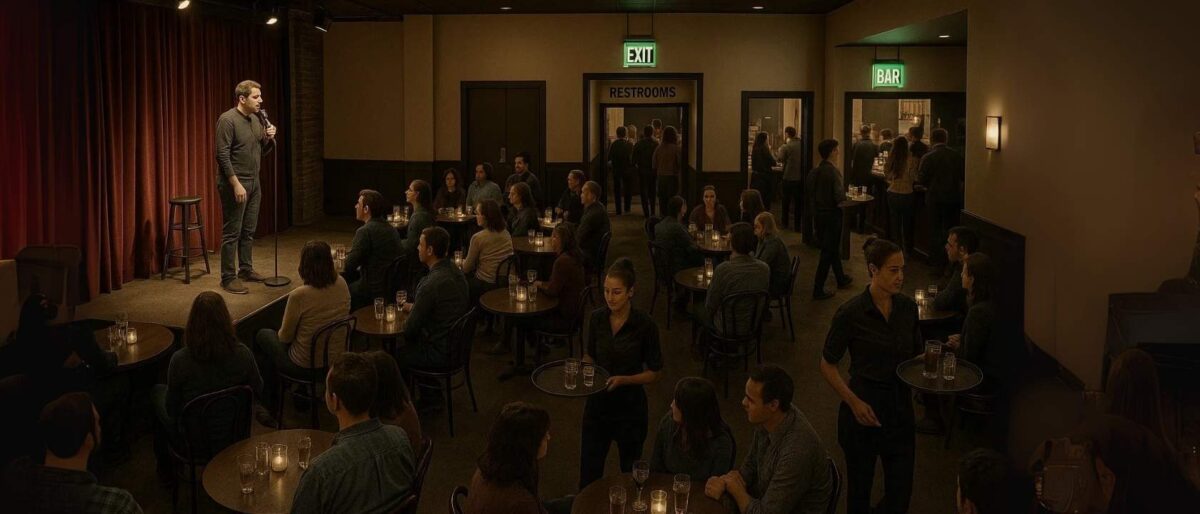
A little scouting before the first joke pays off. Start by spotting the emergency exits. They’re usually marked, but in a dim comedy club with neon distractions, those signs can blur into the background. Knowing where they are helps in both everyday slips and rare emergencies.
Next, trace the path to the bathrooms and the bar. These two spots become high-traffic zones all night, so it’s smart to note how far they are from your seat. If you’ll need a refill or a restroom break, you don’t want to stumble blindly through a maze of chairs.
Keep an eye on staff sections too. Servers dart in and out carrying trays, and their pathways often double as quick lanes for patrons. Sitting too close may invite distractions, but recognizing these routes gives you a backup exit if the main aisles clog up.
This bit of pre-show reconnaissance isn’t about paranoia. It’s about comfort. When you already know how to slip out smoothly, you spend less time stressing about logistics and more time laughing at punchlines. Preparation clears the mind, letting you enjoy the show without worrying about awkward shuffles later.
Crowd Flow and Timing
In comedy clubs, timing isn’t just for the comedian—it matters for you too. The best moments to move are built into the show’s rhythm. Applause breaks mask footsteps and chair shuffles, while light shifts signal natural pauses. Between acts, the room resets, giving you a chance to slip out unnoticed.
The worst times? Right in the middle of a punchline. Not only do you risk missing the joke, but you also draw unwanted attention. Spotlight moments are equally dangerous; moving while the audience’s focus is laser-sharp makes you part of the scene in the worst way. And if a heckler sparks drama, sit tight—walking then feels like volunteering for a cameo.
Think ahead to intermissions and closing time. Those are bottleneck zones. Everyone stands at once, lines snake to the restrooms, and exits jam. If you need to beat the crowd, move a minute early or wait until the rush clears. Reading the flow helps you dodge the crush and keeps your night hassle-free.
Etiquette for Slipping Out

Exiting a comedy club mid-show is a bit like sneaking out of class—you want to vanish without a scene. The golden rule is simple: don’t break the comedian’s rhythm. Wait for a pause, a laugh swell, or a quick transition before moving. Timing your exit keeps the focus where it belongs—on the stage, not you.
Body language plays a big role. Use quiet signals: a nod to your tablemates, a gentle push of your chair, a soft step toward the aisle. Avoid waving or fumbling with coats loudly. The less attention you draw, the smoother the escape feels. Think “ghost mode,” not “grand exit.”
Respect the audience too. People around you paid for their seats, and blocking their view mid-punchline is no small offense. A polite tap on the shoulder and whispered “excuse me” goes further than barging through. Move with patience, not panic.
When standing, judge the moment. If the room’s energy is high, walking tall is fine. But during quiet setups, duck low and stay close to the aisles. This way, you leave gracefully, almost invisible, and everyone stays locked on the laughs instead of your shuffle out the door.
Safety Considerations
Knowing fire exits isn’t overthinking—it’s basic common sense. Comedy clubs pack people into tight spaces, and if something unexpected happens, those glowing green signs suddenly matter. A quick mental note of where to head can turn confusion into calm action when every second counts.
If an emergency strikes, resist the urge to panic. Crowds feed off emotion, and one person bolting can spark chaos. Stay steady, follow staff instructions, and move with purpose instead of speed. Calm decisions keep you and those around you safer than frantic rushing ever will.
Some clubs add quirks to the mix. Basements often have limited exits, while venues with multiple levels can funnel people into narrow staircases. Before the show, glance around and imagine how you’d move if the lights went out. That tiny bit of foresight saves stress later.
Don’t forget personal safety after the show ends. If you’re leaving late at night, stick to well-lit paths. Park near busy spots instead of hidden corners, or book a ride-share to avoid wandering. Crowds offer cover, but they also create distractions. Keeping your head up and phone tucked away makes the walk back far smoother.
Exit Strategy for Different Situations

Not every comedy night goes according to plan, and sometimes you need an exit tailored to your situation. If you’ve got work early the next morning, aim for aisle seats or spots near the back. That way, you can duck out quietly before the closer without disrupting the energy in the room.
Unexpected issues pop up too—a sick companion, a wobbly chair, or a sound system that’s too loud. In those cases, your best bet is to move during applause or transitions. Keep it low-key, help your guest if needed, and let staff know on your way out. They’re used to this and often help smooth things over.
When crowd surges hit—like after a big name comic finishes a set—exits clog fast. If you want to avoid the bottleneck, either slip out a minute early or wait five minutes longer. Patience often beats pushing through a tide of people. You’ll thank yourself when you’re not stuck shoulder to shoulder in a hallway.
Of course, sometimes you stay for the finale. When the lights come up, gather your things quickly but don’t rush. A steady pace toward the door keeps the night relaxed. Leaving smoothly at the end is less about speed and more about courtesy to those around you.
Insider Tips from Regulars and Staff
Servers see everything, and they’ll tell you the best strategies aren’t flashy. Their top advice? Pick seats that let them serve without constant shuffling. If you’re out of their way, you’re also better positioned for a quick, painless exit. They’ll also recommend arriving early—good tables go fast, and the best spots balance view and mobility.
Rookies often make the same blunders. Blocking aisles with jackets, bags, or chairs is one of the biggest. Not only does it frustrate staff, but it also slows you down when you try to leave. Another common slip is choosing a table too close to the stage. It looks tempting, but you’ll be trapped if you need to get out mid-show.
Comedians notice movement more than you think, but they don’t mind if it’s discreet. Slipping out during a laugh swell or applause is usually invisible from the stage. What throws them off is obvious fumbling—loud zippers, clumsy stumbles, or waving at friends while walking out. Done smoothly, your exit blends into the natural hum of the club.
Conclusion
A good night at a comedy club isn’t only about the jokes—it’s also about comfort. When you understand the layout and plan an exit strategy, the whole experience runs smoother, safer, and far more enjoyable. You’re not stuck stressing about stumbling through tables or blocking someone’s view.
Scout the club before the lights dim. Respect the show by moving at the right times and keeping disruptions low. Plan your seat with both fun and practicality in mind. These small steps turn an average night into one where you can focus fully on the laughter.
In the end, comedy is about release. And laughter feels best when you’re relaxed, not calculating how to tiptoe past strangers in the dark. A little preparation clears the way for big laughs—and that’s the whole point of the night, isn’t it?