Broadway Show Etiquette: What You Should & Shouldn’t Do
May 28, 2025
Improv vs Stand-Up: What’s the Difference?
May 28, 2025Hamilton vs Wicked: Which Broadway Show Should You See First?
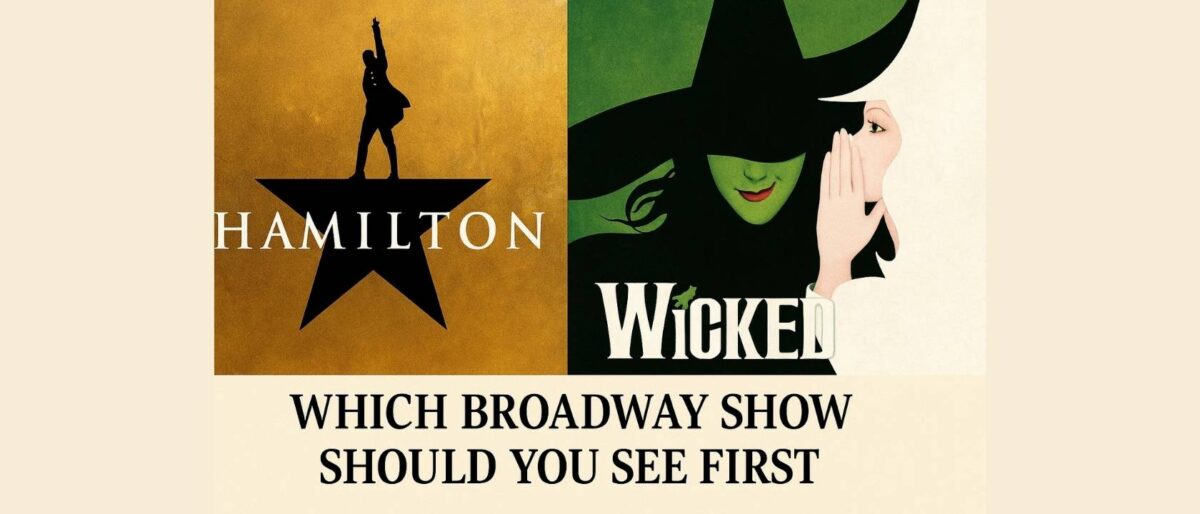
Can’t decide between Hamilton and Wicked? You’re not alone. These Broadway giants offer two wildly different journeys—one a lyrical revolution, the other a spellbinding backstory. But if you’re choosing just one to see first, the decision comes down to style, story, and what kind of magic you’re craving most.
Storyline and Themes
At first glance, Hamilton and Wicked couldn’t be more different—but both deliver deeply human stories wrapped in wildly creative frameworks. Let’s break down what each show is really about beyond the lights and lyrics.
Hamilton follows the rise and fall of founding father Alexander Hamilton. It’s a rapid-fire retelling of American history, filled with revolution, political ambition, personal sacrifice, and legacy. From duels and debates to love letters and betrayal, it paints a vivid picture of a flawed genius fighting to define a new nation—and his own name in it.
Wicked, on the other hand, is a twisty, glittering prequel to The Wizard of Oz. But this time, the story belongs to Elphaba—the “Wicked” Witch of the West—and her unexpected bond with Glinda the Good. At its core, it’s about friendship, identity, societal expectations, and the blurred line between hero and villain. The real question isn’t “who’s good or bad,” but “who gets to tell the story?”
The tonal differences are striking. Hamilton is bold, brainy, and relentlessly kinetic. It’s historical and political, loaded with commentary on power, legacy, and the American experiment. Wicked is whimsical yet weighty, with fantasy, magic, and emotional warmth that tug at the heart even while the broomsticks fly.
And while both deliver emotional punches, they hit differently. Hamilton’s emotional resonance lies in its tragedy and complexity—a brilliant mind undone by pride and circumstance. Wicked leans into redemption and empowerment—how choosing your own path, even when misunderstood, can be the bravest act of all.
So, are you in the mood for a revolution—or a reinvention of a fairy tale? Your answer might guide your ticket choice.
Music and Lyrics
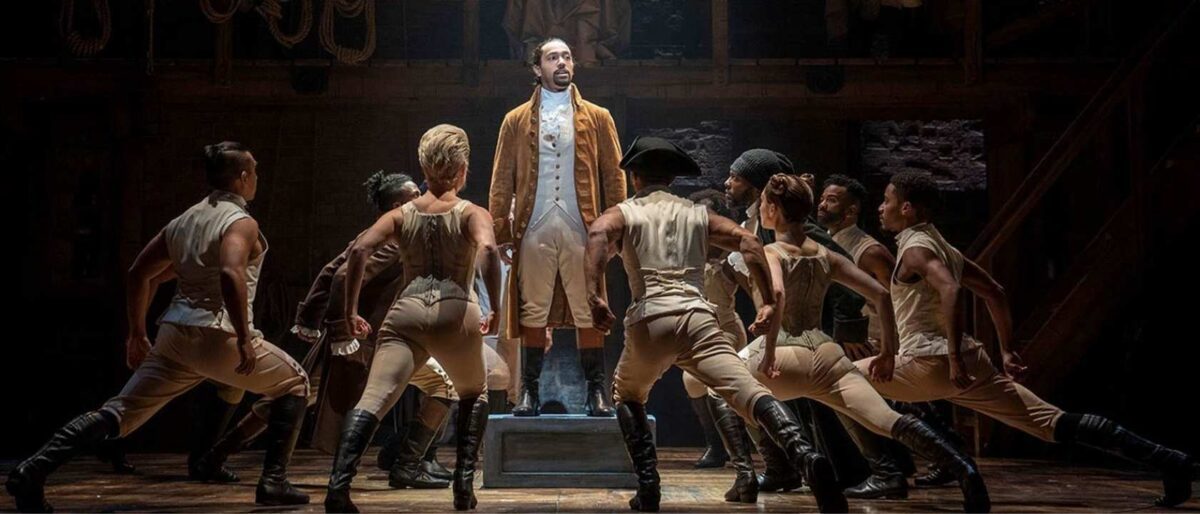
One of the biggest differences between Hamilton and Wicked lies in their soundtracks. These scores don’t just support the stories—they shape them, elevate them, and, in many cases, define why fans fall head over heels.
Hamilton smashes genre walls with a bold blend of hip-hop, R&B, jazz, and Broadway flair. Its lyrics move like a bullet train—fast, dense, and packed with wordplay. Lin-Manuel Miranda’s score modernizes history with a streetwise swagger that feels both revolutionary and refreshingly relevant. Songs like “My Shot” and “The Room Where It Happens” aren’t just catchy—they’re cultural mic drops.
Wicked, in contrast, leans into the lush legacy of classic Broadway. Stephen Schwartz’s score is filled with soaring ballads, sweeping duets, and big emotional crescendos. There’s something timeless in its melodies, from the goosebump-inducing “Defying Gravity” to the tearjerking goodbye of “For Good.” It’s music meant to stir, lift, and linger.
So, what’s your vibe? If you love contemporary rhythms, razor-sharp rhymes, and inventive lyrics, Hamilton might hit harder. If your heart beats for belting vocals, sweeping orchestrations, and classic musical emotion, then Wicked may be your anthem. Either way, your playlist’s about to level up.
Visuals, Set, and Costume Design
The way a show looks can shape the entire experience. In this department, Hamilton and Wicked take dramatically different paths—one embraces restraint, the other runs wild with wonder.
Hamilton keeps things streamlined. The set is a bare-brick backdrop with a rotating turntable stage, used to brilliant, symbolic effect. There’s no giant dragon or flying house—just clever choreography and powerful blocking. The costumes walk the line between 18th-century silhouettes and modern attitude. You’ll see powdered wigs paired with swagger and corsets worn with confidence. It’s subtle. It’s smart. And it lets the words and performances take center stage.
Wicked goes full fantasy. The production design is a visual feast of emerald cities, flying monkeys, and glimmering gearwork. From Glinda’s bubble to Elphaba’s broomlift, the magic is literal—and jaw-dropping. Costumes are as lush as the sets, with dramatic gowns, whimsical makeup, and intricate detailing that echo the show’s fairytale roots. Everything sparkles just a little louder.
So here’s the contrast: Hamilton’s visual world is clever, symbolic, and restrained, while Wicked dazzles with spectacle, fantasy, and theatrical flourish. One invites your imagination to fill in the blanks. The other overwhelms it—in the best way. What kind of stage magic speaks to you?
Cast and Star Power
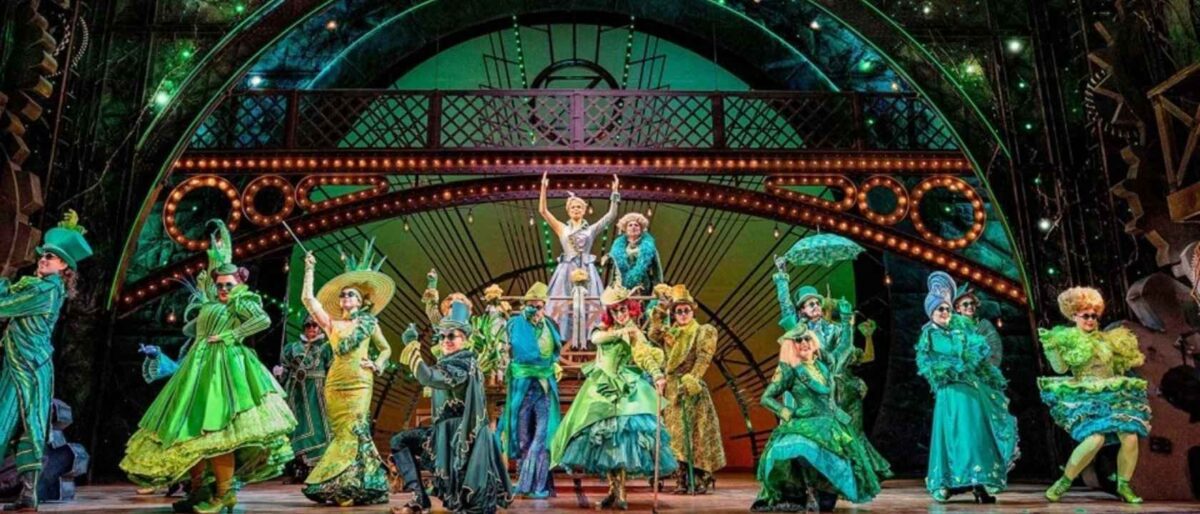
Let’s talk talent—because both Hamilton and Wicked have helped launch careers, attract celebrities, and shape Broadway’s modern era. But their approaches to casting and character power? Very different.
Hamilton burst onto the scene with a cast that would soon become Broadway royalty. Lin-Manuel Miranda, Leslie Odom Jr., Daveed Diggs, and Renée Elise Goldsberry didn’t just perform—they redefined what musical theater could sound and look like. Since then, it’s become known for a strong rotating ensemble, with actors of all backgrounds stepping into those now-legendary roles. It’s a show where the whole cast moves as one, delivering razor-sharp performances with shared rhythm and fire.
Wicked, by contrast, is a playground for vocal divas and character actresses. The role of Elphaba is iconic—Idina MenzelCynthia ErivoAriana Grande (in the film adaptation) have followed suit. Glinda, too, demands perfect comedic timing and vocal sparkle. Wicked leans heavily on its two leading ladies to drive the emotional highs and vocal showstoppers. When they’re firing on all cylinders? Pure Broadway bliss.
In short: Hamilton thrives on ensemble cohesion and chemistry, while Wicked places more weight on magnetic star performances. So the question is—do you crave a cast in perfect sync, or want to witness a lead belting her heart out into the rafters?
Audience and Age Appeal
Not all Broadway audiences are built alike—some shows speak to policy wonks and hip-hop heads, while others charm enchanted kids and teary-eyed parents. Hamilton and Wicked each attract their own kind of crowd, and knowing that can help you pick the perfect first-time Broadway experience.
Hamilton appeals most to older teens, adults, and history buffs who can follow its rapid-fire lyrics and political nuance. The language is sharp, the references fly fast, and the themes—ambition, legacy, revolution—carry emotional weight that lands harder with life experience. Plus, it’s a dream for fans of hip-hop, R&B, and lyrical mastery. That said, younger viewers with strong reading or listening comprehension can still get swept up in the music and drama.
Wicked is pure magic for all ages. It’s family-friendly, visually spectacular, and emotionally accessible, which makes it a top pick for tweens, teens, and mother-daughter duos. The storybook setting softens the deeper messages, while the music and visuals dazzle even first-time theatergoers. It’s a solid bet if you’re introducing someone to Broadway for the first time—especially kids.
So, who’s in your audience? For an adult-first Broadway adventure with brains and beats, choose Hamilton. For a heartwarming, all-ages journey filled with magic and meaning, Wicked wins the night.
Emotional Impact and Depth
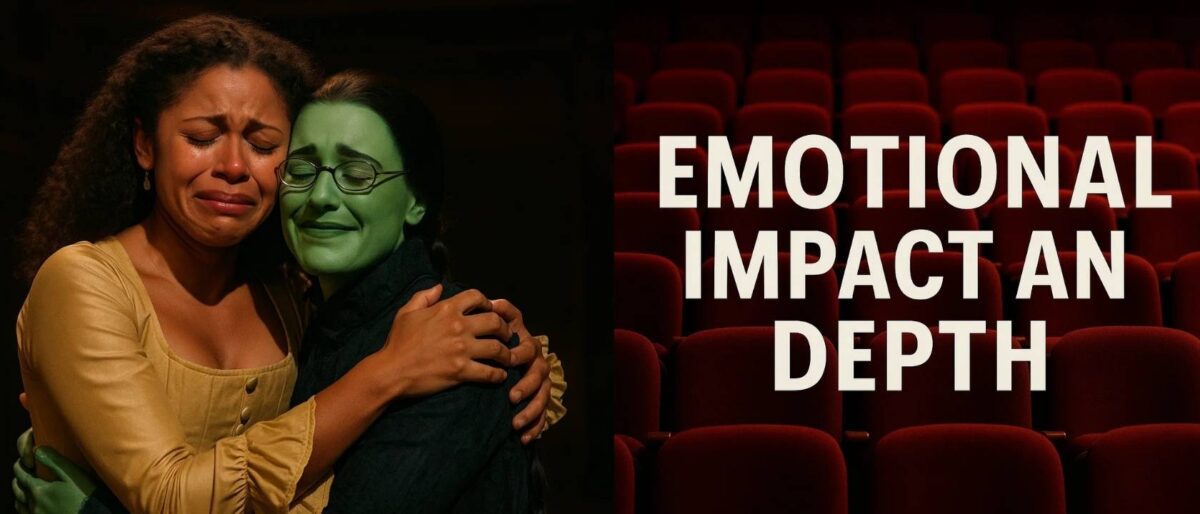
When the curtain falls and the lights come up, what kind of feeling do you want to carry out of the theater? Both Hamilton and Wicked will move you—but they hit you in very different places, and with different intensity.
Hamilton is a gut punch. It’s unapologetically intense, layered with political ambition, moral conflict, and the weight of legacy. You witness love and betrayal, success and downfall, all against the backdrop of a country being born. Its final scenes pack a heartbreaking wallop—death, grief, forgiveness—leaving many audience members quietly stunned. It’s theater that makes you think, ache, and reflect deeply.
Wicked tugs at the heart, but with a more hopeful grip. It focuses on friendship, identity, and what it means to be seen for who you truly are. There’s tension, there’s sadness, but ultimately it leaves you with triumph and redemption. People walk out humming “For Good,” teary-eyed—but also inspired, lighter, uplifted. It’s the kind of show that wraps you in sparkles and strength at the same time.
So, what’s your emotional flavor? Hamilton offers depth, tragedy, and resonance. Wicked gives catharsis, empowerment, and warmth. Either way, you’ll leave changed—but the tears might come for different reasons.
Cultural Impact and Legacy
Some Broadway shows come and go. Others become seismic events—changing the culture, inspiring generations, and redefining what live theater can be. Hamilton and Wicked are both in that rare second category, but they’ve left very different footprints on the Broadway map.
Hamilton didn’t just make waves—it caused a revolution. With its genre-busting mix of hip-hop, history, and diverse casting, it challenged what a musical could sound and look like. It won the Pulitzer Prize, cleaned up at the Tonys, and broke into the mainstream like no Broadway show in decades. Lin-Manuel Miranda became a household name, and Hamilton entered school curriculums, Spotify playlists, and TikTok trends. It reshaped musical theater’s future and widened its audience forever.
Wicked, though, has earned its own powerful legacy. Since debuting in 2003, it’s become a generational rite of passage—especially for millennial and Gen Z audiences. Its songs are karaoke staples, its costumes iconic, and its themes of female friendship, self-acceptance, and rewriting narratives continue to resonate. It may not have rewritten Broadway’s rulebook, but it reaffirmed its magic. It’s the musical that launched a thousand “Defying Gravity” shower solos and school talent show renditions.
Which left a bigger mark? Hamilton shifted the cultural landscape, no doubt. But Wicked has endured, generation after generation. Legacy can be loud—or it can quietly grow roots.
Ticket Availability and Cost
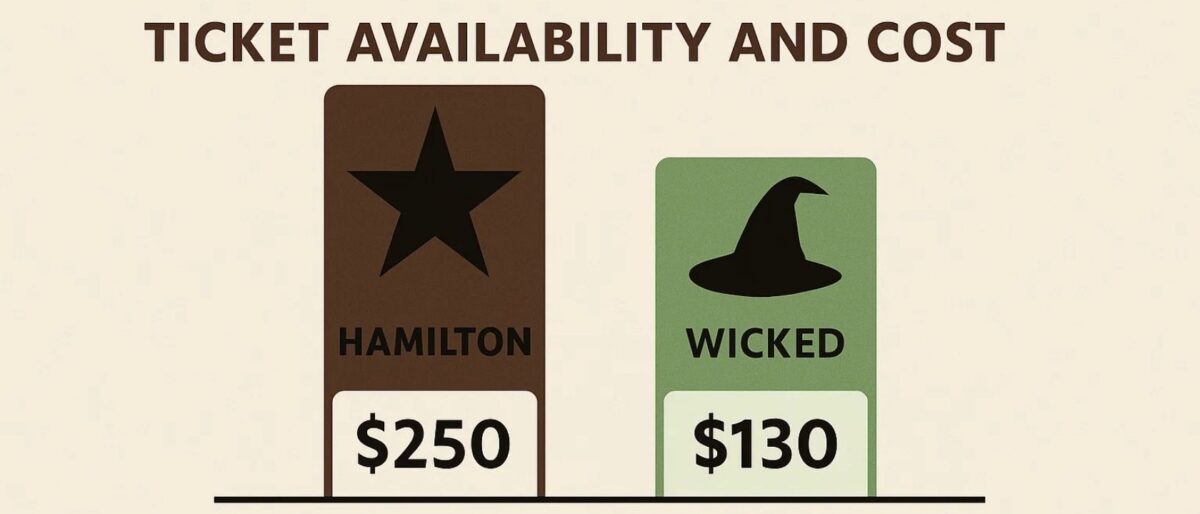
Let’s be honest—Broadway dreams come with a price tag. And if you’re picking between Hamilton and Wicked, the ticket situation might just be the tie-breaker.
Hamilton still commands a crowd. Years after its debut, demand remains sky-high, and ticket prices reflect that. You’ll often see top-tier seats reaching into the hundreds (or more), and even balcony spots don’t come cheap. Scoring a good seat at a reasonable price often means booking months ahead or entering the daily Ham4Ham lottery—if you’re lucky.
Wicked, meanwhile, is much friendlier to the budget-conscious. With its long run and stable popularity, tickets are easier to find, and you’re more likely to score discounts, same-day deals, or lottery wins. Theaters tend to offer a range of seat prices, and even the more affordable ones give you a good experience, thanks to the spectacular staging.
If price, flexibility, or last-minute plans are factors in your decision, Wicked wins on accessibility. But if you’re ready to splurge for a once-in-a-decade phenomenon, Hamilton might still be worth the investment.
Which One Should You See First?
So—Hamilton or Wicked? There’s no wrong answer, but the right one depends on what makes your heart race in the theater.
If you crave rhythm, revolution, and razor-sharp lyrics, then Hamilton should top your list. It’s ideal for history buffs, wordplay lovers, and anyone who thrives on high-energy storytelling. Expect to lean forward in your seat, trying to catch every syllable and soaking up the brilliance of modern theatrical invention.
But if you’re more drawn to magic, melody, and meaningful friendships, then Wicked might be your gateway to Broadway. It’s visually rich, emotionally accessible, and tailor-made for first-time theatergoers, especially families, teens, or anyone who grew up loving The Wizard of Oz. The spectacle alone will leave you wide-eyed.
Wicked feels like a Broadway warm hug—familiar, heart-lifting, and dazzling. Hamilton feels like a jolt of adrenaline—brilliant, bold, and brainy. If you can, see both. But if you’re picking just one to start your journey? Go where your instincts sing loudest.
Conclusion: You Can’t Go Wrong, But Timing Matters
In the grand Broadway battle of Hamilton vs. Wicked, there’s really only one loser—someone who skips them both.
Each show brings something unforgettable to the stage. Whether it’s Hamilton’s lyrical firepower and historic gravitas or Wicked’s heart-tugging tale of friendship and flying, they’ve earned their iconic status for good reason.
Eventually, every theater lover should see both. One delivers a revolution, the other a revelation. But if you’re choosing just one right now, think about your current vibe: craving intensity and intelligence? Hamilton. Want to be dazzled and delighted? Wicked.
Budget and ticket availability may nudge you one way. So can your mood. But whatever you pick, you’re in for something special. Curtain’s up—follow your heart (and maybe your Spotify playlist) to the perfect seat.