Comedy Club Layouts: Best Seating & Exit Strategy Tips for Smooth Nights
September 1, 2025
Best Platforms to Rate & Review Comedy Shows | Top Picks for Fans
September 1, 2025What to Do If Someone Disrupts a Comedy Show | Etiquette & Safety Tips
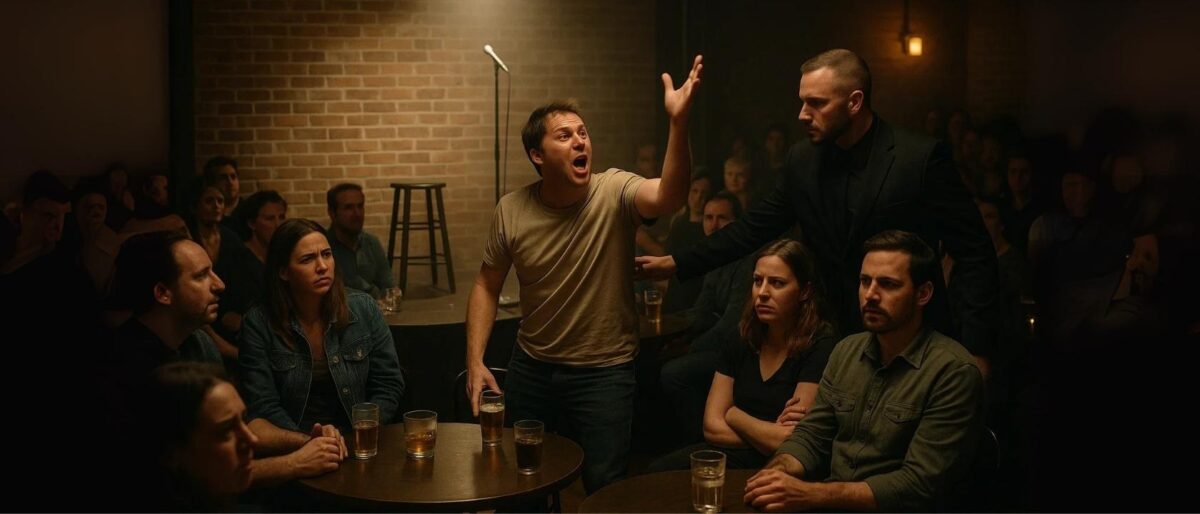
Comedy thrives on timing and trust. In tight rooms, one loud outburst can tank a punchline and rattle the crowd. What should you do if someone derails the show? This quick guide covers polite responses, smart safety steps, and ways to help the comic, calmly, without adding fuel to chaos.
Why Disruptions Matter
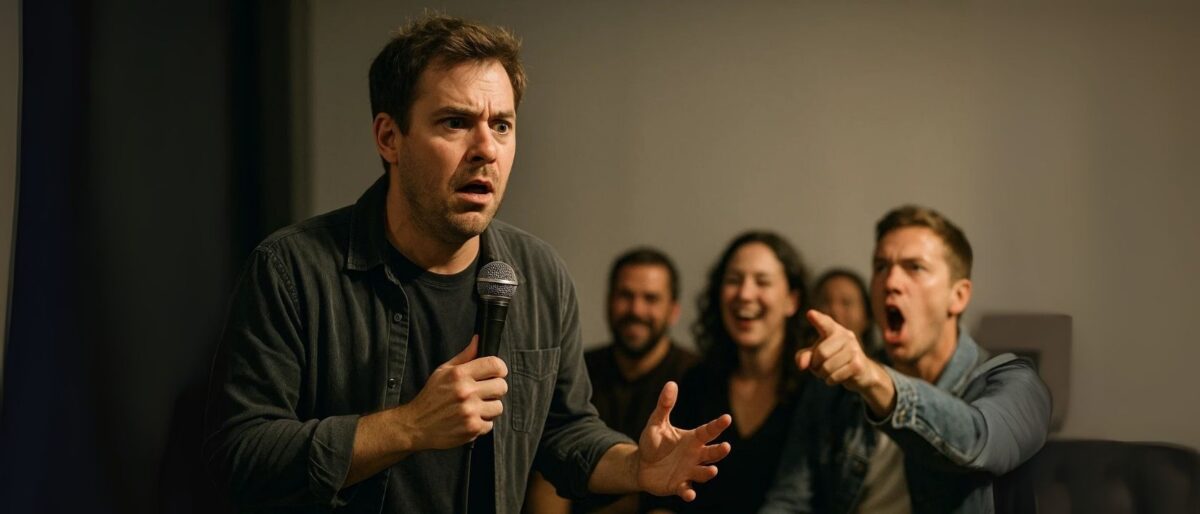
Comedy depends on rhythm. Each joke has a setup, a pause, and a punchline. When someone interrupts that flow, even for a second, the timing collapses. A misplaced shout or sudden outburst can strip the laugh from the room like pulling the needle off a spinning record.
From the audience’s side, the imbalance feels sharp. Two hundred people paid for a night of laughter, yet one noisy heckler hijacks the attention. The collective mood shifts from shared joy to irritation, and the distraction spreads faster than the joke that was about to land.
For comedians, the challenge is twofold. They must protect the crowd’s experience while staying in character and keeping control of the stage. Too harsh, and they risk alienating the room. Too gentle, and the heckler wins the spotlight. Striking that balance requires skill, patience, and quick thinking under pressure.
Common Types of Disruptions
Not every interruption looks the same. Some are annoying, others turn dangerous. Knowing the patterns helps you spot trouble early and react the right way.
Heckling. The most notorious disruption. A guest shouts back, argues with a joke, or tries to “add” to the routine. While some comedians flip it into material, heckling often breaks the flow and drains energy from the crowd.
Drunken behavior. Overindulgence leads to loud, misplaced laughter, drinks spilling across tables, or guests stumbling through aisles. A tipsy guest quickly shifts from amusing to disruptive when the focus moves away from the stage.
Phone use. Texting during the show glows like a beacon in dim light. A ringing call or someone filming without permission pulls eyes away from the comedian, sparking frustration in both audience and performer.
Group chatter. Side conversations might seem harmless, but when they rise above the punchline, they smother the comic’s delivery. Small talk turns into a big distraction when laughter is replaced by whispers and giggles.
Aggressive incidents. The most serious. Threats, fights, or harassing a performer cross the line from distraction to safety risk. At this point, staff and security must step in immediately to restore order.
Audience Etiquette: How to Handle It as a Guest
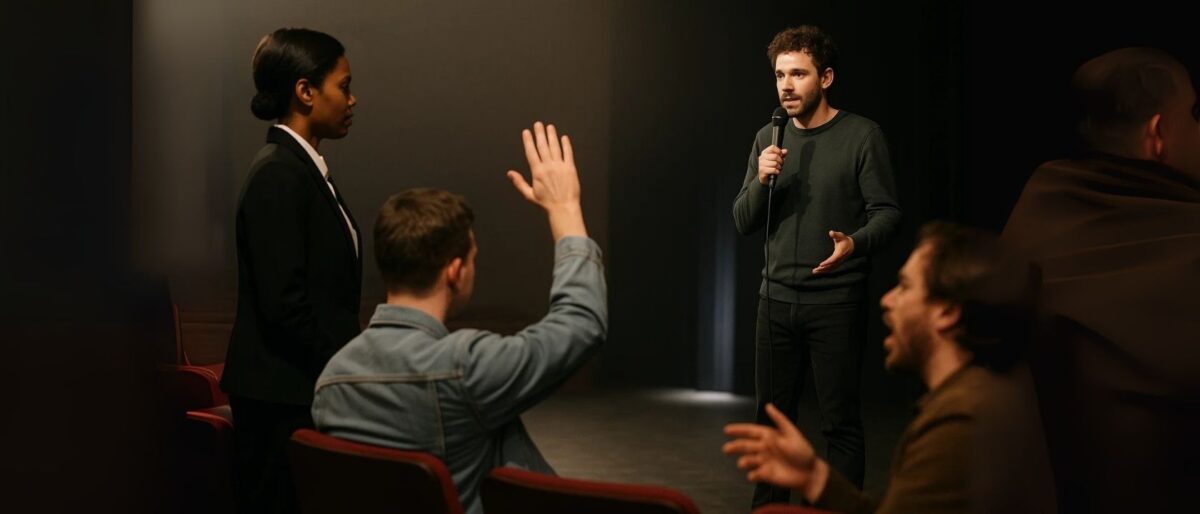
When a comedy show gets interrupted, your first instinct might be to react. Resist it. The best move is to stay calm and avoid engaging directly with the troublemaker. Shouting back only doubles the distraction and makes you part of the problem instead of part of the solution.
Don’t try to out-yell a heckler or confront someone drunk. That rarely ends well. Instead, keep your focus on the performer. If the situation doesn’t settle, signal staff discreetly. A simple raised hand or stepping quietly into the aisle to alert an usher is enough. No need to add drama.
Think about your own experience too. Protect your evening by keeping cool, not by escalating. You’ll enjoy more of the show and help preserve the flow for others. In these tense moments, silence is powerful. Silence shows solidarity with the performer, reminding them the audience is on their side.
Staff Response: Venue Protocols
Behind the scenes, venue staff play a crucial role in keeping comedy shows running smoothly. Ushers and security are often stationed throughout the room, watching for signs of disruption before they escalate. Their presence alone can deter poor behavior and reassure the crowd that order is being maintained.
When issues arise, most clubs use progressive action. First comes a polite warning—sometimes that’s enough to reset behavior. If the guest continues, staff may relocate them to another seat or closer to an exit. When disruptions persist or escalate, removal is the final step, done as quietly and quickly as possible to protect the rest of the audience’s experience.
This balance is tricky. Staff must treat everyone fairly while prioritizing the comfort of hundreds who paid for the show. That’s why keeping aisles and exits clear matters. A swift path allows security to act without adding more chaos, restoring the spotlight where it belongs—on the stage.
The Comedian’s Role on Stage

For comedians, disruptions are part of the job they hope won’t show up. Some choose to acknowledge a heckler with a sharp one-liner, while others ignore the interruption completely. Both tactics work, depending on the mood of the room and the severity of the distraction.
Humor often becomes the best defense. A clever response can defuse tension, win over the audience, and remind the disruptor they’re not the star of the show. But humor has limits. When behavior crosses into aggression, the safest choice is to pause and call for security. The performer’s role isn’t to fight or control the crowd physically, but to protect the flow of the show.
Most importantly, comedians must maintain authority without turning the moment into open conflict. Too much hostility risks losing the audience’s trust. Too much patience risks letting the disruption spiral. Striking that balance keeps the audience engaged, the atmosphere light, and the performance moving forward.
Safety First: When Things Escalate
Most comedy show disruptions stop at words, but sometimes they cross into danger. Warning signs include shouting that turns aggressive, objects thrown toward the stage, or someone rushing the performer. These moments shift from distraction to safety threat, and that changes how everyone should respond.
For the audience, the golden rule is simple: remain seated and don’t intervene physically. Jumping in might feel heroic, but it creates confusion and risks more harm. Your role is to stay calm and let professionals do their work. Applause or supportive silence sends the message you’re on the comedian’s side.
The venue bears the real responsibility. Trained staff or security must step in quickly to remove the threat, keeping both the performer and crowd safe. This is why knowing where emergency exits are before the show starts is smart. If the worst happens, you’ll move with confidence instead of panic.
Preventing Disruptions Before They Happen
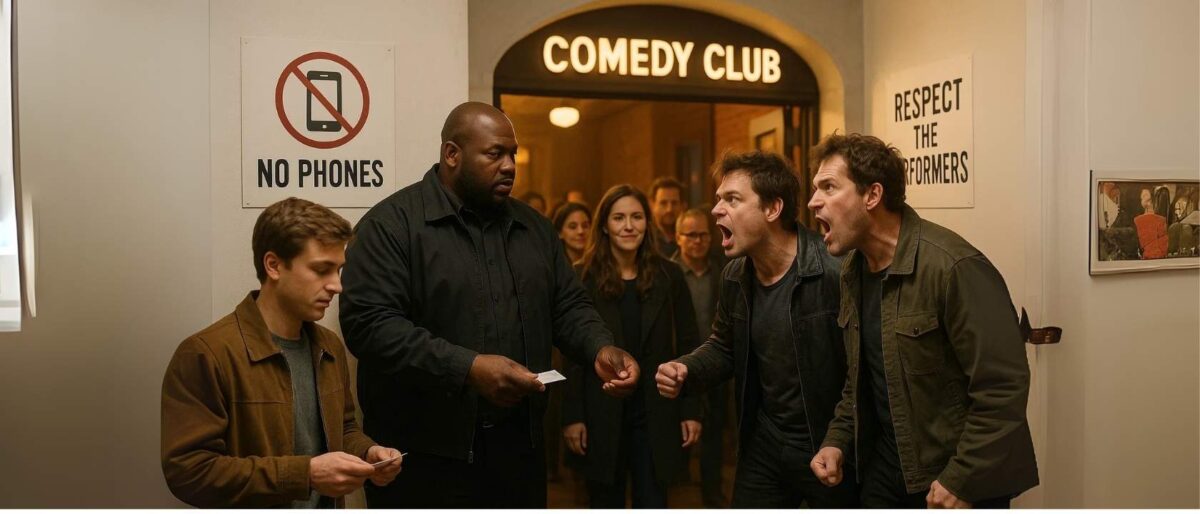
The easiest disruption to handle is the one that never occurs. Many venues now set the tone before the show even begins. Clear announcements remind guests to silence phones, keep conversations low, and show respect to the performers on stage. This proactive step frames expectations for the entire night.
Alcohol often fuels unruly behavior, which is why drink limits matter. Responsible serving policies help manage intoxication before it turns into a scene. A tipsy laugh is one thing, but a table of drunk guests can derail the night for everyone around them.
At the door, trained staff watch for early warning signs—overly loud groups, obvious intoxication, or guests already causing disturbances. Stopping issues at entry reduces the risk of problems later. For the audience, awareness is equally important. Respect for the performer and fellow guests means enjoying the show without stealing attention. That mutual consideration keeps the spotlight exactly where it belongs.
What To Do After a Disruption
Once a disruption is resolved, the room needs to recover its rhythm. The quickest way is through applause. A strong round of clapping not only supports the performer but also resets the energy in the crowd, shifting attention back to the stage where it belongs.
As an audience member, your role is to refocus. Let the distraction fade by giving the performer your full attention again. This collective redirection helps the show regain momentum and restores the atmosphere of shared laughter.
Venues sometimes follow up if the incident was severe. That may mean an apology to the crowd, a round of free drinks, or compensation in rare cases. These gestures signal respect for the audience’s experience and rebuild trust.
For comedians, resilience is key. Some turn the disruption into fresh material, squeezing a laugh from the chaos. Others brush it off and move on. Either way, their ability to recover guides the audience back into the flow of the show, proving the night isn’t defined by one bad moment.
Tips for Comedy Show Attendees

A smooth comedy night often depends on a little preparation. Arrive early, settle in, and take note of where staff or security are located. Knowing who to flag if trouble brews saves time and stress. You’ll feel more at ease when you can spot help quickly.
Follow the house rules. Silence your phone, keep chatter to a whisper before the show starts, and handle drinks responsibly. These small habits create an atmosphere where everyone enjoys the performance without distractions.
If you find yourself seated near a disruptive guest, don’t wait until things get worse. Quietly ask staff to help you move seats early. This small shift can protect your evening and keep tension away from your table.
Finally, keep your reactions supportive but not distracting. Laughter, applause, and attentive listening encourage the performer. Shouting, clapping too long, or trying to “add” to jokes does the opposite. Being a good guest means helping the comedian shine while you enjoy the ride.
Conclusion
Disruptions will happen from time to time, but they don’t have to ruin the night. How audiences, staff, and comedians respond makes all the difference. Respect, patience, and cooperation keep comedy clubs safe and enjoyable for everyone in the room.
The best audience members aren’t the loudest or the cleverest—they’re the ones who laugh freely, listen closely, and let the comedian shine. By staying mindful of etiquette and supporting both performers and fellow guests, you help protect the magic of live comedy. After all, the spotlight belongs on the stage, not in the seats.