From Stand-Up to Broadway: Comedians Who Made the Jump
May 26, 2025
What Is a Jukebox Musical? (Examples from Broadway and Beyond)
May 27, 2025Why Hasan Minhaj Is the King of Political Comedy
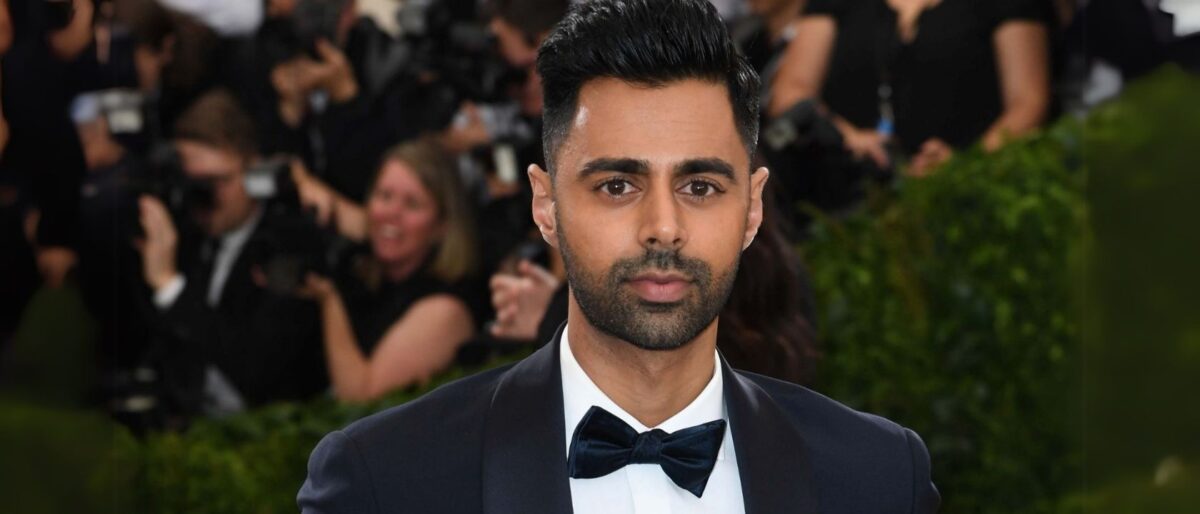
In a comedy world saturated with takes and tweets, Hasan Minhaj cuts through the noise with brainy fire and emotional punch. From personal truths to political jabs, he doesn’t just joke—he dissects, questions, and connects. This is why Minhaj isn’t just funny—he’s the crown prince of political comedy.
1. Breaking Through: From The Daily Show to Headliner
Hasan Minhaj’s rise wasn’t instant—it was intentional. Before taking on Netflix or roasting presidents, he was building his voice in comedy clubs, navigating what it meant to be Indian-American, Muslim, and first-generation in a country that didn’t always understand him. His early stand-up leaned into cultural identity, racism, and generational clashes—with a razor-sharp blend of sincerity and satire.
The turning point? Joining The Daily Show in 2014. Minhaj was handpicked by Jon Stewart and continued under Trevor Noah, bringing a fresh, fearless voice to the show’s long-standing tradition of political commentary. As a senior correspondent, he brought something new: comedy informed by lived experience, particularly in segments that tackled Islamophobia, immigration, and the absurdities of American politics.
Standout moments included “Radical Islam” (a biting takedown of fear-mongering), and “Hasan the Record” (where he explained complex political issues with charisma and clarity). His segments weren’t just funny—they educated and challenged viewers, all while keeping the punchlines sharp.
This chapter was more than a breakout role—it was Minhaj proving he could hold his own in the political comedy arena. And from there, his mic only got louder.
2. The White House Correspondents’ Dinner (2017)
In 2017, Hasan Minhaj stepped onto one of comedy’s most pressure-packed stages: the White House Correspondents’ Dinner. With then-President Trump notably absent (the first no-show in decades), Minhaj faced a cold room of media elites, politicians, and camera crews—and absolutely delivered.
His performance was a scathing, intelligent roast that spared no one. He tore into the president, who’d spent months attacking journalists, while also calling out the press itself for its complicity, clickbait, and hypocrisy. He even acknowledged the elephant in the ballroom: “Only in America can a first-generation Indian-American Muslim kid get on this stage and make fun of the president.”
But what made the set so potent was Minhaj’s tone. He wasn’t just cynical—he was earnest and incisive. He balanced humor with gravitas, tackling topics like racism, media responsibility, and truth itself. At a time when comedy felt like the last line of defense against disinformation, Minhaj showed he could bring the fire without burning bridges.
That night, he proved he wasn’t just another comic with political punchlines. He was a voice of conscience with a spotlight—and a point of view sharp enough to leave a mark in D.C. and beyond.
3. Homecoming King – Personal Is Political
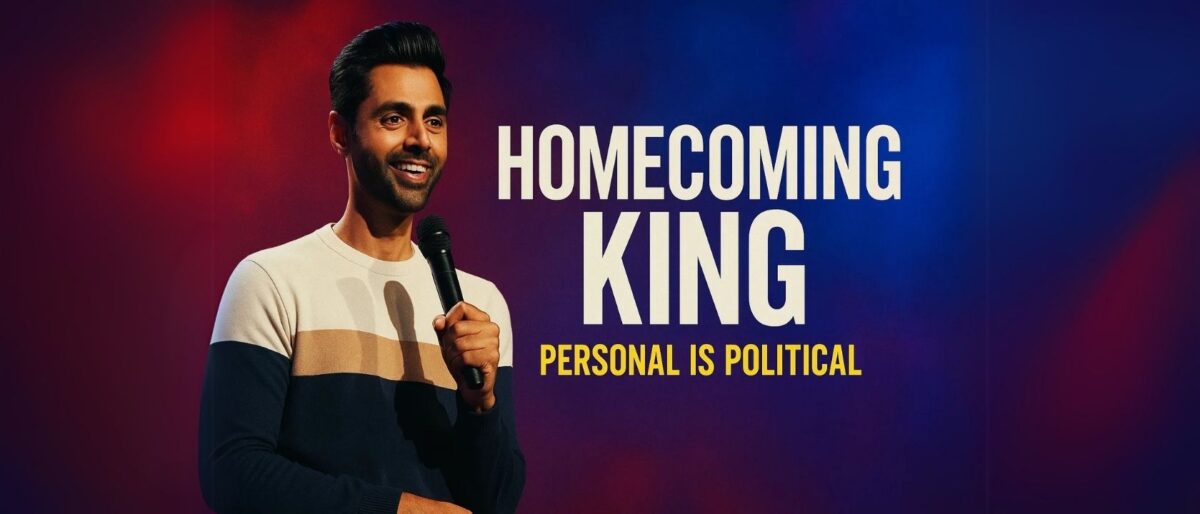
With Homecoming King, Hasan Minhaj turned a stand-up special into something far more layered—a theatrical memoir that blurred the line between comedy and confessional. Premiering on Netflix in 2017, the show was his first solo special, but it played like a full-blown stage production, complete with multimedia visuals, narrative arcs, and emotional twists.
At the heart of it was Minhaj’s personal journey as the son of Indian Muslim immigrants growing up in post-9/11 America. He shared stories of racism, heartbreak, school dances, cultural clashes, and father-son tension—all delivered with the rhythm of a comic and the soul of a playwright. Whether he was recalling being rejected for prom because of his race or navigating dual expectations from two very different worlds, his vulnerability became his sharpest weapon.
What set Homecoming King apart wasn’t just the content—it was the stagecraft. Minhaj stood in front of a dynamic screen that changed with each story: childhood photos, animated texts, news clips, punchy headlines. The visuals weren’t just background—they were storytelling tools, enhancing jokes and deepening emotional beats.
The result? A deeply funny, sometimes gut-punching, and always compelling hour that redefined what a comedy special could be. Minhaj didn’t just entertain—he made audiences feel, reflect, and question. That’s political comedy at its most powerful.
4. Patriot Act – A Masterclass in Modern Satire
When Patriot Act with Hasan Minhaj hit Netflix in 2018, it didn’t look—or sound—like anything else in the political comedy space. No desk. No suit. No slow build to a punchline. Instead, Minhaj stood center stage, surrounded by a massive digital wall, delivering blistering commentary with the speed of a stand-up and the precision of a policy analyst.
Each weekly episode tackled a major issue—from student debt, Amazon’s monopolies, and the opioid crisis to Indian elections, Saudi Arabia, and free speech crackdowns. Minhaj didn’t play it safe. He went after powerful institutions, governments, and even his own cultural communities with the same level of rigor. The show was deeply researched, fearlessly written, and unflinchingly global.
Visuals became a language of their own on Patriot Act. Graphs danced, memes exploded, news clips collided—all in sync with Minhaj’s movements and rhythm. His delivery was fast, funny, and charged with urgency, like a TED Talk on Red Bull with punchlines that landed like truth bombs.
The show didn’t just entertain—it informed. It made you laugh, learn, and flinch, often all at once. And in doing so, it elevated political satire into a multimedia, global conversation.
Patriot Act proved what many already suspected: Hasan Minhaj wasn’t following in anyone’s footsteps—he was building a brand-new path.
5. Stagecraft and Style: A One-Man Revolution
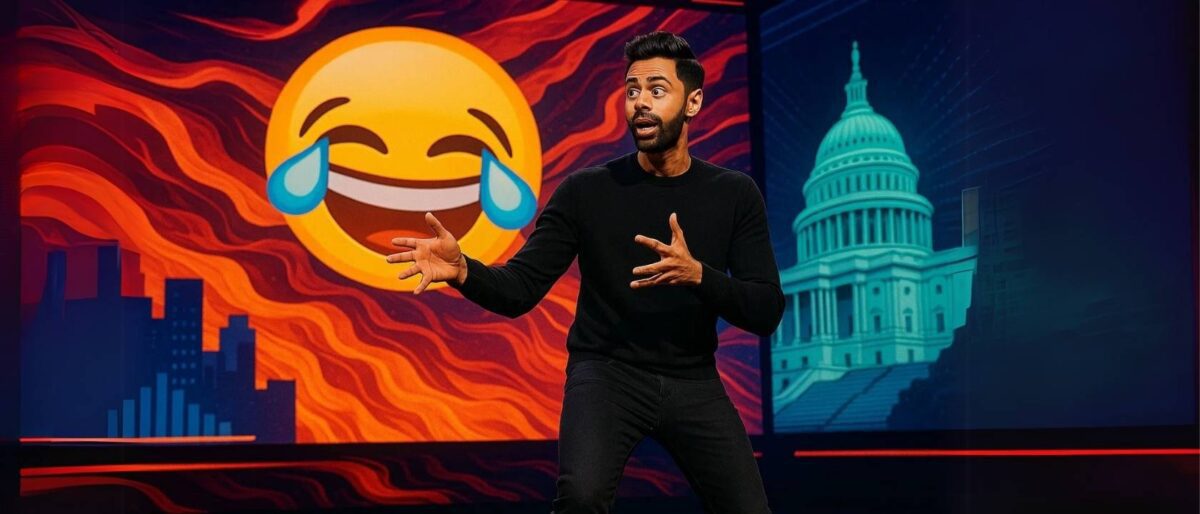
Hasan Minhaj doesn’t just stand on a stage—he transforms it. His use of screens, animation, and immersive visuals has made him one of the most innovative performers in political comedy today. Whether on Patriot Act, Homecoming King, or his live specials, Minhaj treats the stage like a canvas—and he paints in motion, memes, and metaphors.
Think TED Talk energy, stand-up charisma, and newsroom clarity, all wrapped into one. His setup is sleek and minimal, but the screens behind him are alive: charts, headlines, family photos, Google searches, animated maps. It’s storytelling that’s visually kinetic and emotionally grounded. The graphics don’t distract—they amplify. They hit like visual punchlines, reinforcing his words while keeping the audience locked in.
And Minhaj himself? Casual in sneakers and a bomber jacket, but commanding in delivery. He paces the stage like he owns it, jumping between sharp sarcasm and heartfelt moments without losing a beat. He speaks with urgency, but never desperation—like he knows he’s funny, but he also knows what he’s saying matters.
His stagecraft isn’t about gimmicks—it’s about connection. Minhaj invites the audience to laugh, yes, but also to reflect, squirm, question, and learn. It’s not just a one-man show—it’s a one-man revolution in how political comedy is written, performed, and received.
6. Cultural Duality: Speaking From Two Worlds
Hasan Minhaj doesn’t just joke about politics—he lives in the space where cultures collide, and he turns that tension into truth. As an Indian-American and a practicing Muslim raised in a post-9/11 United States, Minhaj’s comedy constantly straddles dual identities. He’s fluent in both worlds, and he mines that space for nuance, absurdity, and hard-earned insight.
Whether he’s talking about growing up in a conservative immigrant household or facing racial profiling at airports, Minhaj uses comedy to dig into the messiness of assimilation, generational gaps, and cultural expectations. But he never plays it just for laughs—he honors both sides. His immigrant parents are never caricatures; they’re complicated, real, and often hilarious in their own way.
What makes Minhaj exceptional is that he connects deeply with immigrant audiences—those who see their own families, frustrations, and fears reflected in his stories—without alienating anyone else. His comedy is specific enough to feel intimate, yet universal enough to resonate with anyone who’s ever felt like an outsider.
Through his lens, cultural duality becomes a superpower. Minhaj isn’t caught between two worlds—he builds a bridge between them. And standing on that bridge, mic in hand, he invites everyone to laugh, listen, and maybe learn something about where they really belong.
7. Fearlessness in Content
In an era where many comedians choose their battles carefully, Hasan Minhaj charges straight into the fire. His comedy isn’t just bold—it’s fearless. Minhaj has used his platform to confront authoritarian regimes, powerful corporations, and cultural taboos—and he hasn’t blinked, even when it cost him.
On Patriot Act, he criticized Saudi Arabia’s human rights abuses in the aftermath of journalist Jamal Khashoggi’s murder. The episode was pulled by Netflix in Saudi Arabia after pressure from the government. Minhaj’s response? “Clearly, the best way to stop people from watching something is to ban it, make it trend online, and then leave it up on YouTube.” He didn’t back down—he doubled down with humor and defiance.
He also tackled Indian politics and Prime Minister Narendra Modi’s nationalist agenda, drawing backlash from within his own cultural community. But Minhaj refused to censor himself, showing that loyalty to the truth outweighs loyalty to comfort.
Whether he’s confronting Silicon Valley giants or foreign governments, Minhaj’s brand of political comedy isn’t watered down or “safe”. It’s precise, researched, and daring. He pushes boundaries not for shock, but for substance—using humor as both shield and sword.
In a landscape full of noise, Minhaj’s voice rings out as one that doesn’t flinch. That’s not just bravery. That’s leadership through laughter.
8. Legacy in the Making
Hasan Minhaj isn’t just part of the conversation—he’s shaping it. With every special, every monologue, every bold choice, he’s elevating political comedy for a generation raised on algorithms and activism. He speaks fluent meme and policy. He blends sharp critique with deep empathy. And he’s doing it on his own terms.
Minhaj has often been compared to Jon Stewart, John Oliver, even George Carlin—comedians who turned truth into performance and built movements with their words. But what sets Minhaj apart is his ability to merge vulnerability, intellect, and cultural identity into something entirely new. He’s not just informing or entertaining—he’s inviting audiences into his life, and in doing so, giving them permission to examine their own.
His influence stretches beyond laughs. He’s redefined what a political comic looks like. He’s shown that nuance can live alongside humor, and that the best comedy doesn’t avoid complexity—it embraces it.
And while his legacy is still being written, one thing’s clear: Minhaj isn’t following in footsteps—he’s carving new ground. For comedians, for children of immigrants, for anyone who’s ever felt caught between systems and silenced by expectations—he’s proof that you can speak up, speak out, and still bring the house down.
Conclusion
Hasan Minhaj is the rare comic who can make you laugh, cry, and question everything—sometimes in the same breath. His ability to fuse personal vulnerability with global awareness, and package it in sharp, high-energy delivery, puts him in a league of his own. He’s not just riffing on politics—he’s rewriting the rules of engagement.
In a time when political comedy often feels like recycled punchlines or partisan preaching, Minhaj’s work stands out as dynamic, fearless, and emotionally honest. He doesn’t just survive in the genre—he’s evolving it. With visuals that dazzle, stories that disarm, and truths that sting, his voice is changing how audiences process power, identity, and justice.
And perhaps most importantly, he’s not just reporting on the world—he’s reshaping how we talk about it. Minhaj turns comedy into commentary, and commentary into conversation. That’s not just talent. That’s legacy in motion.