Best Comedy Shows for a Date Night in 2026
May 30, 2025
How to Book a Broadway Travel Package | 2026 Edition
June 2, 2025Is Political Comedy Still Funny in 2026?

In a world drowning in headlines, is political comedy still funny—or has it become just another echo chamber? Once a rebellious way to skewer power and spark thought, it now walks a tighter, tenser line. Let’s unpack whether satire still delivers laughs—or just tired nods and Twitter threads.
A Brief History of Political Comedy
Long before comedians took the stage with punchlines about presidents, power was parodied in royal courts. Court jesters weren’t just clowns—they were clever commentators wrapped in motley, mocking monarchs with immunity others could only dream of. That blend of humor and hubris? It never went out of style.
Fast forward to the 20th century, and political comedy grew teeth. Lenny Bruce pushed limits, using profanity and provocation to strip hypocrisy bare. George Carlin turned seven dirty words into a free speech flashpoint. Richard Pryor brought fire and vulnerability, calling out race and politics with blistering honesty. Each one cracked open new space for comedians to speak truth to power.
Then came Saturday Night Live, turning cold opens into cultural critiques, and The Daily Show, which Jon Stewart transformed into a trusted (and hilarious) news source for an entire generation. Suddenly, jokes weren’t just about laughs—they were guiding how people understood wars, elections, and scandals.
Political comedy has always ridden the edge—between joke and jab, entertainment and enlightenment. From jesters to Jon Stewart, it’s shaped conversations, shifted opinions, and proved that sometimes, laughter really is the loudest protest.
Why Political Comedy Worked Then
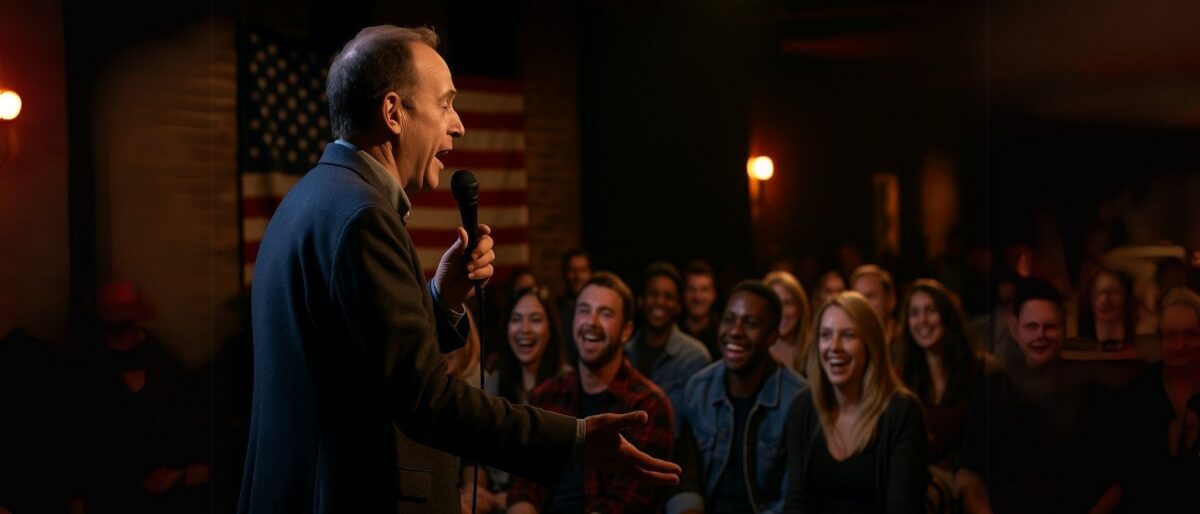
Back in the day, when everyone tuned in to the same late-night shows and read from the same handful of newspapers, political comedy hit harder—and wider. There was a shared stage, a common script. When a comedian roasted a politician, chances were the whole country got the joke.
In that landscape, comics weren’t just funny—they were fearless. Lenny Bruce and George Carlin didn’t just get laughs; they got arrested. Punchlines packed protest. Jokes peeled away the polite lies of politics and exposed the raw, often ridiculous truth. They dared to say what others whispered—turning taboo into spotlight and sparking conversations mainstream media avoided.
Laughter wasn’t just entertainment. It was resistance. It was rebellion. It was relief. In a world wound tight with Cold War paranoia, civil unrest, and scandal-soaked presidencies, humor gave people an emotional pressure valve. When comics said, “Look how absurd this is,” they weren’t just mocking—they were uniting the audience in shared disbelief and defiance.
“Speaking truth to power” felt revolutionary because it was. Comedy held a mirror to authority—and let the people smirk, snort, or shout in recognition. And that communal reaction? It echoed long after the joke faded.
The Climate Shift — What’s Changed?
Let’s be real—the game has changed. What once felt like sharp satire now risks being swallowed by the noise of a 24/7 news cycle that never sleeps (or shuts up). Political fatigue is real. When every headline screams “crisis,” even the best jokes can feel like tired echoes in a crowded room.
Polarization doesn’t help either. Audiences are fractured, not just by beliefs but by entire realities. One person’s punchline is another’s personal attack. With people retreating into ideological echo chambers, comics face a minefield: how do you make both sides laugh when they can’t even agree on the facts?
Then there’s the social media factor—outrage has never been faster or more furious. A single clip out of context can spark a digital wildfire. Audiences don’t just consume jokes—they dissect, debate, and sometimes destroy careers in the comments section. Every performance is a potential controversy, every bit a balancing act.
As a result, some comics pull punches, while others double down. The pressure to entertain without offending, to be bold but brand-safe, is relentless. Political comedy didn’t get less clever—it got caught in the crossfire between provocation and palatability.
Still Funny or Just Preaching?
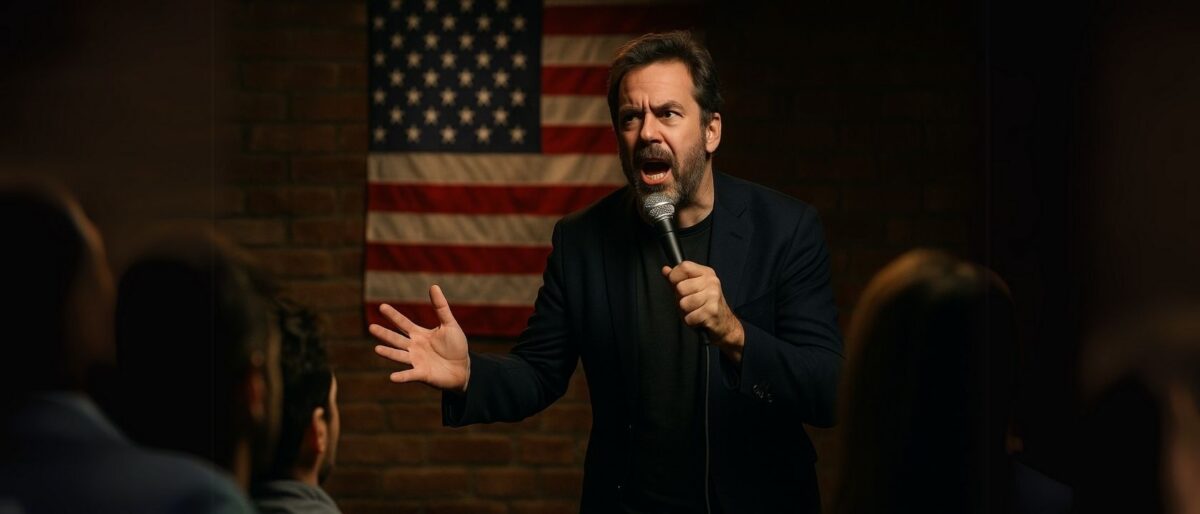
Here’s the rub—political comedy used to feel like a mirror. Now, it sometimes sounds more like a monologue. The audience laughs, sure, but it’s not always because it’s funny—it’s because it flatters what they already believe. Satire, when done right, slices through BS and leaves everyone squirming. But when it turns into scolding, people tune out.
The shift is subtle but telling. Some recent specials have felt less like comedy shows and more like TED Talks with punchlines. The rhythm’s off, the setup’s heavy, and instead of building to a joke, the performer delivers a thesis. Think of those moments when a comic rants about climate change or the Supreme Court, and the audience responds with claps, not cackles. That’s applause for agreement—not laughter for surprise.
It’s not that comics can’t be passionate or political—plenty still nail it. But when the line between satire and sermon gets blurry, the result can feel more smug than sharp. Comedians like George Carlin jabbed at hypocrisy without holding your hand. Today, some acts seem to confirm the audience’s worldview rather than challenge it, swapping truth bombs for confirmation bias with a wink.
The danger? Comedy loses its teeth—and its tension. Without surprise, there’s no spark. And when everyone’s in on the same side of the joke, who’s really the target?
Who’s Still Nailing It?
Even in this tricky terrain, some comics are dancing across the tightrope like it’s a trampoline. They’re edgy, aware, and—most importantly—still hilarious. What sets them apart? It’s not just guts—it’s grace. They bring tone, timing, nuance, and self-awareness to the stage like a finely tuned jazz quartet, riffing with purpose.
John Oliver may look like a professorial owl, but don’t let the glasses fool you—his HBO show packs more punches than a late-night brawl. His humor is research-driven, balancing deep dives with sharp jabs, turning dense policy into digestible satire without dumbing it down.
Hasan Minhaj brings a storyteller’s soul and a designer’s flair. His visual comedy—half stand-up, half TED Talk—hits hard because it’s rooted in experience. He dissects big issues with personal anecdotes and high-octane charisma, guiding you through the absurdity with a knowing grin.
Sarah Silverman threads a needle few dare to touch: compassionate irreverence. She pokes fun at heavy topics but does it with empathy and intention, reminding us that comedy can question without cruelty.
And then there are the fire-starters—Shane Gillis, Bill Burr, Ricky Gervais. Love ’em or loathe ’em, they push buttons and boundaries, daring the audience to flinch. What keeps them relevant? They punch in all directions—up, down, sideways—with enough self-deprecation to dull the blade. They’re controversial, sure. But they’ve mastered the rhythm of tension and release, where every gasp sets up the next laugh.
These comics prove it’s not about being safe—it’s about being skillful. And in an age of outrage, skill is everything.
Audience Sensitivity and “Cancel Culture”
Comedy’s always flirted with the edge—but these days, the edge bites back. Audiences aren’t just laughing anymore; they’re listening harder, fact-checking punchlines, and pulling receipts. One misstep? That viral clip might go nuclear before your second set even starts. For some comics, that’s a chilling thought. For others, it’s just a lazy excuse.
Let’s break it down: free speech doesn’t mean freedom from consequences. Comedians can say almost anything—but they’re not entitled to applause, bookings, or immunity. That’s not censorship; that’s response. If the crowd groans or walks out, it’s feedback. And let’s be honest—plenty of so-called “canceled” comics are still selling out shows. Turns out, outrage isn’t always a career ender.
The real conversation is about responsibility. Comedy that mocks the powerless while sparing the powerful? That’s punching down, not punching up. It’s the difference between daring and damaging. Jokes built on stereotypes or trauma may land with some, but they often crash with others—and not because the audience is “too sensitive.” Sometimes, it’s just bad writing masked as edginess.
But this hypersensitivity also comes with its own risk: comics self-censoring into blandness. If fear replaces boldness, we lose the comedy that challenges, questions, and stings in all the right ways. The key? Intent and craft. A sharp joke with a purpose hits differently than a shock-joke lobbed like a grenade. It’s not about avoiding offense—it’s about earning the laugh.
So, is cancel culture killing comedy? Only the weak stuff. The rest? It’s evolving, sharpening its teeth, and learning to roar smarter, not just louder.
Is Satire Still a Weapon or Just Noise?
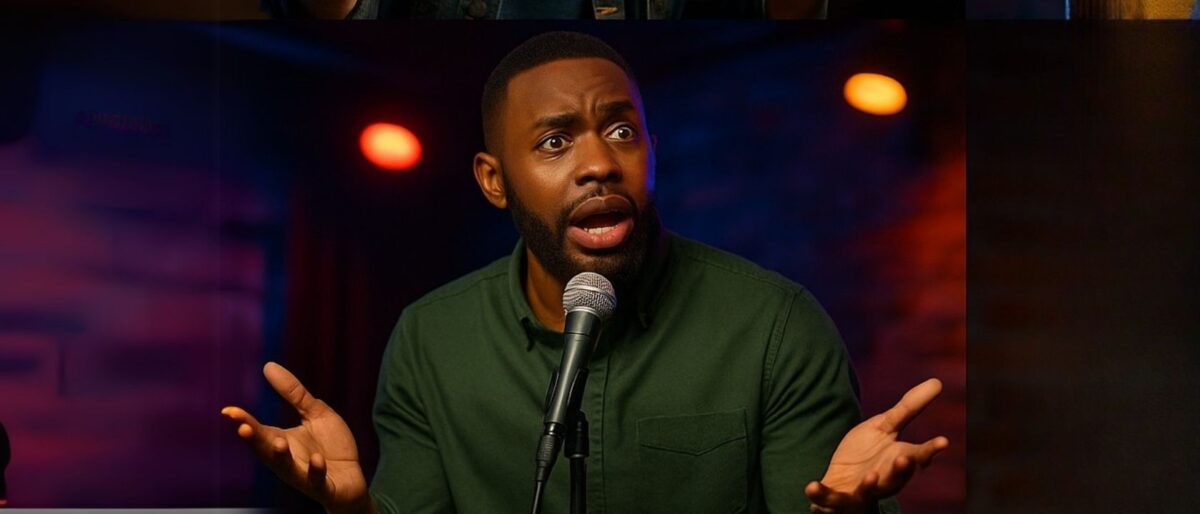
Once upon a time, satire was a sword. It carved through hypocrisy, jabbed at injustice, and rattled the cages of the powerful. But now? It’s everywhere—and maybe nowhere. Between a flood of memes, TikToks stitched with punchlines, and late-night monologues recycled into YouTube clips before dawn, satire’s sharp edge is starting to feel… dull from overuse.
That overload creates a strange paradox: in trying to say everything, satire risks saying nothing. When every take is a joke, and every headline has a parody version before the facts are confirmed, it’s hard to know what’s actually subversive and what’s just scrolling filler. The line between satirist and content creator has blurred—and not always in favor of the former.
Another twist? People don’t laugh as much—they nod. “So true,” they comment. “Facts.” Satire once made you uncomfortable in your laughter. It unsettled as much as it amused. Now it often functions like an inside joke in a group chat—confirmation bias with punchlines. If everyone agrees, is it still satire—or just an echo?
Even more confounding is that real life often outpaces the absurdity. When politicians tweet like parody accounts, and conspiracy theories trend next to cat videos, it becomes hard for satire to out-weird the world. The challenge for modern satirists isn’t finding material—it’s rising above the noise with intent, insight, and yes, still a sharp sting.
Satire’s not dead, but it’s definitely in a complicated relationship—with its audience, with its purpose, and with a reality that often feels like a bad sketch show gone rogue. To stay relevant, it has to do more than mock. It has to matter.
The Role of the Comedian in Today’s World
In an age of constant crises, where every scroll feels like an existential spiral, the comedian stands at a crossroads. Are they meant to poke fun from the sidelines like court jesters? Or should they step in as cultural first responders—activists in hoodies, armed with a mic instead of a megaphone?
Truth is, many comics today are walking that tightrope. Some lean into advocacy, wielding humor to dissect injustice and galvanize awareness—think Hasan Minhaj breaking down immigration policy, or Hannah Gadsby reframing trauma with deadpan grace. Others cling to absurdity, arguing that their job isn’t to fix the world, but to offer a break from it. And maybe there’s room for both.
But here’s the kicker—being “on” politically all the time comes at a cost. For audiences, it can feel like a comedy show with homework: nodding through punchlines laced with pain, never quite sure when to laugh. For comedians, the weight of expectation—to educate, entertain, and somehow not offend anyone—can be crushing. It’s a lot to ask of someone just trying to make people giggle.
Still, laughter remains a potent force. Sometimes it’s a shield. Sometimes it’s a mirror. And sometimes it’s a torch. A great joke can bring relief, spark dialogue, or cut through chaos like a hot knife through disinformation. The challenge—and opportunity—is for comedians to choose their tools wisely. Because in a world that feels like it’s on fire, even a laugh can light the way.
Conclusion: Still Funny, But Harder Work
Political comedy hasn’t lost its punch—it’s just dodging more jabs. It’s alive, kicking, and still capable of cracking up a room or cracking open a conversation. But let’s not kid ourselves: the job’s gotten tougher. Audiences are more fragmented, expectations are sky-high, and the margin for error is razor-thin.
That said, the best political comedians are still out there, threading needles and landing gut-punch punchlines. They’re the ones who can serve satire with soul, call out hypocrisy without losing their humanity, and make us laugh through clenched teeth. It’s not easy. It’s not always safe. But when it works? Oh, it works.
Because in a world of constant shouting, knee-jerk reactions, and infinite scrolls of outrage, a sharp political joke feels like a cool breeze. It disarms. It delights. It dares to speak truth with a smirk. And if it makes us think while we laugh—well, that’s still comedy doing its best work.