
What to Do If Someone Disrupts a Comedy Show | Etiquette & Safety Tips
September 1, 2025
Corporate Group Ticketing for Events | Benefits & Booking Tips
September 1, 2025Best Platforms to Rate & Review Comedy Shows | Top Picks for Fans

Comedy shows don’t end when the curtain falls. Reviews keep the laughs alive, shaping reputations and guiding future fans. Whether you’re praising a killer set or noting weak service, your voice matters. This guide explores the best platforms to rate and review comedy shows with clarity and impact.
Why Reviews Matter for Comedy Shows

Reviews carry weight long after the spotlight fades. A single paragraph on Google or Yelp can sway someone’s decision to buy a ticket. Positive ratings encourage attendance, while negative ones may shrink the crowd. In comedy, where ticket sales often depend on trust, reviews influence the size of the audience directly.
Word-of-mouth used to spread slowly between friends. Now, with digital platforms, feedback travels instantly. A funny clip paired with glowing comments can push a comedian’s career forward, while complaints about rowdy crowds or poor sound can travel just as fast. The digital echo is powerful, shaping perception in real time.
For comedians, thoughtful reviews serve as feedback loops. Praise highlights what worked, while critiques can point to pacing, delivery, or venue issues worth adjusting. Over time, this shapes reputation and signals growth. Reviews become part performance note, part résumé.
Audiences also benefit. New fans unsure about which club to visit or which act to see can skim reviews for insight. Honest feedback helps them avoid weak shows and pick the nights that promise the biggest laughs. In short, reviews protect wallets, reputations, and future experiences.
Key Features of a Good Review Platform
Not every review site delivers the same value. The best platforms share a few key qualities that make them useful for both audiences and performers. First, posting and browsing reviews should be simple. If it takes too many clicks, people won’t bother leaving feedback, and potential readers won’t dig for it.
Verified attendance is another strong feature. When platforms connect reviews to actual ticket purchases, credibility increases. Readers know the person writing the review was really there, not a random critic or competitor. This trust factor makes the feedback far more reliable.
A balanced feed of positive and critical reviews gives a fuller picture. A platform filled with only five-star raves looks suspicious, while constant negativity can mislead too. Seeing both sides helps readers judge fairly. Adding community interaction, such as likes, replies, or discussion threads, turns reviews into conversations rather than one-way posts.
Finally, accessibility matters. With most people glued to their phones, a platform that’s mobile-friendly ensures reviews are available on the go—whether someone’s deciding what show to see tonight or checking a venue while standing in line. Easy access makes a platform practical and dependable for everyone involved.
Popular General Platforms
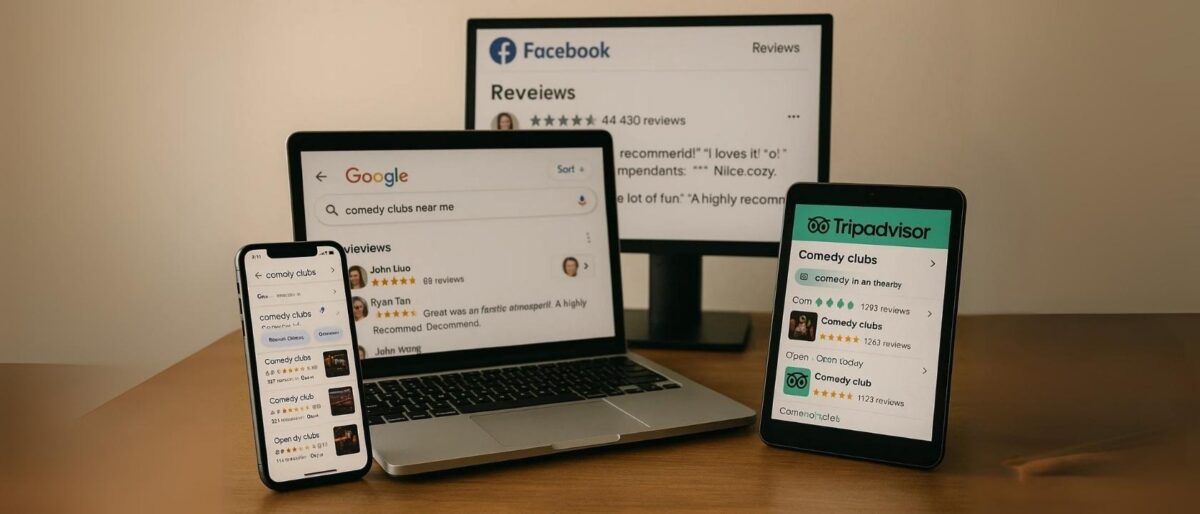
When people want to share their comedy night experience, they often turn to broad, familiar platforms. These sites aren’t built only for comedy, but they still shape how venues and performers are judged by the public.
Google Reviews. The most accessible option. Type in a comedy club’s name, and reviews appear instantly with star ratings and comments. Because nearly everyone uses Google Maps or Search, these reviews carry significant weight for venues.
Yelp. Known for detailed write-ups, Yelp reviews go beyond the comedian’s performance. Guests often talk about seating, drink service, or the overall vibe of the club. This detail makes it especially helpful for locals comparing multiple venues.
Tripadvisor. While aimed at travelers, Tripadvisor has become a strong reference for comedy theaters and shows in tourist-heavy cities. Visitors use it to decide which night out fits into their trip, and reviews often highlight accessibility, neighborhood, and audience mix.
Facebook/Meta. Quick and casual, Facebook reviews show up on event pages and club profiles. Guests leave ratings with short comments, making it an easy place for fast feedback. While not as detailed, its visibility among friends adds a word-of-mouth effect that’s hard to ignore.
Entertainment-Specific Platforms
Beyond general review sites, some platforms are built directly into the ticket-buying process. These focus more closely on live entertainment, giving reviews added credibility and context. Because they connect feedback to ticket sales, the audience knows the reviewer was actually at the show.
Ticketmaster & Live Nation. Both platforms allow buyers to rate and review shows after attending. Since the reviews are linked to verified purchases, they carry a higher level of trust. Fans often mention seating quality, sound systems, and how smoothly the event ran, alongside reactions to the comedian’s performance.
StubHub & SeatGeek. While known mainly for resale tickets, these platforms also collect post-event feedback. Reviews here often highlight the value of seats bought on resale, ease of entry, and overall audience experience. They provide a different angle, especially for fans who grab last-minute tickets.
Eventbrite. This platform leans heavily on community events, including smaller comedy nights and festivals. Its reviews tend to be conversational, giving insight into both the acts and the atmosphere. For lesser-known comedians or indie venues, Eventbrite’s review system can play a big role in drawing new audiences.
Niche & Comedy-Centric Communities

Some of the most colorful and candid feedback comes from spaces dedicated specifically to comedy. Unlike broad review platforms, these communities capture the inside jokes, shared experiences, and unfiltered reactions that hardcore fans and performers often value most.
Comedy club websites. Many clubs feature feedback sections or surveys on their sites. Because the reviews come directly from attendees, they often highlight details unique to that venue—like sound quality, staff friendliness, or the intimacy of the space. This feedback usually goes straight to management and can influence future shows.
Reddit. Subreddits such as r/StandUpComedy or local city threads are lively places for open discussion. Reviews here are less formal and often come with personal stories. Audiences share everything from hilarious moments to complaints about drunk crowds. While informal, these conversations create a strong sense of community.
Podcasts and YouTube comments. As comedians share clips online or host podcasts, audience reactions increasingly show up in comment sections. These aren’t structured reviews but can reveal genuine reactions in real time. A flood of positive comments boosts a comedian’s reach, while critical ones spark debate.
Dedicated forums or apps. In certain regions, specialized comedy boards or apps allow fans to discuss shows, swap recommendations, and leave reviews. While smaller in scale, they provide tight-knit spaces where regulars and newcomers connect over shared love of live comedy.
Social Media as Review Hubs
Comedy shows often live beyond the stage thanks to social media. Audiences don’t always write long reviews—they post, tag, and share instantly. These quick reactions spread fast, shaping a comedian’s image for better or worse.
Twitter/X. Instant reactions thrive here. A single viral tweet about a hilarious set or disastrous heckler can reach thousands overnight. The downside? Posts are often emotional bursts rather than thoughtful reviews.
Instagram. Comedy clubs and fans alike lean on stories, reels, and photo tags. Audiences share snippets of their night, adding comments that double as mini-reviews. Story highlights on club accounts often become informal archives of audience feedback.
TikTok. Short clips paired with audience captions or voiceovers are powerful review tools. A great moment can trend, bringing global attention to a comedian. Still, TikTok’s focus on viral snippets means the broader context of the show may be lost.
The pros of social media lie in reach and speed. Feedback spreads widely and instantly. The cons? These posts lack structure, verification, or balance. Unlike formal review platforms, social media often reflects hype and emotion more than careful evaluation.
How Performers & Venues Use Reviews

Reviews aren’t just for audiences—they’re tools for comedians and venues too. A steady stream of feedback helps performers gauge audience response. If certain jokes always get called out in glowing comments, those bits stay. If pacing or delivery feels off to multiple reviewers, it signals room for adjustment.
Venues read reviews with a different lens. Comments about sound quality, uncomfortable seating, or dim lighting become direct notes for improvement. Adjusting the stage setup or upgrading audio based on critiques shows audiences that their feedback matters, and it often improves the overall show experience.
Positive ratings also help build reputation. A club with consistent five-star reviews gains trust, drawing new visitors and top comedians eager to perform there. For individual comedians, strong feedback acts like word-of-mouth marketing, fueling future bookings and ticket sales.
Of course, criticism comes with the territory. The most successful performers and venues don’t ignore it. They respond professionally, acknowledge concerns, and outline changes where possible. This approach not only salvages relationships with unhappy guests but also shows prospective audiences that accountability is part of the culture.
Tips for Writing Helpful Comedy Show Reviews
A good review does more than vent or cheer—it guides future audiences and offers valuable feedback to performers. The more specific you are, the more useful your words become. Start by noting the comedian’s name, the venue, and the date of the show. Context helps readers understand your perspective.
Don’t stop at the set itself. Mention the atmosphere of the club, the behavior of the crowd, and how staff handled service or any disruptions. These details shape the overall experience and often matter as much as the jokes.
If a joke stood out, highlight it without giving away the punchline. Spoilers drain the magic for someone planning to attend the same show. Instead, describe the style, timing, or energy that made the moment memorable.
Finally, stay constructive. Balance positives and negatives so your review feels fair. Point out areas for improvement without turning it into a rant. A review that praises strengths while offering measured critique serves both the audience and the performers, keeping comedy culture supportive and honest.
Future of Comedy Show Reviews

The way we review live events is shifting fast, and comedy shows are no exception. One emerging idea is verified blockchain-based ticket reviews. By tying feedback directly to a ticket on the blockchain, platforms can prove that each review came from an actual attendee, eliminating fake posts and boosting trust.
Another development is AI-driven sentiment analysis. Platforms are starting to scan thousands of comments, posts, and reviews to gauge overall audience mood. This gives comedians and venues data-driven insights into how shows land, beyond a handful of written reviews.
Integration with streaming and recorded specials could also reshape feedback. Imagine watching a comedian’s set online and leaving a review instantly linked to both the live tour and digital release. This connection extends audience influence across live and virtual comedy experiences.
Finally, the rise of community-driven comedy apps suggests a future where fans gather in dedicated spaces to share thoughts, trade recommendations, and rate shows. Smaller but focused communities create tighter connections between performers and audiences, keeping feedback personal and engaged rather than lost in endless feeds.
Conclusion
Reviews keep the spirit of comedy alive long after the lights go down. They carry the energy of the night into the wider world, shaping reputations and guiding future audiences. Choosing the right platform makes your voice stronger, ensuring your experience reaches people who value it most.
Thoughtful feedback matters. When you balance honesty with fairness, you not only help comedians grow but also support fellow fans looking for their next night of laughs. In the end, a good review does more than share an opinion—it keeps the culture of live comedy thriving.