
How Presale Concert Tickets Work (And How to Get Them)
May 1, 2025
Can You Return Concert, Comedy, or Broadway Tickets?
May 1, 2025Ticketmaster vs StubHub: Key Differences, Fees & Which Is Better

Buying concert tickets shouldn’t feel like solving a puzzle, but picking between Ticketmaster vs StubHub? That’s a whole show of its own. I’ve used both—sometimes won, sometimes facepalmed—and this guide breaks it all down. Pricing, guarantees, resale rules, and real talk about which site’s worth your time (and money).
Quick Overview: Ticketmaster vs StubHub
Before we get into the nitty-gritty, here’s a quick backstage pass to how Ticketmaster and StubHub compare at a glance. Think of this as your cheat sheet before the full review—because knowing who owns what (and how they charge you) is half the battle.
| Feature | Ticketmaster | StubHub |
|---|---|---|
| Ownership | Live Nation Entertainment | Owned by Viagogo (formerly eBay) |
| Primary or Resale? | Mostly primary sales; some resale | Secondary marketplace only |
| Fees | Often higher, added at checkout | Seller sets price + transparent buyer fee |
| Resale System | Only for Ticketmaster events | Any event, more flexible for sellers |
| Delivery Methods | Mobile tickets, instant transfer, will-call | Mobile tickets, downloadable PDFs, mail (sometimes) |
| Support | Ticketmaster Help Center, limited live chat | StubHub Customer Support, FanProtect Guarantee |
This side-by-side gives you the vibe: Ticketmaster is the official gatekeeper; StubHub is the street-smart reseller. Now, let’s dig into what that means for your wallet, your seats, and your overall experience.
Platform Background: Who Owns What?
Let’s start with the basics—who’s actually behind these ticketing giants? Because ownership plays a huge role in how each platform operates, who they partner with, and what kind of access you get as a buyer or seller.
Ticketmaster is part of Live Nation Entertainment, the largest live entertainment company in the world. That means they’re not just selling tickets—they’re producing the tours, managing the venues, and working directly with artists. In short, they’ve got the keys to the kingdom. When you buy from Ticketmaster, you’re usually getting access to the official primary ticket inventory. They often control the very first batch of tickets that go on sale, and they handle exclusive presales, VIP packages, and venue-only access.
StubHub, on the other hand, is a secondary marketplace. It was owned by eBay until 2020, when it was sold to Viagogo. Unlike Ticketmaster, StubHub doesn’t control the original inventory. Instead, it connects sellers (often other fans or resellers) with buyers. Think of it as a digital ticket bazaar: you’ll find tickets to everything from sold-out concerts to niche theater shows, often at a markup—but sometimes at a steal.
Buying Experience: Which Is Easier to Use?

Let’s be real—if buying tickets feels like taking the SATs, you’re not going to stick around. A smooth, frustration-free shopping experience makes all the difference. Both Ticketmaster and StubHub have mobile apps and websites, but how they guide you from search to checkout is where the gap shows.
Website and App Interfaces
Ticketmaster leans more polished and professional, with an interface that feels sleek but sometimes rigid. It’s built for structure—everything is organized around official events, and you’ll often need to log in early just to get into a presale queue. On high-traffic days, expect virtual waiting rooms and “You’re now in line” messages that can be… less than fun.
StubHub is quicker, more flexible, and often less dramatic. Open the app, search your event, pick a price range, and boom—you’re browsing available seats in seconds. There’s no queue unless the event is really hot. It feels more like browsing a marketplace than requesting access from the ticket overlords.
Search and Filtering Tools
Both platforms let you filter by price, number of tickets, and seating level. StubHub edges ahead with its ability to filter by delivery method, zone, or seller type. That’s useful if you want instant-download tickets for a last-minute event. Ticketmaster offers cleaner filters for official events, like presale types and accessibility seating.
Seating Charts and Price Sorting
Ticketmaster’s interactive seat maps are usually synced to the venue and super accurate, showing official rows, sections, and real-time availability. But it can feel clunky when tickets disappear mid-click. StubHub’s seat maps are simpler but faster—they show available resale tickets with color-coded prices, and the zoom feels smoother on mobile.
Real-World Example: I searched for Billie Eilish tickets in NYC. On StubHub, I was browsing listings within 20 seconds, seeing price tags from $80 to $400. On Ticketmaster, I had to wait in a queue, verify I wasn’t a bot, and click through a few pages—took nearly 3 minutes just to view the seats. Both got me there, but one was clearly more chill.
Ticket Prices and Fees: Who Charges More?
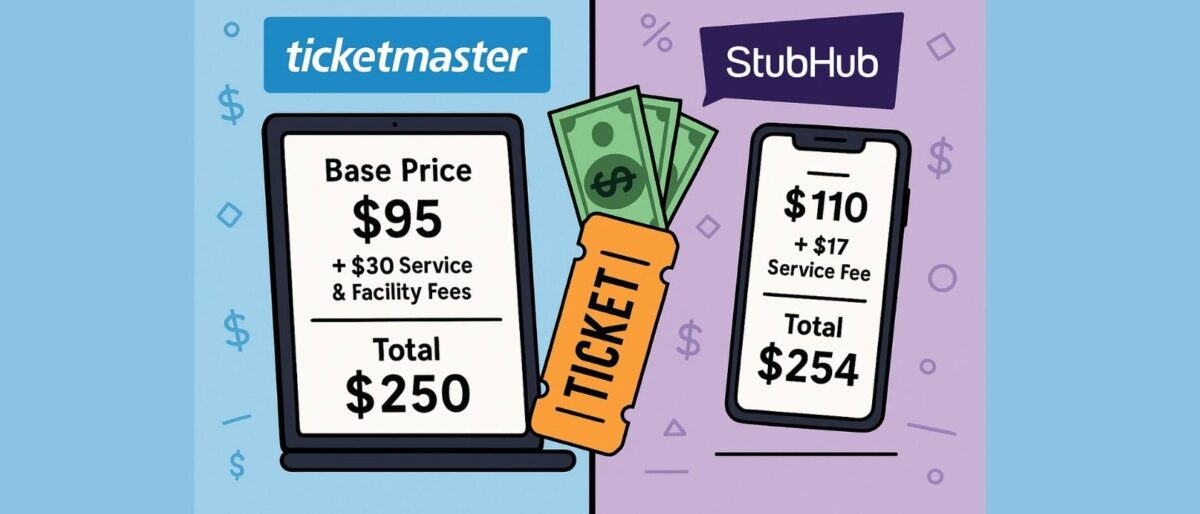
Let’s talk money—because that $95 concert ticket you spotted? Yeah, it’s not really $95 once you hit checkout. Both Ticketmaster and StubHub tack on fees, but how they do it (and how much they add) can leave your jaw on the floor if you’re not paying attention.
Fee Breakdown
Ticketmaster is notorious for its hidden fees—convenience charges, processing fees, facility charges, order fees… it’s a lot. The kicker? You usually won’t see the full total until you’re one click from payment. That $95 ticket can jump to $125 without warning. And for high-demand events, dynamic pricing can spike the base price based on demand—similar to surge pricing for Uber, but with fewer apologies.
StubHub, on the other hand, is more transparent. Sellers set their own prices, and StubHub adds a service fee (usually 10%–15%) at checkout. You’ll also see delivery fees if applicable. It’s still a hike, but at least you’re not blindsided—it’s all itemized before the final screen. And there’s no dynamic pricing here; what you see is what you get.
Real-World Price Example
Let’s say you’re buying 2 mid-level seats for Olivia Rodrigo in Chicago:
| Platform | Base Price (each) | Fees | Total for 2 |
|---|---|---|---|
| Ticketmaster | $95 | + $30 service & facility fees (each) | $250 |
| StubHub | $110 | + $17 service fee (each) | $254 |
So while the base prices may vary, the actual totals often land in the same ballpark. The big difference? StubHub shows its cards earlier. With Ticketmaster, you sometimes feel like you’re playing a game of “Gotcha!” at checkout.
Resale Options: Selling Your Tickets
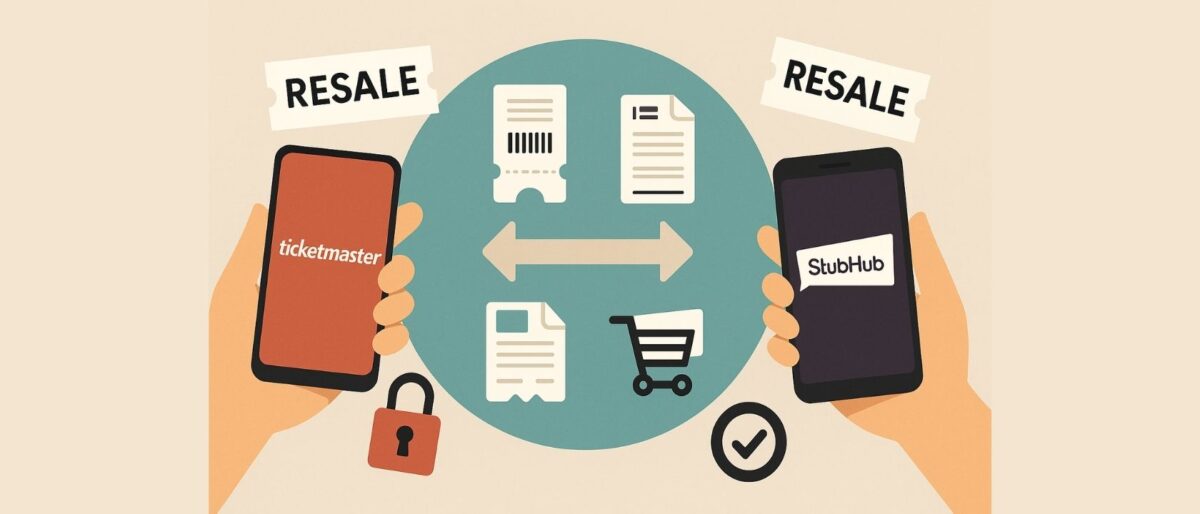
Life happens—plans change, babysitters bail, or you suddenly realize you double-booked your night. When that happens, the ability to resell your ticket quickly and easily is everything. But depending on the platform, your options might be wide open… or completely shut down.
Ticketmaster Resale: Limited but Official
Ticketmaster allows resale, but there’s a catch: it only works if the event supports it—and the original ticket was purchased through Ticketmaster. So if you bought from another vendor or the artist doesn’t allow resale through their system, you’re out of luck. When resale is enabled, the process is pretty smooth: you list your ticket directly in your account, choose a price, and wait. Ticketmaster keeps things in-house, which can make buyers feel safer.
But here’s the rub: payout often happens after the event, which means you’re waiting days—or even weeks—for your money to hit. And they’ll take a seller fee (usually around 10%–15%) off the top.
🛒 StubHub Resale: More Freedom, More Risk
StubHub is the go-to resale hub because of one word: flexibility. You can list tickets for almost any event, no matter where or how you originally bought them—concerts, sports games, theater, even festivals. If you’ve got a digital ticket or barcode, StubHub will probably let you post it.
Listing is quick. Choose your event, upload your ticket (or confirm your ticket type), set a price, and you’re good to go. StubHub takes a cut—typically 10%–15% seller fee—and payouts happen a few days after your ticket sells, not after the event. That’s a win if you need the cash fast.
Last-Minute Resellers, Take Note
If you’re trying to offload tickets last-minute, StubHub gives you the edge. You can adjust prices quickly, reach a broader pool of buyers, and keep selling right up until event time (depending on ticket type). But be careful: prices can get undercut fast, and if demand is low, you might have to slash your price just to sell.
Availability and Event Selection
When it comes to finding tickets, not all platforms are built the same. Ticketmaster and StubHub serve very different roles in the ticketing universe—one controls the spotlight, while the other fills in the gaps behind the scenes. Depending on what kind of event you’re chasing, one platform may have a clear edge.
Ticketmaster: The Industry Gatekeeper
Ticketmaster dominates official ticket sales—especially for concerts, big-name arena tours, and Broadway shows. If you’re trying to get tickets during an artist’s initial sale (think Beyoncé, Harry Styles, or The Eras Tour), Ticketmaster is often the only game in town. It handles most presales, VIP packages, and first-release seats directly from the venue or promoter.
But here’s the catch: once the general sale ends or tickets are sold out, Ticketmaster may not offer much else—unless resale is enabled within their system. You’re basically out of luck unless you jump on it early.
StubHub: The Resale Playground
StubHub shines when tickets are scarce. If an event is sold out, hasn’t been listed through Ticketmaster, or isn’t hosted by a major venue, chances are StubHub has it. You’ll often find last-minute resale options or tickets for smaller/local shows, niche events, comedy acts, and sports games that Ticketmaster doesn’t carry.
StubHub also casts a wider net internationally. So if you’re traveling and want to catch a show in London, Toronto, or Berlin, StubHub may offer more variety across borders than Ticketmaster’s localized platform.
Choosing Based on Event Type
- Want official presale tickets to a major concert? Go with Ticketmaster.
- Trying to find a deal for a sold-out game or festival? StubHub is your friend.
- Looking for flexibility or browsing smaller venues? StubHub usually has broader listings.
Bottom line? Use Ticketmaster for first access, big-name artists, and guaranteed inventory. Use StubHub for everything else—especially if the show’s already sold out or flying under the radar.
Customer Service and Support
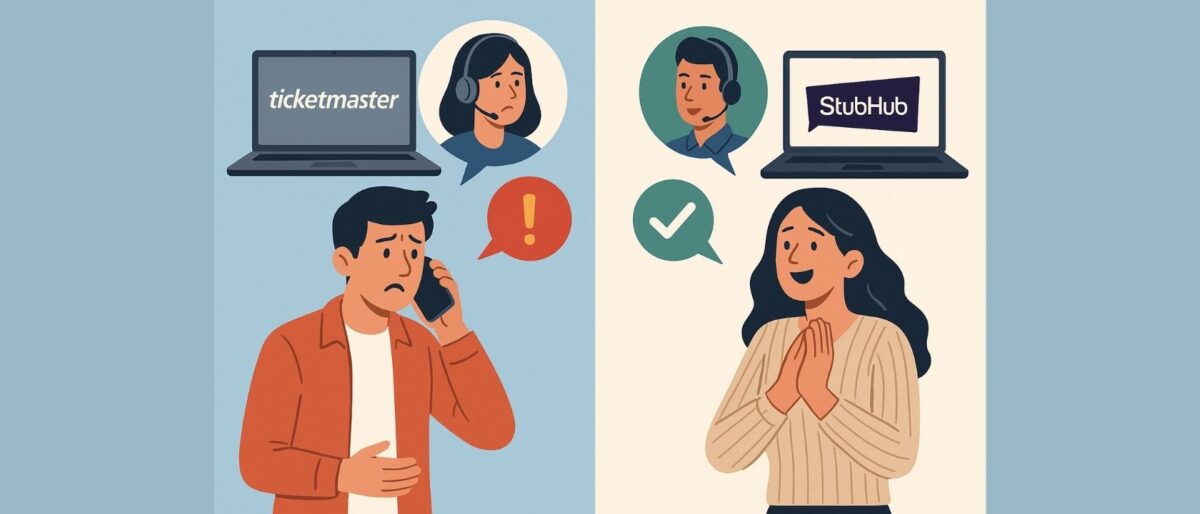
When tickets disappear, plans change, or a show gets canceled, you want backup fast. Unfortunately, not all ticket platforms deliver the same kind of help when things go south. Both Ticketmaster and StubHub have customer support—but your experience may feel like a warm hug… or a cold shoulder.
Ease of Getting Help
Ticketmaster offers help through its online Help Center, which includes FAQs, chatbots, and (occasionally) live agents. But phone support? Practically nonexistent unless you’re lucky enough to find a working number. Even the live chat can feel like you’re shouting into the void during high-demand times.
StubHub provides support via live chat, email, and phone—and yes, the phone line is real and works. While wait times can vary, many users report getting ahold of a rep within a reasonable window, especially for urgent issues like last-minute ticket delivery problems.
User Complaints and Common Issues
Ticketmaster: The biggest gripe is communication. Users often complain about vague refund policies, limited updates for postponed events, and long waits for money to hit after a refund is approved. Some people also run into trouble transferring tickets or retrieving mobile barcodes right before showtime.
StubHub: Most complaints center around seller no-shows or listings that vanish after purchase. StubHub usually makes things right—but scrambling for replacement tickets an hour before doors open is not ideal. However, many buyers have praised StubHub for being fast with refunds or replacements under its FanProtect Guarantee.
⏱️ Response Time and Real-Life Stories
One Ticketmaster user shared on Reddit that they waited over three weeks for a refund after a canceled event—and only got it after publicly tweeting at the company. Meanwhile, another said their issue was resolved in less than 24 hours through StubHub after a seller flaked on floor seats at a playoff game. StubHub not only refunded them but gave a $50 voucher for the hassle.
Which One Is Better for You?
So, Ticketmaster or StubHub? Honestly, it depends on what kind of ticket buyer—or seller—you are. Some folks want first dibs on official seats. Others just want a good deal without the digital drama. Here’s a side-by-side look at who each platform serves best, depending on your situation.
Buyer Type: “I Want Official Access”
If you’re the kind of fan who sets alarms for artist presales and loves scoring VIP packages, Ticketmaster is your home base. It’s the go-to for first access to big-name concerts, Broadway shows, and arena events. When early access matters most, Ticketmaster gets you through the (official) door.
Buyer Type: “I Need Tickets—NOW”
Missed the sale? Planning last-minute? StubHub is built for this. From resale tickets to sold-out events, StubHub often has what Ticketmaster doesn’t—even hours before showtime. You might pay more, but the convenience is unmatched.
Seller Type: “I Can’t Make the Show”
Need to resell your tickets? StubHub gives you more freedom. You can list tickets from nearly any source and any event, while Ticketmaster only lets you resell tickets originally bought through them (and only if resale is enabled). If flexibility is key, StubHub is the better tool.
Buyer Type: “I Hate Surprise Fees”
If hidden fees give you buyer’s remorse, StubHub’s transparency may feel like a breath of fresh air. While you’ll still pay service fees, you’ll see them upfront before checkout. Ticketmaster? The fees often jump out from behind the curtain right when you’re ready to pay.
In short:
- Want official tickets and presales? → Use Ticketmaster
- Want resale options and last-minute access? → Go with StubHub
- Want to sell tickets easily? → Trust StubHub
- Want fewer checkout surprises? → Stick with StubHub
No one-size-fits-all answer here—just pick the one that matches your priorities and event style.
Pros and Cons Summary
If you’re still torn between Ticketmaster and StubHub, this quick-hit pros and cons breakdown should help you decide where to click next. Each platform brings strengths to the stage—and a few off-key notes too. Here’s how they stack up, side by side.
Ticketmaster Pros
- Official sales with verified tickets: Buy directly from the source, with built-in trust and ticket legitimacy.
- Presale access and VIP packages: Get early access and exclusive bundles before the general public even gets a chance.
- Integrated venue seating and delivery: Clean, clickable seat maps and seamless delivery options—especially when using mobile tickets.
Ticketmaster Cons
- Higher fees (especially hidden at checkout): The listed price isn’t the final price—be ready for a last-minute total jump.
- Limited resale options: Only resale-eligible events are allowed, and tickets must have been bought through Ticketmaster originally.
StubHub Pros
- Wider resale market and selection: Great for sold-out events, last-minute finds, or tickets not available elsewhere.
- Transparent pricing and buyer protection: FanProtect Guarantee offers peace of mind, and you’ll see fees before checkout.
- Often cheaper for last-minute tickets: Prices sometimes drop closer to showtime if sellers are trying to offload inventory.
StubHub Cons
- No access to official presales or exclusive seats: You’ll be shopping the resale market only—no early bird specials here.
- Occasional fake or unavailable listings: While rare, some buyers have had to scramble due to listing issues—though StubHub usually steps in fast to fix it.
Final word? It’s less about which platform is “better” and more about what you need—first access or flexibility, official pricing or open market options.
Final Verdict: My Personal Take
Alright, real talk—I’ve used both Ticketmaster and StubHub more times than I can count. Sometimes it’s been smooth sailing; other times, I’ve wanted to toss my phone across the room. But after plenty of trial, error, and panic-refreshing, here’s how I play it.
If I want first access to an artist presale, a VIP package, or that sweet front-row seat before the public even knows tickets are live, I go straight to Ticketmaster. It’s not always the cheapest, but for major tours or Broadway blockbusters, it’s the safest bet for scoring something official and early.
But if I’m grabbing tickets last-minute, trying to catch a sold-out show, or just want to compare prices across seat sections, StubHub is where I click. I love being able to browse without jumping through hoops, and I’ve found some killer deals just hours before the curtain rises. Bonus points for showing all fees upfront—no shockers at checkout.
Here’s my advice: use both smartly. Start with Ticketmaster if early access and verified tickets are non-negotiable. But keep StubHub in your back pocket—especially when the official well runs dry or your plans change. Price, seat quality, and timing all matter—just pick the platform that plays to your priorities.
In the end, the goal’s the same: get to the show, enjoy the night, and leave with no regrets (except maybe not buying that tour hoodie).
Frequently Asked Questions
What is the main difference between Ticketmaster and StubHub?
Ticketmaster mainly sells primary tickets directly from venues and promoters, while StubHub focuses on resale tickets listed by fans and brokers on a secondary marketplace.
Which is cheaper, Ticketmaster or StubHub?
It depends on the event. Ticketmaster may be cheaper at face value during the initial on sale, while StubHub can be cheaper or more expensive depending on demand and resale prices.
Which site has higher fees, Ticketmaster or StubHub?
Both charge service and processing fees that vary by event. StubHub often shows higher markups on hot events, but Ticketmaster can also have significant fees. Always compare the final total, not just the base price.
Which is safer to buy tickets from, Ticketmaster or StubHub?
Both are large, established companies with buyer guarantees. Ticketmaster sells tickets straight from the source, while StubHub backs resale purchases with a protection policy if tickets are invalid or an event is canceled.
Can I resell my tickets on Ticketmaster?
Many Ticketmaster events allow official resale through their own platform. You can list your tickets within your account if the event has resale turned on.
When is StubHub a better choice than Ticketmaster?
StubHub is often better if an event is sold out on Ticketmaster, you want specific seats someone else is reselling, or you are looking for last-minute tickets.
When is Ticketmaster a better choice than StubHub?
Ticketmaster is better for buying primary tickets at face value when they first go on sale and for events where official resale through the primary seller is strongly encouraged.
Do both Ticketmaster and StubHub use mobile tickets?
Yes. Many events on both platforms now use mobile-only tickets that live in the app or digital wallet and are scanned from your phone at the venue.
Can I transfer tickets bought on Ticketmaster to sell on StubHub?
Sometimes you can, but not for every event. Some mobile-only tickets have transfer restrictions that keep them inside the primary system.
Which site has better customer support?
Customer support experiences can vary by case. Both platforms offer help centers, chat, and email support, but resolution speed often depends on the event, the seller, and how close it is to show day.