Sensory-Friendly Broadway Shows for All Audiences
June 11, 2025
What Is Observational Comedy? Examples, Stars & Shows
June 12, 2025The Unique Comedy of Bo Burnham: Music, Satire & Angst
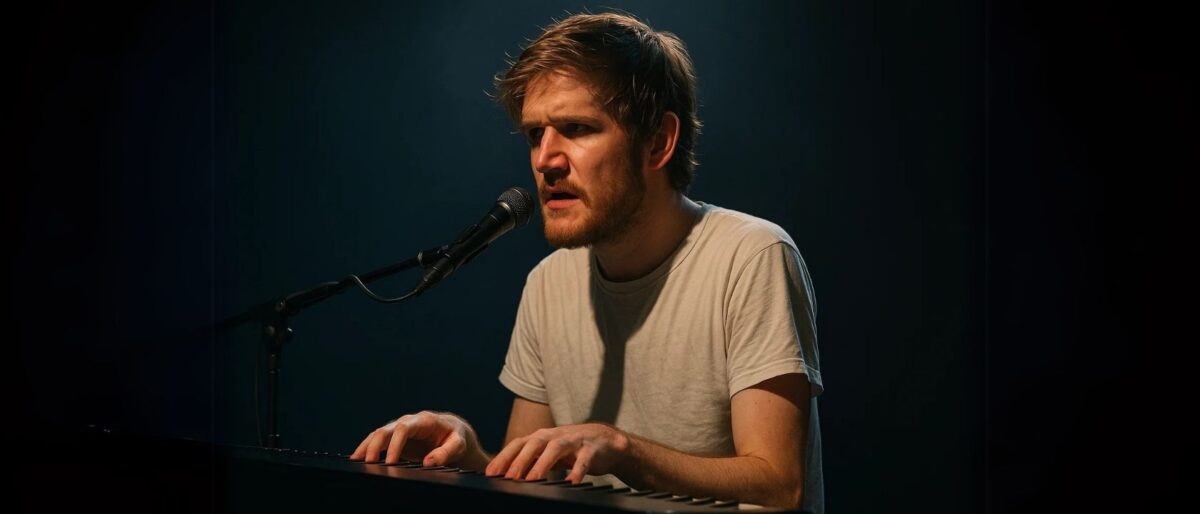
Bo Burnham isn’t just a comedian—he’s a one-man existential crisis set to a piano riff. Blending music, satire, and raw self-awareness, he turns punchlines into gut punches. In this guide, we’ll unravel how Bo reshaped modern comedy with wit, vulnerability, and just enough chaos to make it all feel real.
From YouTube Star to Comedy Auteur
Bo Burnham didn’t stumble into comedy—he uploaded himself there. It all began in 2006, when a 16-year-old Bo posted a grainy video of himself performing “My Whole Family” on YouTube. With nothing but a keyboard, a camera, and a basement backdrop, he cracked jokes about religion, adolescence, and family dysfunction with a mix of self-deprecating charm and razor-sharp wit. The internet noticed—fast.
More songs followed—“Bo Fo’ Sho” and “Love Is…” gained millions of views, each one proving that a kid with timing and a twisted rhyme scheme could carve a place in digital comedy. While others were lip-syncing or vlogging, Bo was building a persona: clever, cringey, aware. His awkward stage presence was deliberate, his punchlines often hiding gut-punch truths.
What makes Bo’s story different is the seamless pivot from teenage viral sensation to full-blown comedy auteur. By his first Comedy Central special, it was clear he wasn’t just riffing—he was orchestrating. His background in theater and poetry showed through, and the timing of his rise—just as YouTube was changing entertainment—gave him a sandbox few others had. Bo wasn’t just on the internet. He was formed by it.
And that early start? It shaped everything. His obsession with control, discomfort with fame, and layered approach to performance can all be traced back to a teen who went viral before he could even vote.
Comedy Through Song: A Tool for Wit and Whiplash
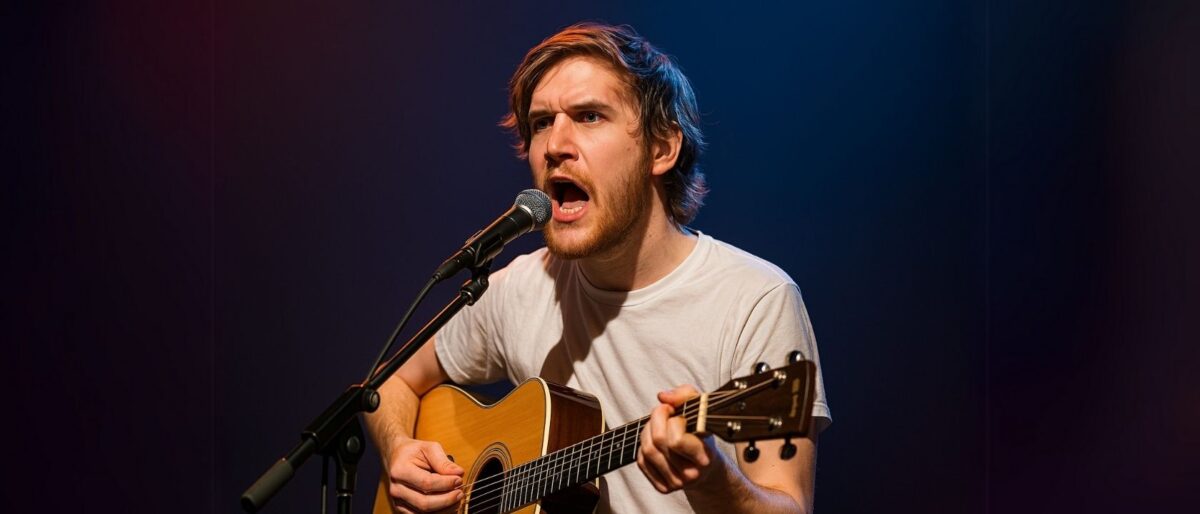
Bo Burnham doesn’t just tell jokes—he sings them. But not like a camp counselor with a ukulele. His songs are fast, furious, and laced with lyrical booby traps that explode the moment you let your guard down. His style? Think Sondheim on Red Bull, with a splash of self-loathing.
Take “Art is Dead.” It starts soft, almost lullaby-like, but quickly spirals into a biting takedown of celebrity culture—especially his own place in it. Bo juxtaposes the innocent tone of the piano with lyrics like “I must be psychotic, I must be demented,” forcing the audience to laugh while wincing. That’s the whiplash effect. He’ll have you tapping your toes while questioning your values.
“Left Brain, Right Brain” turns a psychological metaphor into a mini musical duel—half vaudeville, half therapy session. It’s sharp, absurd, and crafted with the precision of a Broadway finale. And then there’s “Welcome to the Internet,” a chaotic cabaret about digital overload. It’s catchy. It’s sinister. It’s the entire internet in one song—sarcasm, seduction, despair, dopamine.
Bo’s musical theater influence is everywhere, from tight rhyme schemes to choreographed chaos. But instead of closing with a triumphant note, he often lands on something dissonant. It’s not a bow—it’s a gut check.
Satire with a Scalpel: Deconstructing Society
Bo Burnham doesn’t swing wildly—he slices with precision. His comedy isn’t just satire; it’s surgery. With a scalpel-sharp wit, he dissects the absurdities of modern life, laying bare the messy organs of internet addiction, performative progressivism, and late-stage capitalism—then laughs along as we all recognize our own reflection in the mess.
He skewers our obsession with screens and scrolls—those endless loops of validation and voyeurism. “Welcome to the Internet” doesn’t just parody our online habits—it makes us complicit. The candy-colored chaos of the melody masks a cultural diagnosis that’s bleak and biting.
Bo’s takedown of performative activism is equally ruthless. In Inside, he mocks influencers who cry on camera, brands who slap rainbows on ads in June, and the shallow theater of “doing the work” without doing anything at all. His comedy doesn’t just point fingers; it turns the lens inward, exposing the ways even he benefits from the same flawed systems.
Masculinity, fame, capitalism—nothing escapes the scalpel. Yet, the beauty of Bo’s satire is that it rarely feels smug. It’s layered, reflexive, even vulnerable. He knows he’s part of the system he critiques. That tension? It’s the punchline, and it hits hard.
Self-Awareness as a Weapon
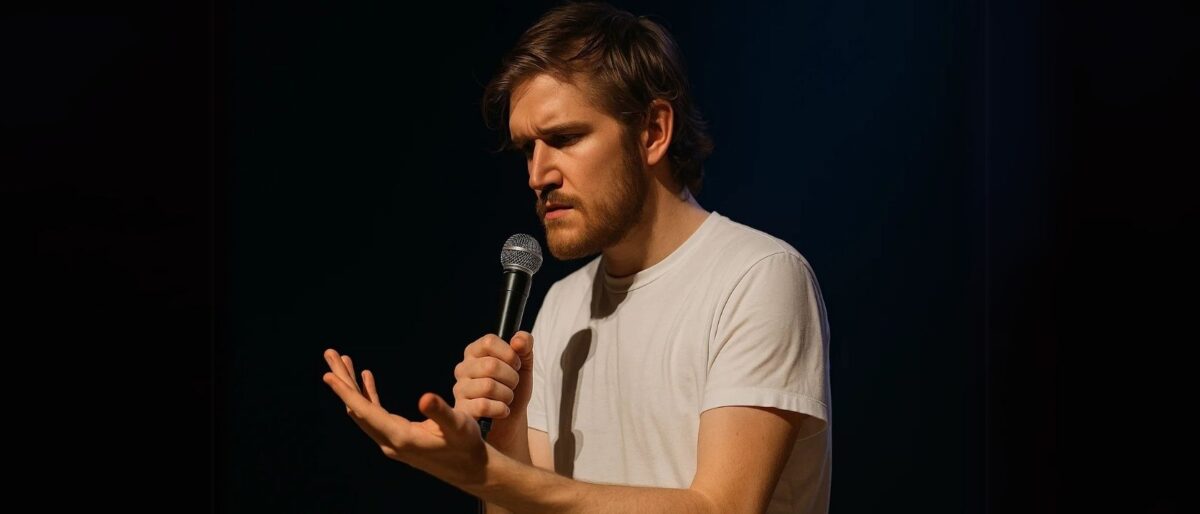
Bo Burnham doesn’t just perform comedy—he dissects it while you’re watching. His entire act is a mirror, tilted back at himself, at us, at the very idea of what a performance is. Meta-comedy isn’t a flourish for him; it’s a fundamental tool. A hammer and a scalpel, used simultaneously.
From early sets to Inside, Bo has made a habit of cracking open the mechanics of his own routines. He’ll launch into a joke and stop mid-punchline to question its intent. He’ll sing a song, then critique the song in real time. The fourth wall isn’t just broken—it’s rubble. In Make Happy, he famously addresses the audience after a heartfelt keyboard performance: “If you can live your life without an audience, you should do it.” It’s a chilling moment that flips the spotlight back on the crowd, questioning not just performance, but consumption itself.
There’s a rawness to it all. A contradiction that lingers. “I know it’s a bit, but it still hurts,” he says in Inside. That line is a razor-thin veil between character and creator, joke and journal entry. He confesses, mocks, and reassures—all in the same breath.
It’s this emotional whiplash, this vulnerability wrapped in irony, that keeps audiences locked in. You’re laughing, then you’re thinking, then you’re quietly spiraling. Just like he is.
The Evolution of Tone: From Zany to Existential
Bo Burnham’s comedy didn’t just grow up—it cracked open, spiraled inward, and emerged as something far more complex. In the beginning, his tone was sharp and sprightly. Those early YouTube uploads? They were the comedic equivalent of a sugar rush—cheeky, chaotic, and proudly irreverent. Songs like “Bo Fo’ Sho” and “I’m Bo Yo” tossed wordplay like confetti, celebrating cleverness for its own sake.
But as his audience grew, so did his sense of purpose—and pressure. By the time we hit *what.* and *Make Happy*, that boyish smirk had started to twitch. The performances got bigger, the jokes tighter, the themes heavier. Introspection seeped in through the cracks.Make Happy ended with a somber piano piece alone onstage, questioning whether comedy itself could fill the void. Spoiler: it can’t.
Then came Inside—the quarantine-era juggernaut that blurred the lines between special, diary, and digital fever dream. Filmed entirely alone during lockdown, it tackled anxiety, depression, and internet fatigue with blistering precision. No applause. No audience. Just Bo, his brain, a few lights, and an existential meltdown, all meticulously composed.
The tone had shifted from prankster to philosopher. From guy-on-a-keyboard to multimedia artist sculpting serotonin and sorrow into one brilliant, broken package.
The Impact of Inside: A Cultural Reset
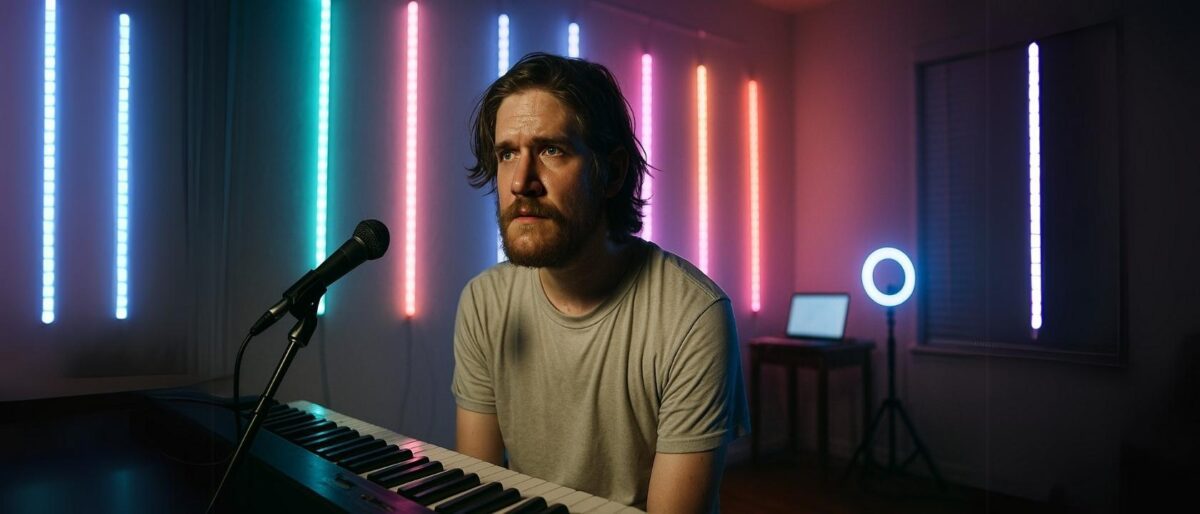
When Inside dropped in 2021, it didn’t just land—it detonated. Created in total isolation during the height of the COVID-19 pandemic, Bo Burnham’s one-man masterpiece captured a moment of global disconnection and existential dread with eerie, electrifying precision. No crew. No audience. Just one man, one room, and way too many LED lights.
The themes hit like a fever dream: mental health unraveling, digital surveillance, the erosion of identity through constant performance, and the gnawing absurdity of creating “content” while the world burned outside. It wasn’t just a comedy special—it was a time capsule soaked in sweat, anxiety, and neon.
And the songs? Viral gold laced with vinegar. “White Woman’s Instagram” skewered curated online personas with eerie accuracy and oddly tender visuals. “That Funny Feeling” delivered poetic apocalypse in soft acoustic strums—so potent, Phoebe Bridgers started covering it live. And “All Eyes on Me”? A hypnotic, glitchy breakdown that turned concert tropes into a cry for help, echoing through TikTok and late-night shows alike.
Inside was more than a quarantine project—it was an emotional X-ray of a collective collapse. It earned Emmy wins, Oscar whispers, and critical adoration, but more importantly, it gave voice to the exhausted, the anxious, and the overstimulated. Bo took his breakdown, turned it into art, and somehow made us all feel a little less alone.
Bo’s Relationship with Fame and the Audience
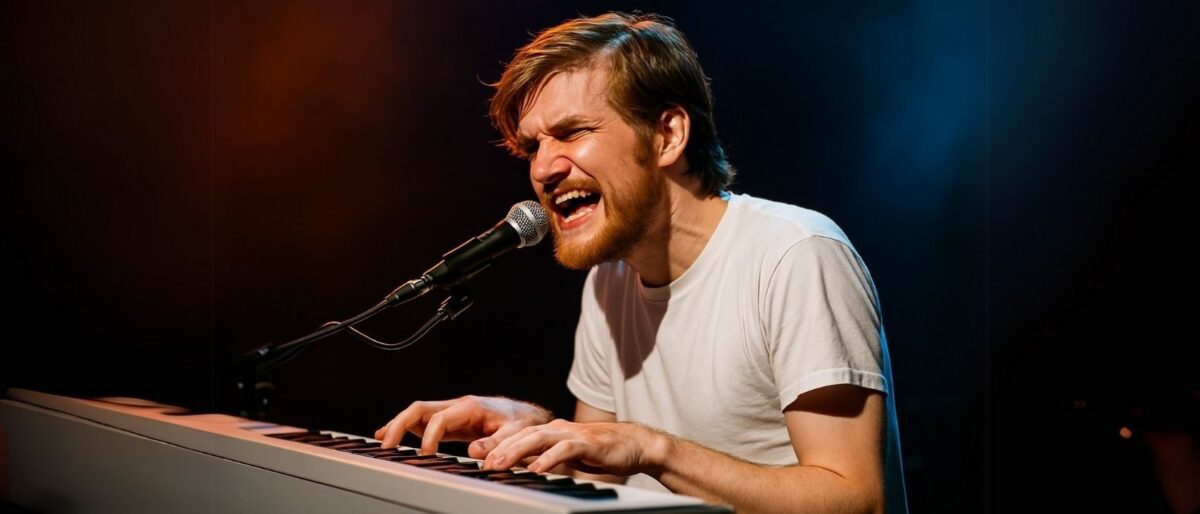
Bo Burnham’s dance with fame has always been a strangely choreographed tug-of-war—equal parts desire and disdain. He stepped into the spotlight young, riding viral fame straight into theaters and TV specials. But as the stages got bigger, so did his ambivalence. You can feel it in his work: a performer craving connection yet cringing at the cost of constant visibility.
This tension became unavoidable. Bo openly discussed his struggles with live performance anxiety, panic attacks, and the psychological weight of being “on” in front of thousands. In 2016, after Make Happy, he took a step back from stand-up entirely—retreating from touring at the height of his career. Not because he failed, but because he couldn’t breathe in the box he’d built.
He also skewers parasocial culture—the eerie one-way intimacy fans develop with performers. Ironically, he does this while being incredibly good at creating it. Through direct eye contact, whispered monologues, and confessional-style lyrics, Bo makes you feel like he’s talking just to you. And then he yanks the rug. “You don’t know me,” he reminds you—often by telling you too much.
At the heart of his work lies a maddening question: when is Bo being sincere, and when is he performing? The answer? Probably both. Probably neither. That’s the magic and the madness of it. He’s the magician who reveals the trick mid-show—then asks if you’re still having fun.
Burnham as a Storyteller, Not Just a Comedian
Bo Burnham doesn’t just tell jokes—he tells stories. Complex, contradictory, and emotionally rich stories that unravel like well-orchestrated symphonies rather than chaotic stand-up routines. With Inside, he shattered the mold of traditional comedy by leaning into visual storytelling as much as lyrical wordplay. Every frame, every cut, every beam of colored light isn’t random—it’s a line in his narrative.
Take the lighting in Inside: it isn’t decorative. It’s mood. Blue bathes loneliness. Red pulses with anxiety. White floods the room when reality crashes through the performance. Burnham used a single room to stage an entire emotional arc, transforming four walls into a kaleidoscope of psyche and satire. He played cinematographer, editor, and director, choreographing each moment with surgical precision.
He also wields structure like a novelist. Recurring motifs—clocks, mirrors, self-reflection—aren’t just Easter eggs. They’re anchors. Songs loop back. Visuals echo earlier scenes. He builds a rhythm that’s closer to musical theater than stand-up. There’s a rise, a climax, a gut-punch, a descent. You don’t laugh your way through Bo—you travel through him.
That’s why comparisons to artists like Charlie Chaplin (who fused slapstick with social critique), Andy Kaufman (a performance-as-puzzle master), Lin-Manuel Miranda (lyrical storytelling), or Donald Glover (genre-breaking polymath) feel not only fair but necessary. Bo’s not simply trying to amuse—he’s trying to translate emotion, chaos, and critique into something beautiful. Funny? Yes. But that’s just the front door. Inside, it’s a theater of the soul.
Legacy and Influence
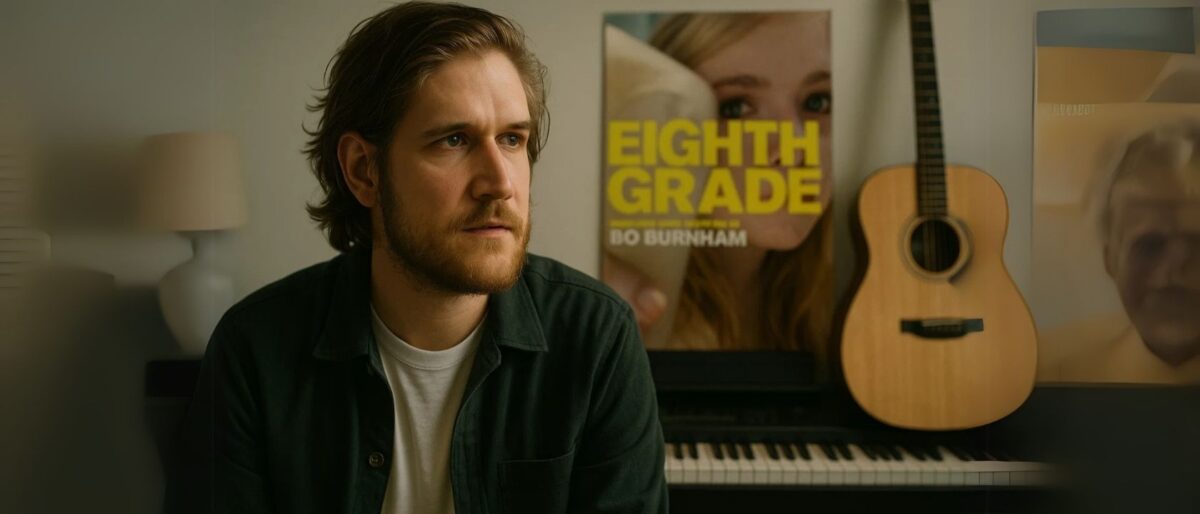
Bo Burnham didn’t just push boundaries—he redrew the map. What began as a teenager’s cheeky keyboard bits on YouTube morphed into a genre-bending blueprint for 21st-century comedy. His legacy? A seismic shift. Bo showed that a comedian can be more than a joke machine—they can be a filmmaker, a composer, a cultural mirror.
His fingerprints are everywhere in modern internet comedy. You see it in the absurdist introspection of Sarah Squirm, in Cole Escola’s eerie genius, and especially in the musical TikTok creators who balance humor and heartbreak in 60-second bursts. Bo gave them permission. Permission to be weird, self-aware, dramatic, and deeply human—all while still being funny.
He’s also a poster child for cross-genre credibility. Theater nerds admire his structure. Indie filmmakers envy his cinematography. Musicians notice his chord progressions. Comedians? They either want to be him or collaborate with him. He cracked the code on making work that’s sharp enough to slice and soft enough to scar. It sticks.
More than anything, Burnham redefined the idea of stand-up. He made it intimate, cinematic, painful, musical, uncomfortable, hilarious, and theatrical—all in the same breath. It’s not just a performance. It’s an experience. And for the next generation of storytellers, the bar is now set at “Bo.”
Conclusion
Bo Burnham is funny—but never just funny. His work crackles with cleverness, sure, but beneath every punchline is a pause, a pang, or a plea. Whether he’s mocking influencer culture or singing a heartfelt breakdown under disco lights, Bo delivers more than laughs—he delivers meaning, tension, and reflection wrapped in melody and mirth.
His blend of music, satire, and angst doesn’t just entertain—it resonates. It mirrors the manic contradictions of modern life: deeply connected, yet desperately lonely; hyper-visible, yet unseen. Bo doesn’t give us easy answers. Instead, he invites us to squirm, to sing along, and maybe, just maybe, to understand ourselves a little better.
So here’s the question: Is Bo Burnham making comedy—or is he using comedy to make sense of everything else?
Either way, we’re still watching. Still laughing. Still thinking.