Hamilton vs The Lion King: Which Broadway Show Should You See?
August 14, 2025
Should You Use Your Phone at a Comedy Show?
August 14, 2025What Happens If a Child Cries at a Broadway Show?

Broadway thrives on focus, but real life happens. If a child cries during a show, ushers will usually guide you to the lobby and allow re-entry when appropriate. This brief explains common policies, what to expect, and practical tips so you protect the performance—and your child’s comfort and fellow guests.
General Broadway Etiquette and Noise Policy

At Broadway shows, silence and attentiveness aren’t just encouraged—they’re the standard. Every rustle, whisper, or unexpected noise can disrupt the delicate connection between the stage and the audience. Even small interruptions, like a child’s brief cry or a loud wrapper, may cause actors to lose concentration and break the immersive flow for those around you.
Unlike movie theaters, where the screen and audio can overpower minor disturbances, live theater is far less forgiving. Performers hear and see the audience, and sound carries quickly in an enclosed space designed for acoustics. That’s why maintaining a quiet, focused environment is essential to the Broadway experience for everyone.
What Typically Happens if a Child Cries
If a child begins to cry during a Broadway performance, the immediate expectation is that the parent or guardian will quickly and quietly remove the child from the seating area. This helps minimize disruption to both the performers and fellow audience members.
Ushers play an important role in these situations. They will usually approach discreetly, ensuring they do not draw additional attention or disturb the performance further. Their job is to guide the parent and child to the lobby or another designated area where the child can settle down.
Re-entry policies vary by show and venue. In many cases, you may be allowed back in once your child is calm, but not during a scene change. Some productions have stricter rules, only permitting re-entry at intermission to maintain the flow of the performance.
Venue Policies and Rules
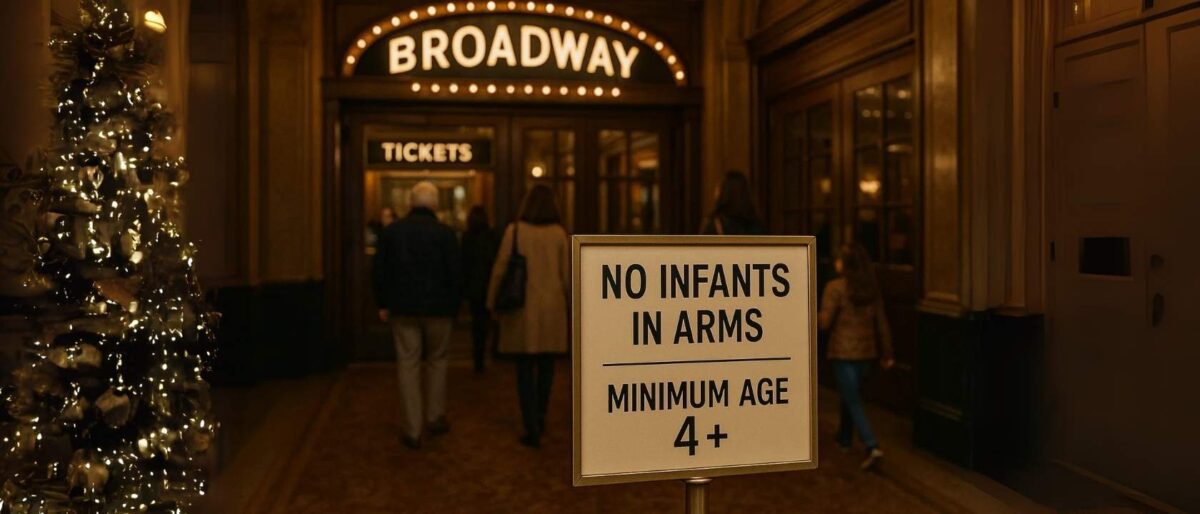
Most Broadway theaters maintain clearly posted behavior policies to preserve the quality of the live performance. These guidelines often include minimum age recommendations, with many productions advising that children be at least 4–6 years old to attend. This helps ensure young audience members can remain seated and quiet for the duration of the show.
Several major Broadway houses enforce a strict no infants in arms rule, meaning every guest must have their own ticketed seat and be of an appropriate age. However, family-friendly productions like The Lion King, Aladdin, and similar shows tend to be more accommodating, offering a slightly more relaxed environment for younger theatergoers.
As for ticket policies, refunds or exchanges are rarely granted if a child becomes disruptive during the performance. In most cases, it’s considered the parent or guardian’s responsibility to manage the situation without expecting compensation for missed portions of the show.
Impact on Other Audience Members
When a child cries during a Broadway show, it can easily block key lines of dialogue or moments of music, causing nearby audience members to miss important parts of the performance. Live theater relies on every word and note being heard clearly, so even brief disruptions can affect the experience.
For paying guests who expect a distraction-free evening, a sudden outburst breaks the immersive atmosphere the production works so hard to create. The shared focus in the room shifts from the stage to the source of the noise, pulling attention away from the performers.
From a social etiquette standpoint, other guests may feel frustrated—not necessarily at the child, but at the situation—because they have invested time, money, and anticipation into the performance. Respecting the collective experience is a key part of theater culture.
Impact on Performers

In a live performance, actors are acutely aware of what’s happening in the audience. Theaters are built for sound to travel, which means even small noises—like a child crying—are audible on stage. This can disrupt timing, concentration, and emotional delivery, especially during quiet or dramatic scenes.
Professional actors are trained to adapt and continue regardless of distractions, often maintaining character and pushing through the moment without acknowledgment. Their goal is to preserve the flow of the story for the rest of the audience while staying focused on their cues and stage partners.
In rare instances, some actors have addressed disruptions directly, pausing a scene or speaking to the audience to resolve the situation before resuming. While these moments often make headlines, they highlight just how impactful audience behavior can be in a live theater setting.
Preventive Tips for Parents
Attending Broadway with a child can be a wonderful experience if planned with care. Start by choosing child-friendly productions such as The Lion King, Frozen, or Aladdin, which are designed with younger audiences in mind and often have a more relaxed atmosphere.
Whenever possible, opt for daytime or matinee performances. These shows tend to have a family-oriented crowd, making them a better fit for younger theatergoers who may struggle to stay quiet or alert during late-night performances.
Prepare your child for the experience by explaining theater etiquette in advance—such as staying seated, keeping quiet during the performance, and clapping at the right moments. This sets clear expectations before you arrive.
Bring small comfort items like a quiet toy or a light snack (if permitted by the venue) to help keep your child content. Finally, consider booking aisle seats so you can exit quickly and discreetly if your child becomes restless or upset, minimizing disruption to others.
If You Need to Step Out

If your child becomes upset during a Broadway performance, the best approach is to exit as discreetly as possible. Move quietly down the aisle, avoiding eye contact with other guests, and keep your child close to minimize noise while leaving the seating area.
Ushers will typically guide you to a designated space such as the lobby, a quiet room (if the theater offers one), or an area outside the auditorium where your child can calm down. These spaces allow you to regroup without missing important safety announcements or losing track of your belongings.
Late re-entry is managed according to each theater’s policy. In most cases, ushers will wait for a natural break in the performance—such as a scene change or musical pause—before letting you back inside. Some productions may require you to wait until intermission to rejoin the audience.
Alternatives for Families with Young Children
If your child isn’t quite ready for the demands of a full Broadway performance, there are plenty of alternatives that can still offer a memorable theater experience. Off-Broadway productions and dedicated children’s theater performances are excellent options, as they are often shorter, more interactive, and tailored to younger attention spans.
Touring family shows in local theaters provide another great choice. These productions bring popular stories and characters to life in a more relaxed environment, often at a lower cost and with more flexible seating policies than Broadway houses.
For some families, the best option may be to simply wait until the child is older before attending a major Broadway production. This ensures they can fully appreciate the performance, follow the story, and observe proper theater etiquette—making the experience more enjoyable for everyone.
Conclusion
Broadway can be a magical experience for families, but it works best when everyone respects the shared environment. A little preparation—choosing the right show, setting expectations, and planning for quick exits if needed—can go a long way toward preventing disruptions. By taking these steps, you not only help your child enjoy the performance but also preserve the experience for fellow audience members and the cast on stage. With thoughtful planning, everyone leaves the theater with great memories and a deeper appreciation for live performance.