Top 10 Concert Experiences for Couples
June 5, 2025
How to Find Last-Minute Broadway Tickets (Without Overpaying)
June 6, 2025How Broadway Sets Are Designed: Behind-the-Scenes in 2026
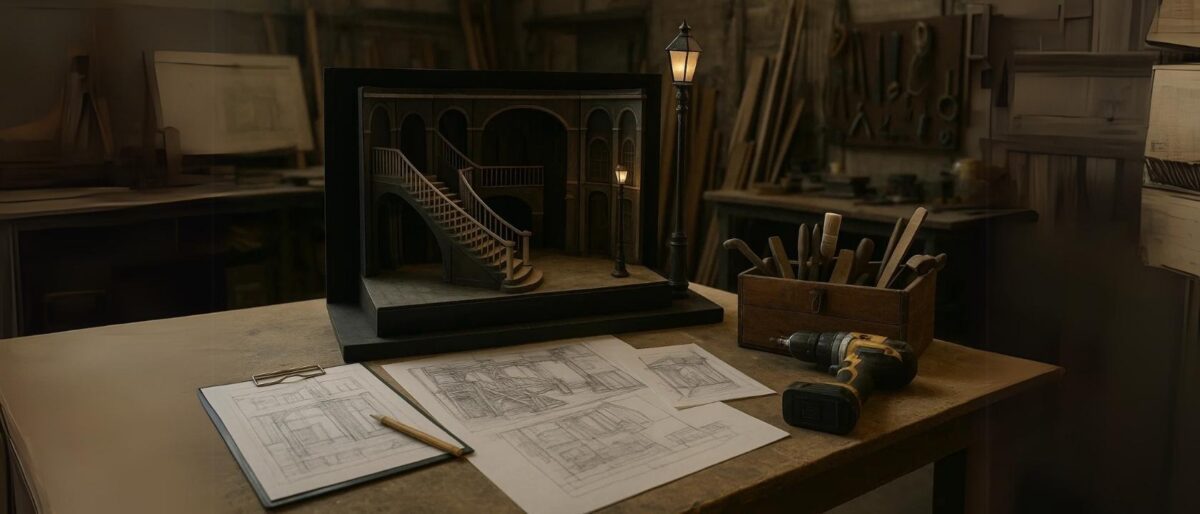
We all gasp at the grandeur of a Broadway stage—but have you ever wondered how that magic is made? Behind every rotating staircase and flickering streetlamp is a design journey full of sketches, sawdust, and split-second timing. Let’s peel back the curtain and explore where Broadway’s visual storytelling truly begins.
From Script to Sketch: Where the Vision Begins
Before a single nail is hammered or platform is raised, the set designer sits down with the most powerful tool in theater—words. Reading the script is more than just absorbing lines; it’s decoding subtext, atmosphere, rhythm, and space. Set designers act like detectives, scanning every stage direction, emotional beat, and musical swell for clues. Where does the action take place? How should the space feel—oppressive, dreamlike, kinetic? What metaphors are hidden in the scenery itself?
From these insights, the visual storytelling starts to bloom. Designers begin building concept boards that capture mood and tone—often filled with textures, historical references, color palettes, and architectural cues. These are followed by thumbnail sketches and, increasingly, 3D mockups that map the relationship between set pieces, performers, and lighting.
Take Natasha, Pierre & the Great Comet of 1812—a show where the set wasn’t just a backdrop but the entire world. The audience sat amidst catwalks, banquettes, and staircases, fully immersed. Or Hadestown, where a massive turntable rotated like fate itself, sweeping characters through love, loss, and myth.
This phase is highly collaborative. Directors and choreographers weigh in early to align the visual concept with the show’s emotional arc and movement flow. A single doorway may be placed to serve a dramatic entrance—or a dance break. Every inch matters when you’re telling a story onstage, and it all starts here—with a pencil, a plan, and a well-worn script.
Blueprints and Budgets: Marrying Art with Practicality
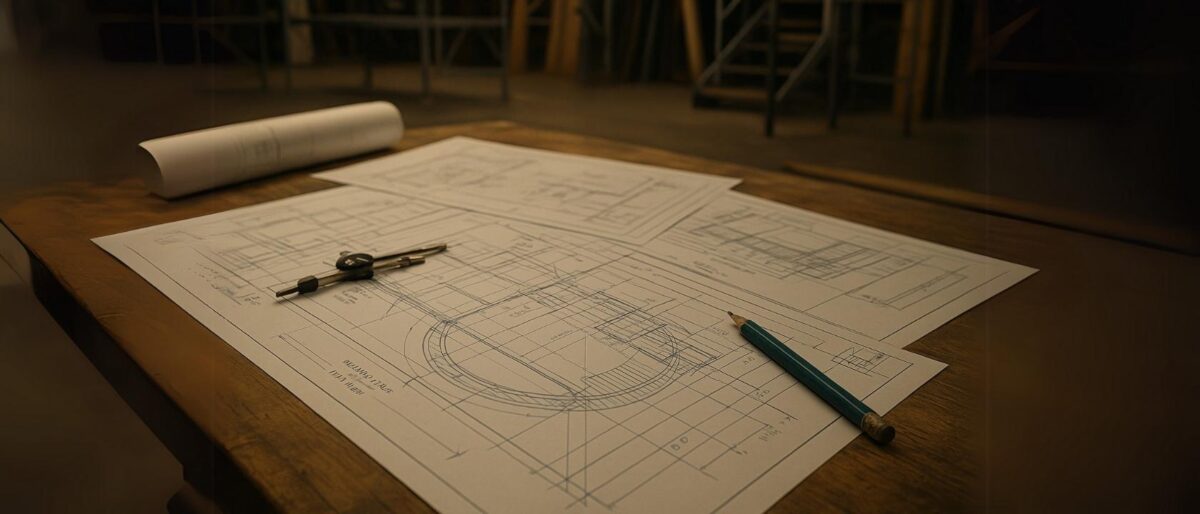
Once the dreamy sketches are approved, it’s time to get down to brass tacks—and steel frames. The scenic designer hands off the vision to a technical director, and together they translate it into cold, hard blueprints. These aren’t just pretty drawings anymore. They’re precise diagrams packed with measurements, safety specs, weight tolerances, and rigging logistics. Suddenly, every grand idea has to survive a reality check.
Limitations kick in fast: Broadway stages are not one-size-fits-all. Some theaters are wide but shallow, others deep with terrible sight lines. Load-bearing capacities, backstage space, and ceiling height all affect what’s possible. Want a two-story spinning library? Better make sure it clears the grid—and doesn’t crush the trap room below.
And then, there’s the budget. Designers often dream big—multi-level moving sets, automated lifts, specialty finishes—but those come with a price tag. That’s where the heartbreak happens: cutting beloved details, swapping real wood for scenic paint, or reducing moving elements to stay within limits.
Hamilton’s now-iconic rotating stage is a perfect example. It revolutionized blocking and pacing, allowing actors to walk against history—literally. But engineering that dual-turntable required structural reinforcement, meticulous coordination, and constant maintenance. Genius? Yes. Simple? Not even close.
In this stage of the process, compromise is constant. The magic lies in keeping the illusion alive while balancing creativity, safety, and dollars. And when it works? The audience never sees the struggle—they just see the story.
Model Building and Virtual Renders
Once the blueprints are in motion, it’s time to build something you can actually see—and spin around. Enter the model phase. Scenic designers often create 1:24 scale models of the set to map out not just the look, but the flow. These tiny replicas are more than just miniature eye candy—they help directors, choreographers, and lighting designers visualize how the stage will transform in real time. Scene transitions, actor paths, and lighting angles are all tested on this tiny version first.
But in today’s Broadway, foam board isn’t the only game in town. 3D modeling software like CAD, SketchUp, and Vectorworks now plays a major role in set design. These digital tools let designers manipulate structures, rotate pieces, and simulate lighting or movement—all before the first hammer swing. With digital renders, teams can test sight lines, predict technical issues, and even plan automation cues with uncanny precision.
Take Wicked, for instance. The show’s elaborate, clockwork-inspired set—with moving gears, looming arches, and a massive dragon overhead—was fully rendered in 3D before physical construction began. This virtual planning allowed the crew to anticipate challenges, rehearse transitions, and build with confidence.
These models—physical and digital—act as the set’s dress rehearsal. They catch problems early, refine storytelling, and turn blueprints into something tactile. It’s where dreams get their first three-dimensional breath—and sometimes their first major rewrite.
The Workshop: Where Ideas Become Wood and Steel
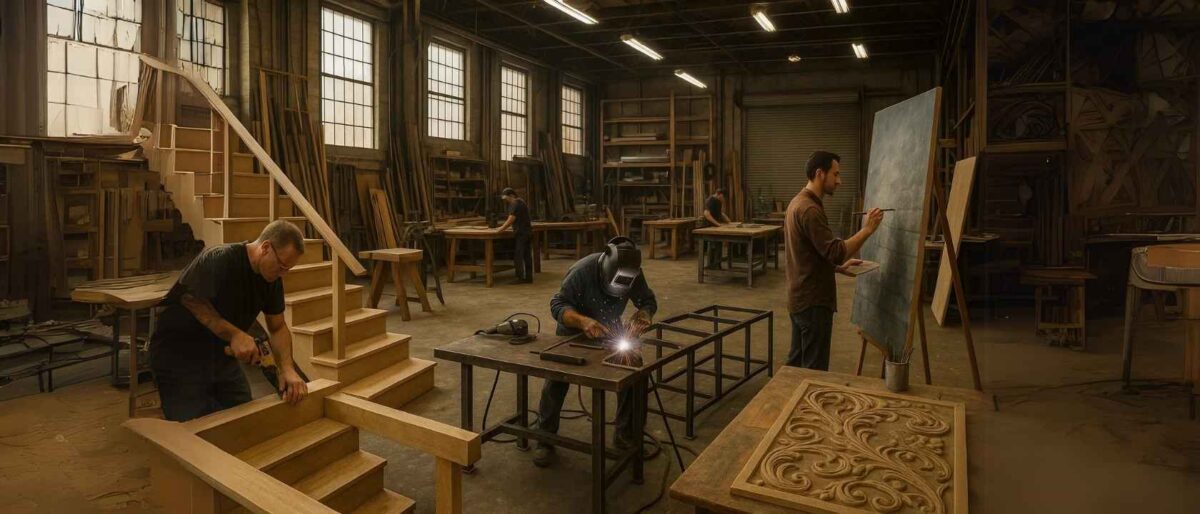
This is where the sketches get sawdust in their teeth. After the designs are approved and models reviewed, the real-world magic begins—in giant scenic shops often located miles outside New York City. These aren’t dainty studios. They’re industrial spaces where sparks fly, drills hum, and ideas are literally built from the ground up.
Skilled craftspeople take over: carpenters shape staircases, welders forge platforms, sculptors carve intricate details, and scenic painters transform plywood into marble, brick, or stormy skies. It’s a team effort with each trade adding a layer of realism and illusion. These folks don’t just build—they interpret, engineer, and problem-solve on the fly.
Once complete, every set piece must be disassembled, labeled, and transported—usually by truck—into the city. That’s when the logistical ballet begins. Load-ins happen overnight, often during “dark” days when no show is running. Crews move fast, installing massive structures in tight spaces while dodging catwalks, fly lines, and each other.
And somehow, it works. The stage transforms from bare bones to full-blown spectacle in days—or hours. A fantasy world, once born on paper, stands tall under theater lights. But behind the beauty is bruised knuckles, midnight builds, and a warehouse full of grit. It’s not glamorous, but it’s where the show is physically born.
Tech Rehearsals: When Everything Gets Real
At this stage, the set isn’t just built—it’s alive. Tech week is where everything collides: lights, sound, scenery, automation, props, projections, and the people who have to navigate it all eight times a week. The theater becomes a pressure cooker of cables, cue calls, and caffeine. And for set designers, it’s where the theory gets battle-tested under blinding lights and brutal time limits.
Load-in is just the beginning. Once the set is installed, designers and technicians swarm the space to fine-tune. Lighting designers test every angle. Stage managers pace through transitions. Crew members run scene changes on repeat while actors block movement around trapdoors, sliding walls, and flying props. It’s not uncommon for a single scene to be rehearsed for hours if something feels even slightly off.
And things will change—often fast. Designers may alter entire elements for safety reasons, better sightlines, or tighter pacing. What worked perfectly on paper might be a nightmare onstage when an actor misses a spike mark or a scenic piece overshoots by an inch. Everyone adapts in real time. No egos—just solutions.
Look at The Lion King: a masterclass in precision. Its stage uses hidden lifts, gliding platforms, and massive puppet rigs that must all function flawlessly. During tech, every moving piece—from Pride Rock’s rising floor to the elephant that enters through the audience—was tested again and again until it moved as if by instinct. The goal? Seamless storytelling that feels effortless—even if it takes a dozen sweaty humans behind the curtain to pull it off.
Tech rehearsals are exhausting, exhilarating, and absolutely essential. This is where Broadway’s spectacle gets sharpened, polished, and prepared to meet the audience eye-to-eye.
Moving Sets & Modern Technology
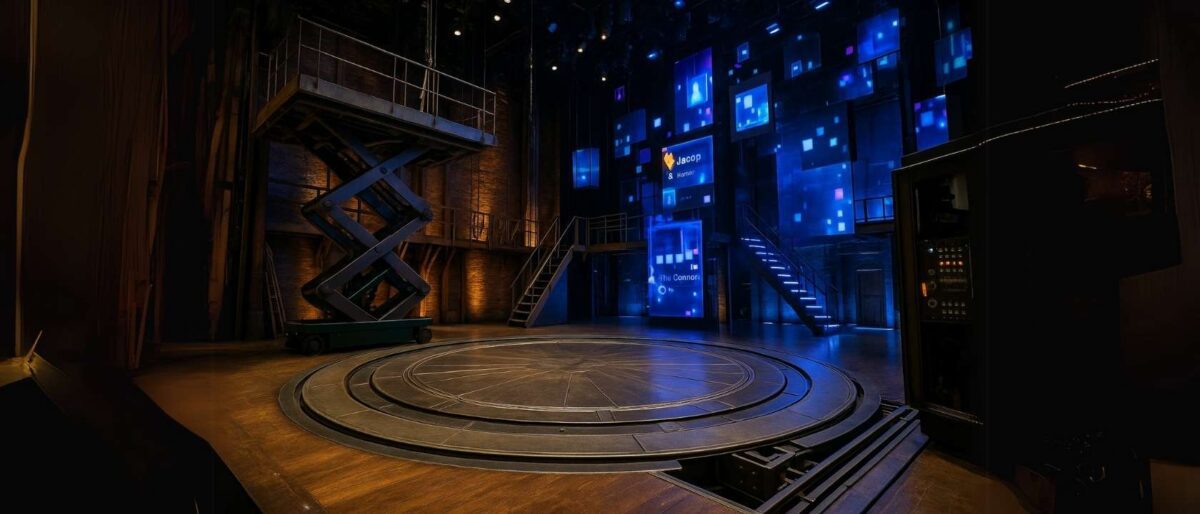
Broadway might be rooted in tradition, but its sets are anything but old-fashioned. Today’s stages are engineered wonders—automated turntables, fly systems, and hydraulic lifts transform static scenes into living, breathing environments. Walls glide. Staircases rise. Platforms spin. And the magic? It’s all choreographed down to the millisecond.
Technology doesn’t just enhance—it drives the story. In shows like Dear Evan Hansen, digital backdrops flicker with real-time texts and social feeds, pulling the audience into the character’s mental world. In Beetlejuice, wild projections and sudden scene shifts mirror the chaos of the afterlife, with doors flying open and floors vanishing beneath the actors’ feet. None of that happens by accident.
Behind the scenes, automation engineers work hand in hand with scenic designers and stage managers to program exact movements. Every piece of moving scenery must be tested, timed, and synced to cues—music, lights, actors’ positions—to prevent collisions or timing flubs. The more complex the set, the more delicate the balance between art and mechanics.
And that’s the challenge: this isn’t a theme park ride. Real humans interact with these machines. When a platform rises, an actor is likely standing on it. When walls shift, dancers are mid-choreography. One misstep or delay could be dangerous—or just ruin the illusion. So every rotation, lift, and glide is rehearsed with the same rigor as a monologue or a dance solo.
Today’s Broadway isn’t just a stage—it’s a moving machine. And when done right, the audience doesn’t see the tech. They just feel the momentum.
Touring Adaptations: How Broadway Sets Hit the Road
When Broadway shows pack their bags and hit the road, the sets come too—but not in their original, larger-than-life form. Touring versions are often scaled down for quick setups, tighter budgets, and the ever-changing quirks of regional theaters. Think of it like the travel-sized version of your favorite shampoo—same essence, compact packaging.
The challenge? Recreating Broadway magic in smaller or nontraditional venues. Some theaters are narrower, others have limited fly space, and many lack the backstage depth Broadway houses take for granted. That means designers must reimagine the set without losing the heart of the show. It’s not about cutting corners—it’s about working smarter within constraints.
Foldable, modular set pieces become essential. Walls hinge. Platforms collapse. Massive props become lightweight shells. And multi-use backdrops serve multiple locations through clever lighting shifts and prop swaps. The result? A visual sleight of hand that keeps the story flowing, even if the scenery is riding in a truck across Kansas.
Take Les Misérables for example. The original Broadway set featured a massive turntable and towering barricades. For the national tour, designers reimagined it with digital projections and collapsible scenic units—preserving the grandeur, but making it packable and efficient. Same emotional punch, less steel and sweat.
Touring set design is Broadway’s logistical Olympic event—speed, precision, and creativity all rolled into one. And when it’s done well? Audiences in Tulsa or Tucson feel the same awe as those in Times Square.
The Unsung Artists: Who’s Behind the Magic?
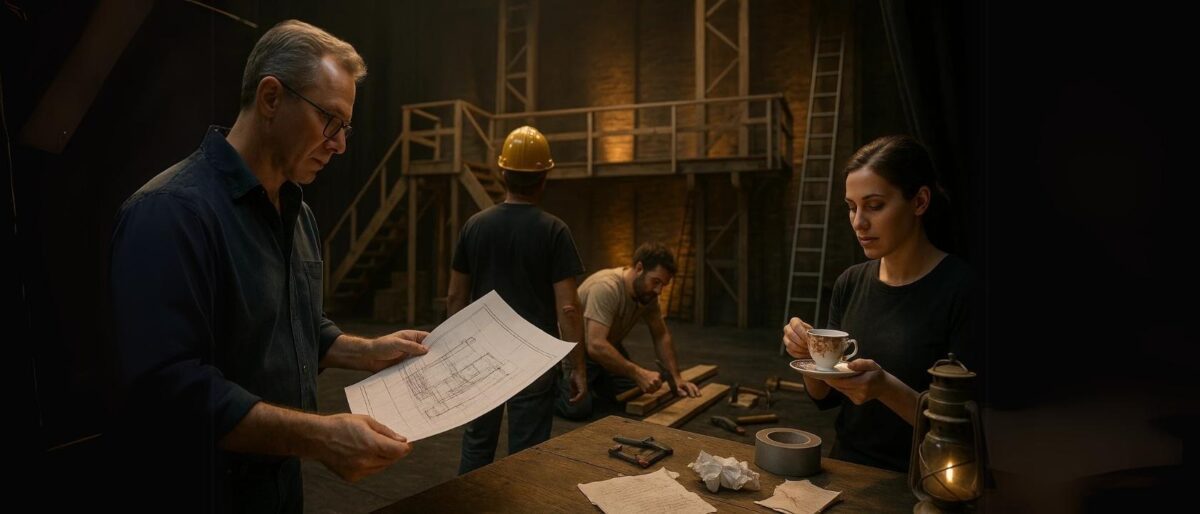
Broadway might spotlight the actors and composers, but the unsung heroes are the ones covered in sawdust and gaff tape, working before the curtain rises and long after it falls. Scenic designers, technical directors, carpenters, and props masters are the invisible hands shaping every scene. Without them, there is no stage—just a script and a spotlight.
Scenic designers dream it up. Technical directors figure out how to make it safe, stable, and show-ready. Carpenters and welders bring the bones to life. Props masters obsess over every object, from crumpled letters to ancient teacups, ensuring every item tells part of the story. It’s a delicate orchestra behind the scenes, and no single note can go missing.
The best designs come from seamless collaboration. Take David Korins and his revolutionary rotating scaffolds in Hamilton, or Christine Jones’ chaotic-yet-controlled world of American Idiot, filled with screens and scaffolding. Es Devlin’s work on The Lehman Trilogy and Strange Loop used rotating glass boxes and LED illusions to reflect time and memory. These names are legends in the field—but for every big name, there are hundreds of artists whose names aren’t in the Playbill, but whose fingerprints are on every beam and bolt.
They’re often invisible—but they’re absolutely essential. Their work doesn’t demand applause. It earns it, night after night, one seamless illusion at a time.
Conclusion
The next time you settle into a velvet seat and the curtain rises, take a moment to appreciate the world unfolding before you. That crumbling alleyway, glowing ballroom, or enchanted forest didn’t just appear—it was dreamed, drawn, engineered, and built by a team of unsung visionaries.
Broadway set design is part art, part architecture, part organized chaos. It’s a symphony of sketches, steel, storytelling, and sweat. From the first sketch on a napkin to the final cue in tech rehearsal, every piece of scenery carries the fingerprints of dozens—sometimes hundreds—of artists and artisans working behind the scenes to transport you somewhere else.
So while the spotlight may shine on the stars, remember: the magic starts long before opening night, in quiet studios, dusty workshops, and midnight load-ins. That’s the real set piece. That’s Broadway.