Are VIP Tickets Worth It? What You Really Get at Events
August 8, 2025
What Are Broadway Rush Tickets and How Do They Work?
August 8, 2025Should You Buy Partial View Broadway Seats? Pros & Cons

That cheap Broadway seat looks tempting—until you see the words “partial view.” Should you risk it? Maybe. Maybe not. Some are hidden gems. Others block half the show. Here’s what you need to know before buying limit
What Are Partial View Seats, Really?

Partial view seats come with a warning—and for good reason. These are seats where something physically blocks part of your view of the stage. It might be a pillar, a lighting rig, a set wall, or even an overhanging balcony cutting off your sightline. Some shows label them honestly. Others? Not so much.
In mild cases, you’ll miss a sliver of stage left or right—like an actor entering from the wings or a set piece that’s briefly hidden. In worse cases, half the choreography, facial expressions, or key visuals are lost behind the obstruction.
The term “partial view” is often used as a catch-all, but it’s not the same as “obstructed view” (which usually means significantly blocked) or “limited view” (a softer warning with slightly less impact). Theaters use these labels to manage expectations—and to price accordingly.
One thing’s clear: all partial views are not equal. Some are totally fine, others are frustrating. Knowing what you’re getting into is half the battle—and can save your night (and your wallet).
Why They’re So Much Cheaper
If you’ve ever seen a Broadway ticket priced way below the rest, there’s probably a catch—and that catch is usually the view. Partial view seats are almost always discounted, even for sold-out shows. You’re still in the room, but you’re not getting the full picture. Literally.
Most of these budget-friendly spots sit in the corners of the mezzanine, along the far sides of the orchestra, or even in the front row where the stage towers above your eye line. Theaters know these sightlines aren’t ideal, so they lower the price accordingly.
For example, you might see orchestra center seats for $199—and then a partial view seat two rows over for $79. Same show, same night, very different experience.
Some theaters are notorious for tricky views. At the Gershwin Theatre (home of Wicked), side mezzanine seats often cut off entrances. The Shubert Theatre has boxes and corners that block sightlines for shows like Chicago or Matilda. It’s not always a deal-breaker—but it’s priced like one for a reason.
If you’re on a tight budget, these tickets can be a blessing. But you need to know where that discount comes from—and what you’re giving up in return.
The Pros: When They’re Totally Worth It

Not all partial view seats are bad news. In fact, sometimes they’re an absolute steal. If you’re willing to sacrifice a sliver of scenery, you could walk away with a Broadway experience that feels full-price—at half the cost.
- Big savings on high-demand shows – Want to see Hamilton or Wicked without draining your bank account? Partial view is often the only way in under $100.
- You still hear everything – Dialogue, music, vocals—none of that is affected. As long as you’re not behind a wall, your ears are still front row.
- Great for sound-heavy or concert-style shows – Productions like Six or Hadestown don’t rely heavily on set changes or movement. You’re getting the energy, the music, and the lights, even if you miss a few steps.
- You often only miss minor staging moments – Sometimes “partial view” just means you can’t see stage right entrances or one corner of a dance number.
- Some aren’t really partial at all – The label’s there for legal reasons, but your view might be 90% intact. It’s a gamble, but one that often pays off.
One theatergoer snagged a $69 seat for Hamilton in a side box. “I missed two entrances. That’s it,” she said. “Totally worth it for the price.”
If you care more about the music, the moment, and being in the room, partial view might be your ticket to Broadway on a budget.
The Cons: When You Might Regret It

While partial view seats can save you serious cash, they’re not always a smart buy—especially if you’re hoping for a full, immersive Broadway experience. Sometimes, “partial” really means “you’re going to miss something important.”
- Key scenes might be blocked – Some shows use the entire stage. If you’re stuck on the far side, you could miss pivotal moments, entrances, or climactic scenes happening on the opposite end.
- You miss emotional details – When actors turn away or perform downstage, their facial expressions might be completely out of view. That’s a big deal for drama-heavy productions.
- Choreography gets chopped – Dance-heavy shows like Moulin Rouge or Hamilton lose impact if you can’t see the full formation or movement.
- Important projections or visuals can disappear – Some sets rely on video screens, shadows, or lighting effects. A blocked angle might make you feel like you’re watching the show with one eye closed.
- Partial can sometimes mean “nearly blind” – Especially in older theaters, certain box seats or extreme corners are labeled “partial view” but really cut off more than half the stage.
One guy who saw Sweeney Todd from a partial view seat said, “I missed the barber chair scenes entirely—and that’s the point of the show!”
If it’s your dream show or a once-in-a-lifetime trip, that $50 savings might not be worth the frustration.
How to Check What You’ll Actually See
“Partial view” is a vague label. Sometimes it means you’ll miss a corner of the stage. Sometimes it means you’ll miss half the show. Don’t guess—verify. A little research can help you avoid a total letdown.
- Use SeatPlan.com or A View From My Seat – These sites offer real photos from specific seat numbers. You’ll see what the stage looks like from Row G, Seat 26—not a generic diagram.
- Search the theater + seat number – Type something like “Imperial Theatre Row L Seat 2 partial view” into Google. Odds are, someone’s reviewed it or posted a photo.
- Reddit and Broadway forums are gold – Subreddits like r/Broadway or sites like BroadwayWorld have threads full of real-life seat reviews and advice from fans who’ve been there.
- Watch bootleg clips (carefully) – If you can find a full-stage video of the show, it helps to visualize where the action happens—and what you might miss depending on your angle.
No two seats are the same. A “partial view” in the balcony might be worse than a “partial view” box in the orchestra. Do a 2-minute check before you buy—it could mean the difference between a great deal and a wasted ticket.
Which Shows Are Safe with Partial View?
Not all shows suffer from a blocked corner. Some productions are built for sound and spectacle, not subtle facial expressions or complex choreography. If you’re looking to save without missing the magic, these shows are safer bets from a partial view seat:
- Wicked – The action is big, the vocals are powerful, and most scenes play center stage. Even from the side, you’ll catch the big moments.
- Chicago – Minimal set. Most of the performers stay downstage, facing forward. What you hear is what you get.
- Six – Concert-style format with the queens performing mostly in a line. The set rarely blocks sightlines, and the energy hits no matter where you sit.
- Hadestown – Strong sound design and lighting carry the emotion. It’s atmospheric and layered—but you won’t lose much if your view is slightly clipped.
On the flip side, here are shows where partial view seats can be a letdown:
- Hamilton – Choreography spans the entire stage. Miss part of it, and you miss the story.
- Moulin Rouge – Visually rich, with immersive lighting, dancing, and set pieces that wrap around the audience. You want the full effect.
- Sweeney Todd – If your view blocks the barber chair, you miss key scenes—literally and emotionally.
The takeaway? Some shows let the music do the heavy lifting. Others demand a full-frame view. If you’re seeing a visual spectacle, pay up. If it’s more about sound and story, partial view might be all you need.
Tips for Getting the Best Value
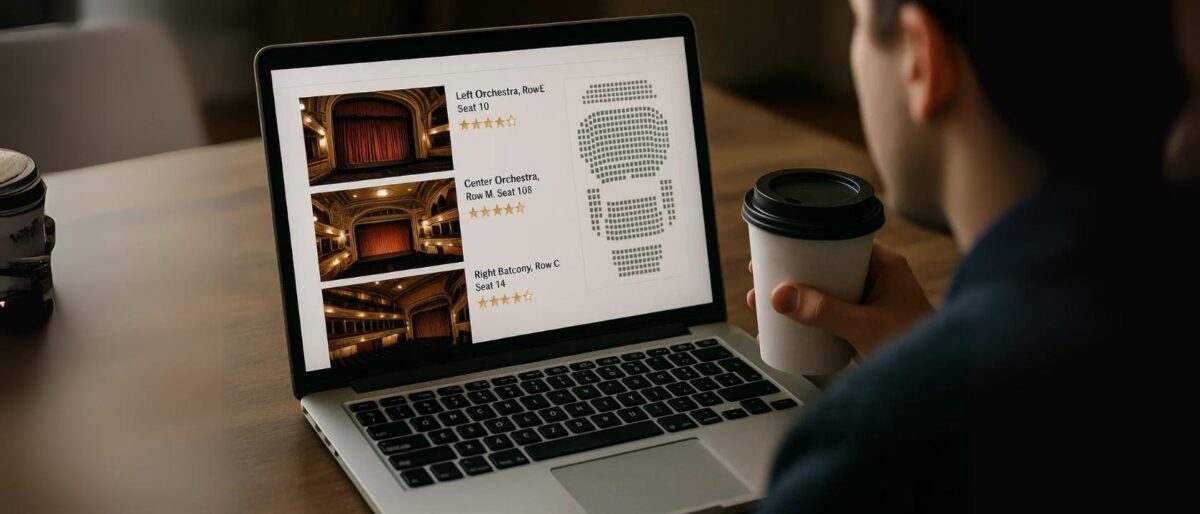
If you’re thinking about booking a partial view seat, there’s a smart way to do it. You don’t need to gamble blindly—just make a few strategic moves to get the most for your money (and your view).
- Use the box office or verified resale sites – These usually give more accurate seat labels and better pricing. Plus, you avoid hidden fees from sketchy ticket sites.
- Front partial view is better than far mezzanine – Being close—even if slightly blocked—beats being so far back you feel like you’re watching ants act Shakespeare.
- Look for aisle or off-center orchestra seats – Some “partial view” orchestra seats only miss side entrances but still offer excellent sound and depth.
- Ask about open seats after curtain – Ushers won’t always move you, but if the house isn’t full, it doesn’t hurt to ask if you can slide into something better during intermission.
- Don’t skimp if it’s your one shot – If this is a dream show or a once-in-a-decade opportunity, pay more for peace of mind. A better seat is sometimes worth the splurge.
Partial view can be a great value—but only if you know what you’re getting into. Make the seat work for you, not against you.
Conclusion: Is a Partial View Seat Worth It?
If you’re chasing Broadway magic on a budget, partial view seats can absolutely deliver. You’ll hear everything, feel the energy, and catch most of the action—without paying premium prices. For shows that aren’t visually complex, it’s a solid deal.
But if you’re expecting a perfect, cinematic view or seeing a show you’ve dreamed about for years, it might fall short. Missing key scenes or emotional details can dampen the moment.
The key? Know what you’re getting. Do the research. Set realistic expectations. That’s how you avoid regret—and how you turn a discount ticket into a great night out.
Found this helpful? Share it with someone booking their first Broadway ticket.