How Netflix Changed Stand-Up Comedy Forever
April 30, 2025
Best Broadway Shows for Families in 2026
April 30, 2025Top 10 Broadway Theaters You Must Visit
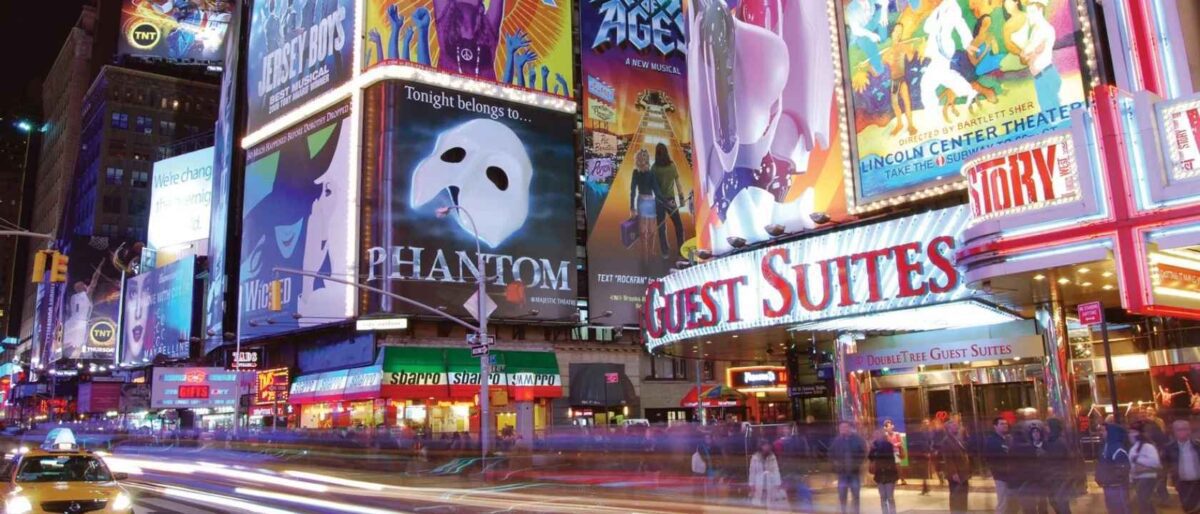
Broadway isn’t just about the shows—it’s about the stages that make magic happen. From ornate, century-old landmarks to modern musical powerhouses, each theater tells its own story. Whether you’re a first-timer or a seasoned theatergoer, these 10 legendary Broadway venues deserve a starring role on your NYC itinerary.
1. The Majestic Theatre
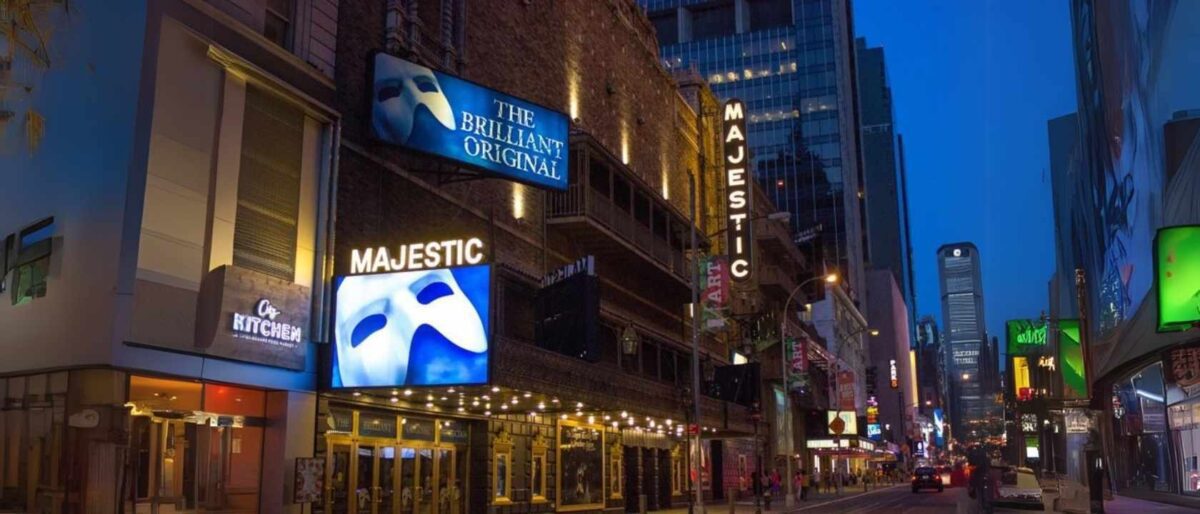
Opened: 1927
Location: 245 W 44th St, New York, NY
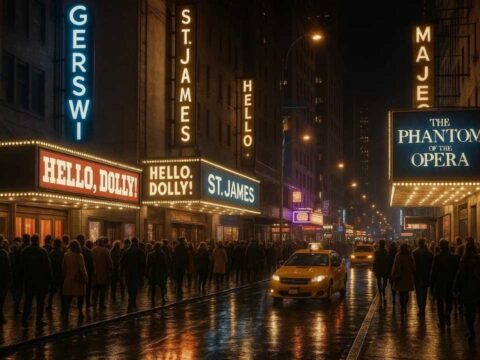
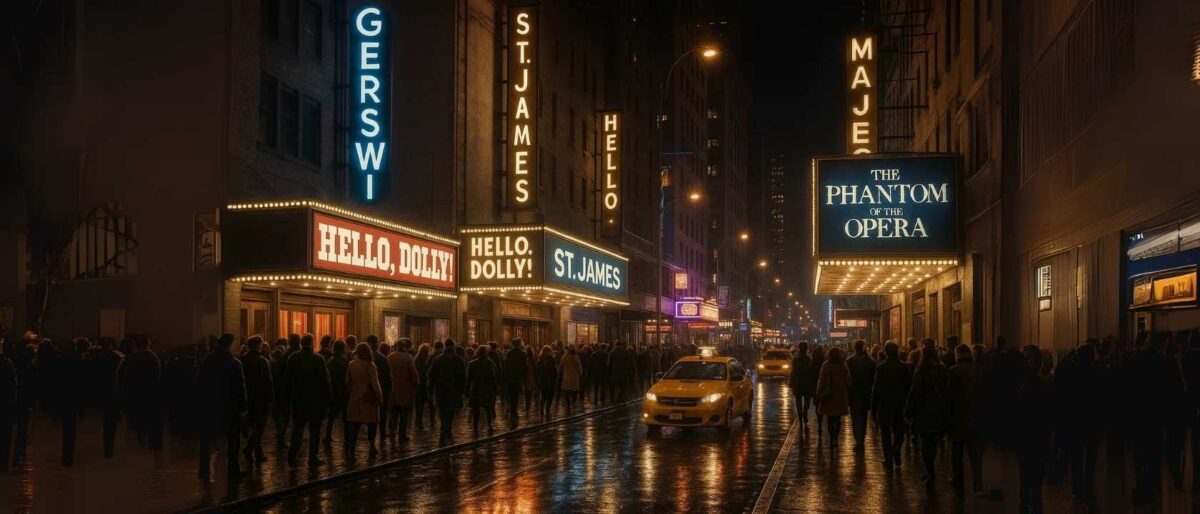
The Majestic Theatre lives up to its name—it’s grand, iconic, and steeped in Broadway history. Best known as the long-time home of The Phantom of the Opera, the Majestic holds a sacred place in the hearts of theatergoers as the venue that hosted Broadway’s longest-running musical, playing for over 35 years until its final bow in 2023.
Built with musicals in mind, the Majestic was one of the first theaters designed to fully accommodate large-scale productions. From its sweeping proscenium arch to the opulent gold-leaf ceiling and plush red velvet seats, this venue oozes old-school theatrical charm. With a seating capacity of over 1,600, it’s big enough to feel electric but intimate enough that no seat feels too far from the stage.
Fun fact: The theater’s acoustics were carefully crafted for live orchestras and big vocal performances, making it a favorite among performers and directors alike.
Whether you saw the chandelier crash in Phantom or plan to catch the next blockbuster production, visiting the Majestic is like stepping into a living memory of Broadway’s golden age—timeless, ornate, and unforgettable.
2. The Gershwin Theatre
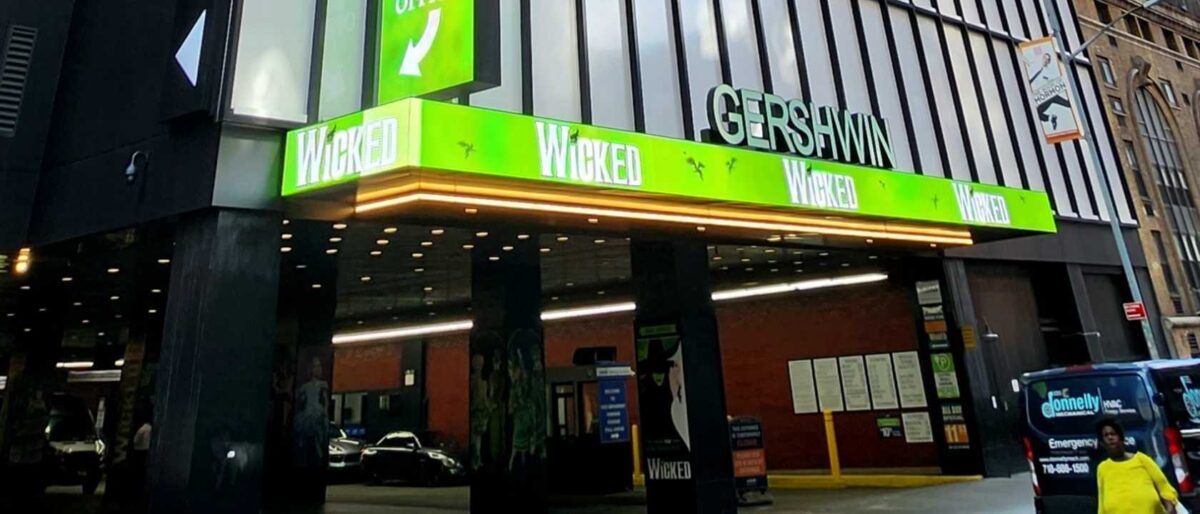
Opened: 1972
Location: 222 W 51st St, New York, NY
Bold, modern, and massive—The Gershwin Theatre is Broadway’s biggest house, built to impress and designed to dazzle. With a staggering 1,933-seat capacity, it’s been home to the blockbuster musical Wicked since 2003, drawing crowds from all over the world eager to defy gravity alongside Elphaba and Glinda.
Unlike many of Broadway’s historic playhouses, the Gershwin embraces a sleek, contemporary style. Its wide stage and spacious auditorium allow for jaw-dropping sets, flying effects, and full-scale orchestra sound. Every detail—from the soaring ceiling to the wraparound mezzanine—creates a cinematic experience, making it a perfect fit for spectacle-driven productions.
Fun fact: The theater was renamed in 1983 to honor legendary American songwriting duo George and Ira Gershwin. Their legacy lives on in every note performed on its stage.
Even before curtain-up, the Gershwin impresses. Its lobby features the American Theatre Hall of Fame, showcasing bronze plaques of Broadway legends. Whether you’re a musical superfan or a first-timer, this is the venue that makes theater feel larger than life—in every sense of the word.
3. The Richard Rodgers Theatre

Opened: 1925
Location: 226 W 46th St, New York, NY
If there’s a theater that embodies Broadway’s modern renaissance, it’s the Richard Rodgers Theatre. Though it’s been a staple of the Theater District since the Roaring Twenties, the venue hit stratospheric fame as the home of Lin-Manuel Miranda’s cultural juggernaut Hamilton—a show that redefined what a musical could be and made theater history night after night.
But this house was winning Tonys long before Hamilton ever picked up a quill. In fact, the Richard Rodgers holds the record for hosting the most Tony Award-winning Best Musicals in Broadway history. From Guys and Dolls to In the Heights, it’s been the launchpad for era-defining productions across decades.
Inside, the theater strikes a perfect balance between vintage charm and functional elegance. With just over 1,300 seats, it offers both intimacy and energy—ensuring audiences feel connected, whether they’re in orchestra or mezzanine.
Fun fact: The theater was renamed in 1990 in honor of composer Richard Rodgers, one half of the legendary Rodgers and Hammerstein duo. Fitting, since his influence is written all over the American musical landscape—and this venue continues to shape it.
Whether you’re revisiting a classic or witnessing the next big thing, the Richard Rodgers Theatre isn’t just where hits happen—it’s where legacies are made.
4. The Lyceum Theatre
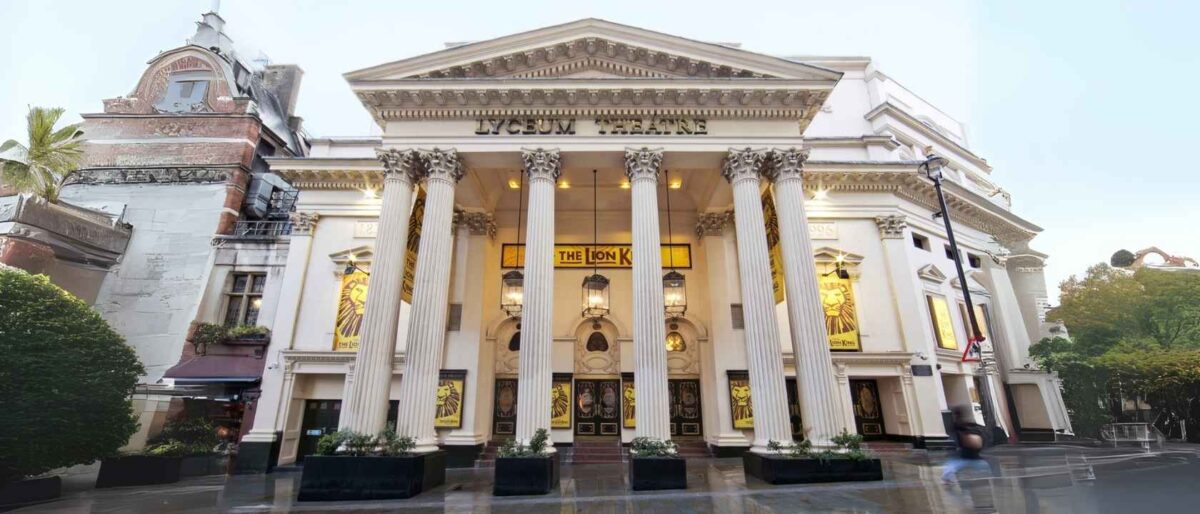
Opened: 1903
Location: 149 W 45th St, New York, NY
Step into the Lyceum Theatre, and you’re not just entering a performance space—you’re walking into a piece of living history. As the oldest continuously operating Broadway theater, the Lyceum has been hosting plays, dramas, and landmark productions for over 120 years, making it a crown jewel of New York’s theatrical legacy.
Architecturally, the Lyceum is a stunner. Built in the opulent Beaux-Arts style, it features elegant moldings, sweeping balconies, and marble accents that evoke a golden era of theatergoing. It’s one of only a handful of Broadway venues to be designated both an exterior and interior New York City landmark.
Despite its smaller size (around 900 seats), the Lyceum offers a surprisingly intimate experience, especially prized for straight plays and actor-driven productions. And if you’re into history, its museum-like lobby is a treat—displaying rare memorabilia, old photographs, and artifacts that trace Broadway’s evolution through the decades.
Fun fact: It was one of the first theaters to be built entirely with electric lighting—a true innovation for its time.
5. The Shubert Theatre
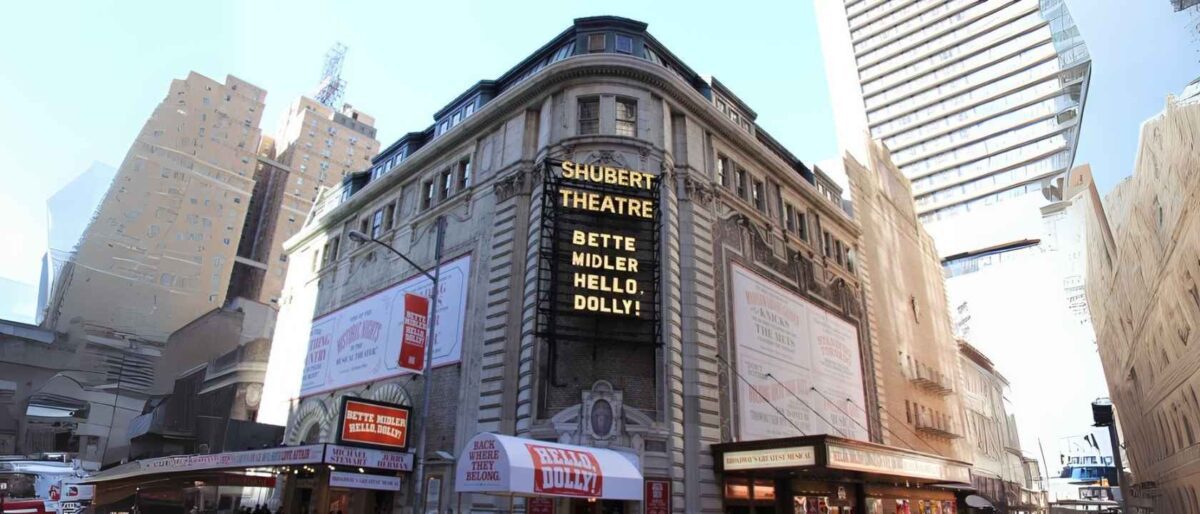
Opened: 1913
Location: 225 W 44th St, New York, NY
With its elegant arches, golden flourishes, and vintage charm, the Shubert Theatre is pure Broadway royalty. Opened over a century ago, it remains one of the most prestigious and recognizable venues in the Theater District. Today, it’s best known as the long-running home of Chicago—the sultry, jazz-fueled hit that’s been razzle-dazzling audiences for decades.
From the moment you step inside, the Shubert’s ornate architecture transports you to Broadway’s golden age. With beautifully carved details, rich wood finishes, and a layout that creates a warm, immersive atmosphere, the venue feels intimate despite seating over 1,400 people. The top-tier acoustics are a performer’s dream, giving every note and line a crisp, resonant quality that fills the space effortlessly.
Fun fact: The theater is named after Sam S. Shubert, one of the founding brothers of the Shubert Organization—a powerhouse company that still owns and operates many Broadway venues today. It’s not just a theater—it’s the heart of a Broadway empire.
Whether you’re there to witness Fosse-inspired footwork or catch the next revival gem, the Shubert Theatre offers a quintessential Broadway experience. It’s more than a stage—it’s a symbol of everything Broadway stands for: drama, elegance, and show-stopping spectacle.
6. The Eugene O’Neill Theatre
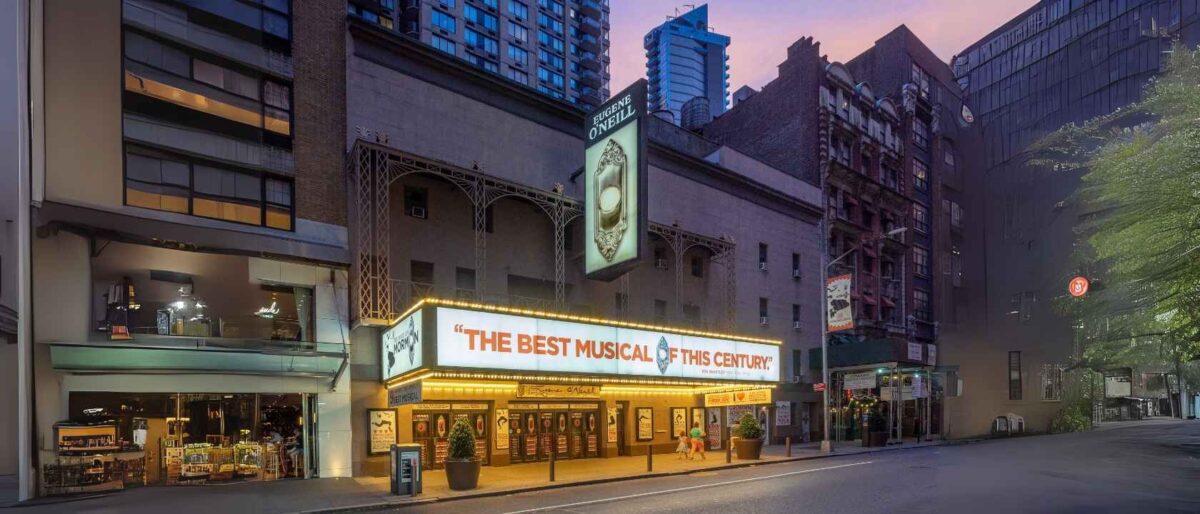
Opened: 1925
Location: 230 W 49th St, New York, NY
With its warm lighting, gold-accented interior, and intimate feel, the Eugene O’Neill Theatre is one of Broadway’s coziest gems—and home to one of its most outrageous hits. Since 2011, this venue has hosted the hilariously irreverent and Tony-sweeping musical The Book of Mormon, delighting (and shocking) sold-out audiences night after night.
Though located just steps from the hustle of Times Square, stepping into the Eugene O’Neill feels like a calm retreat—perfect for audiences who appreciate strong sightlines and a clear view from nearly every seat in the house. The theater holds just over 1,000 guests, offering that ideal balance between scale and intimacy that makes the laughs land harder and the quiet moments more impactful.
Fun fact: The theater is named in honor of Eugene O’Neill, America’s first great playwright and the only U.S. dramatist to win the Nobel Prize for Literature. Fittingly, the venue has hosted several of his works, solidifying its connection to literary and theatrical history.
7. The New Amsterdam Theatre
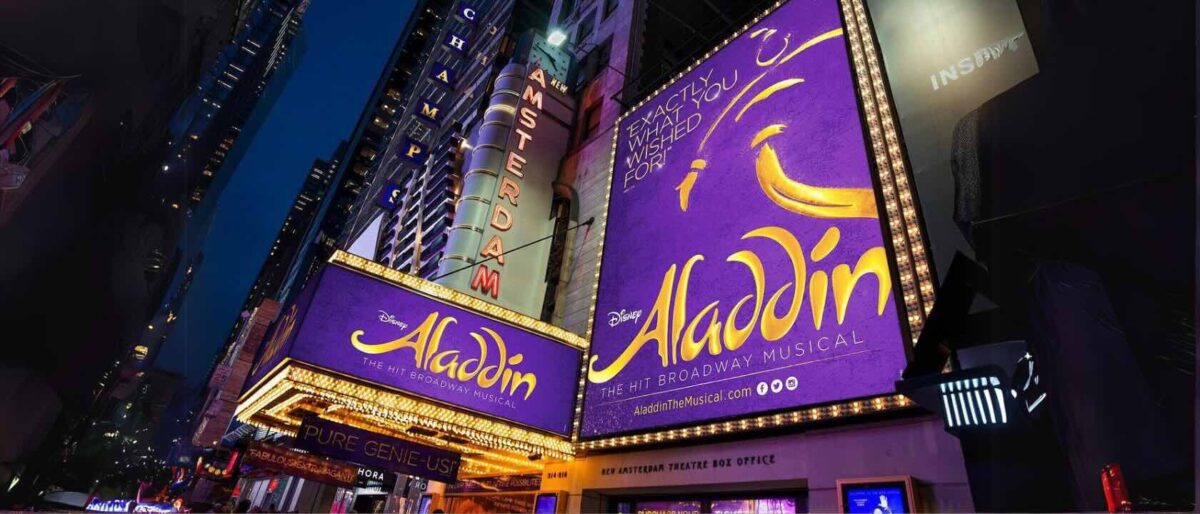
Opened: 1903
Location: 214 W 42nd St, New York, NY
If Broadway theaters were royalty, the New Amsterdam Theatre would wear the crown with a jeweled smile. As one of the most lavish and historically significant venues in New York City, it’s best known today as the home of Disney’s long-running spectaculars, including The Lion King and Aladdin.
Step inside and you’re immediately immersed in Art Nouveau grandeur. With its sweeping murals, gilded columns, and ornate plasterwork, the New Amsterdam feels more like a palace than a playhouse. Originally designed for Ziegfeld Follies in the early 1900s, the theater was later rescued from decline and meticulously restored by Disney in the 1990s as part of the Times Square revitalization project.
Today, it serves as the go-to venue for Disney’s stage magic. With its deep stage and modernized backstage facilities hidden behind a classic façade, it perfectly blends Broadway history with cutting-edge production capabilities.
Fun fact: During its restoration, over 100 artisans were hired to bring the New Amsterdam back to life, recreating stained glass, velvet drapes, and the original color palette down to the tiniest details.
8. The Nederlander Theatre
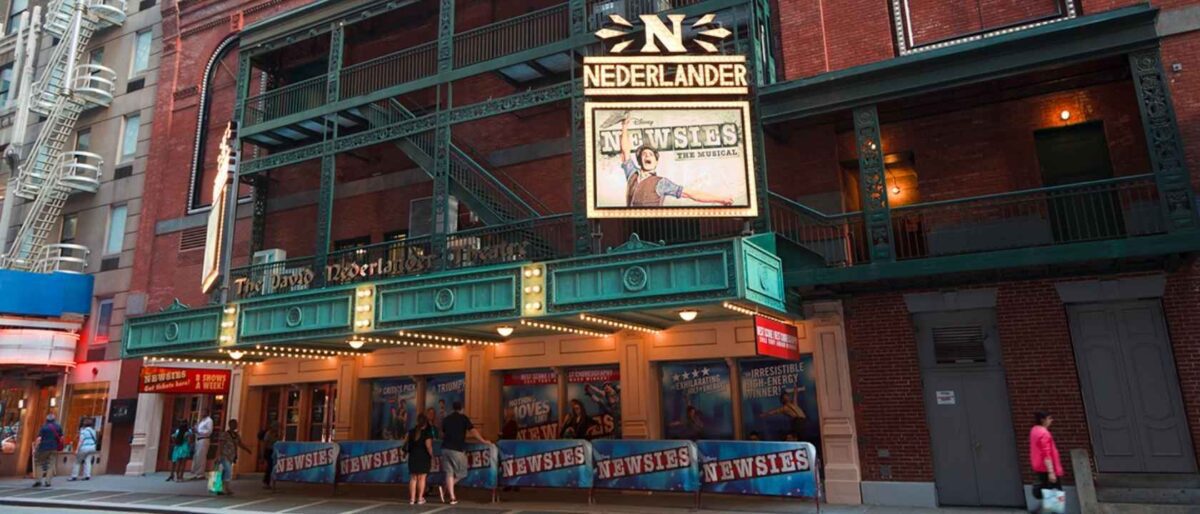
Opened: 1921
Location: 208 W 41st St, New York, NY
In a city known for glamor and polish, the Nederlander Theatre stands out for its raw, gritty intimacy—a vibe that perfectly matched its most iconic tenant, the era-defining musical RENT. For 12 years, Jonathan Larson’s rock opera transformed this unassuming venue into a sanctuary for love, loss, and bohemian spirit, redefining what Broadway could be.
Unlike the towering, gold-leafed palaces a few blocks north, the Nederlander embraces its slightly scruffy charm. With just under 1,200 seats, the theater has an underground edge that makes it a perfect match for edgier, high-energy productions. Think exposed brick, lived-in energy, and acoustics that make rock guitars rattle your seat—in the best way.
Fun fact: It’s one of the southernmost theaters in the Broadway district, sitting just a few doors up from 40th Street. Its location made it a bit of an underdog—which somehow made it even cooler when RENT became a cultural phenomenon there.
Over the years, the Nederlander has housed a mix of rock, pop, and revival productions, always with that distinct indie-theater edge. If you’re drawn to Broadway’s grunge side—the shows that shake the walls and break the rules—this theater is your kind of place.
9. The Minskoff Theatre
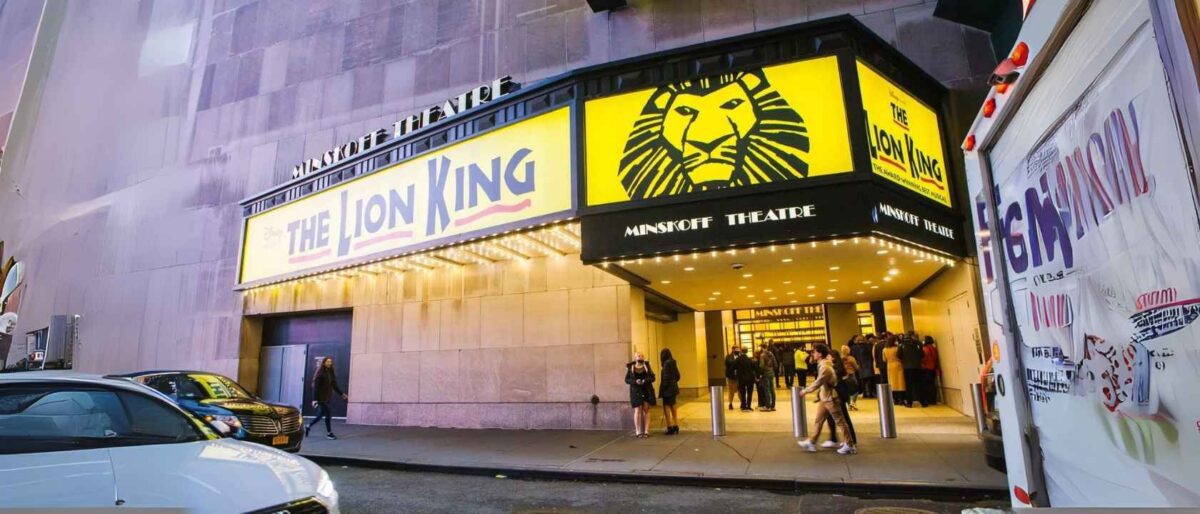
Opened: 1973
Location: 200 W 45th St, New York, NY
Bright, spacious, and undeniably modern, the Minskoff Theatre is home to one of Broadway’s most visually stunning triumphs: Disney’s The Lion King. Since 2006, this breathtaking adaptation has roared its way into hearts around the globe from this very stage—making it the longest-running Disney Broadway production of all time.
Unlike many historic theaters in the district, the Minskoff embraces a clean, contemporary design with expansive lobbies, elevated views of Times Square, and a streamlined interior layout. With over 1,600 seats and top-tier acoustics, it’s an ideal space for large-scale productions that thrive on visual spectacle and immersive staging.
Fun fact: The theater is uniquely located inside the Marriott Marquis building, several floors above street level. Escalators carry guests up into the venue, making the pre-show arrival feel like part of the experience—especially when the city’s neon chaos gives way to the theater’s golden glow.
The Minskoff may not be draped in vintage velvet or marble columns, but it delivers in sheer scale and functionality. It’s a place where Broadway meets blockbuster, and every seat feels like a front-row safari. For theatergoers seeking unforgettable visuals and a flawless production experience, it’s a must-visit destination.
10. The Winter Garden Theatre
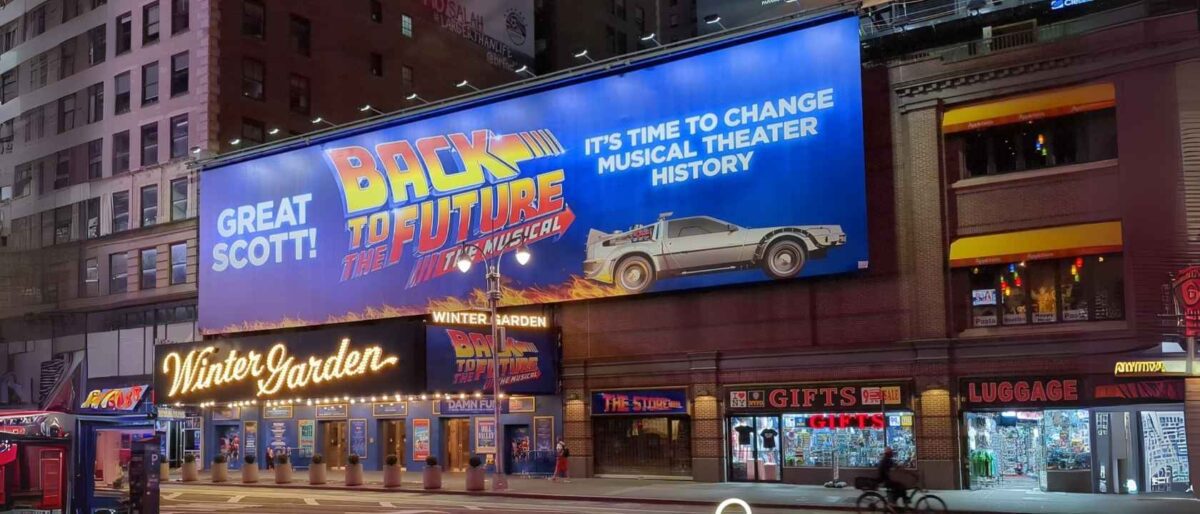
Opened: 1911
Location: 1634 Broadway, New York, NY
The Winter Garden Theatre has seen it all—from dancing queens to bio-exorcists—and it’s one of Broadway’s most versatile and beloved venues. Originally a horse exchange (yes, really), this grand space was transformed into a playhouse that’s now hosted everything from Mamma Mia! to Beetlejuice to the current revival of Funny Girl.
The stage is known for its unusually wide proscenium and spacious layout, which makes it perfect for big ensemble numbers, showy choreography, and large scenic designs. It’s this adaptability that keeps producers coming back. Whether it’s glittering Greek islands or haunted houses, the Winter Garden delivers the space and tech to bring ambitious visions to life.
Fun fact: When it first opened in 1911, it was literally a horse trading venue—transformed into a theater by the Shubert brothers, who added a sloped floor and called it showbiz history in the making.
Today, the Winter Garden strikes a balance between Broadway tradition and modern flexibility. Its ornate detailing and rich legacy mix with up-to-date lighting and sound, creating a venue where both nostalgia and innovation take center stage. For longtime theatergoers and first-timers alike, it’s a Broadway essential worth every ovation.
Honorable Mentions
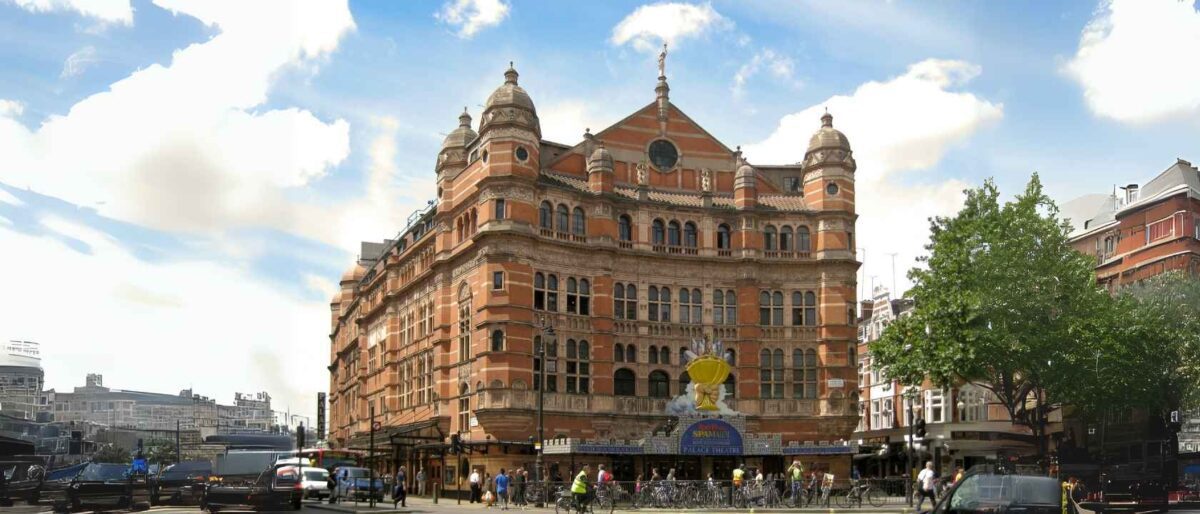
While the top 10 Broadway theaters are undeniably iconic, a few more deserve a standing ovation of their own. These venues may not always make the front of the Playbill, but their stories, legacy, and architecture are pure Broadway magic.
The Hudson Theatre
Opened: 1903
Known as Broadway’s oldest theater overall, the Hudson is a beautifully restored gem that blends historic charm with modern comfort. After years in limbo as a TV studio and event space, it was gloriously revived in 2017 and has since hosted acclaimed productions like Sunday in the Park with George and Plaza Suite. Its glowing Tiffany glass and intimate design make it a favorite among theater purists.
The Imperial Theatre
Opened: 1923
Famous as the long-time home of Les Misérables, the Imperial is a classic mid-size Broadway venue with deep roots in musical history. Its strong acoustics and elegant sightlines have made it a go-to for major productions like Ain’t Too Proud and Carousel. It’s a theater that consistently lives up to its name—regal, refined, and rich with Broadway legacy.
The Palace Theatre
Opened: 1913 (currently undergoing a dramatic vertical lift)
Once the pinnacle of vaudeville, the Palace has hosted legends from Judy Garland to Liza Minnelli. Today, it’s making headlines again as part of a jaw-dropping renovation—literally being lifted 30 feet into the air to make room for retail space underneath. When it reopens, it will be one of Broadway’s most technologically advanced historic venues, proving that even century-old theaters can find a new spotlight.
These honorable mentions are more than footnotes—they’re cornerstones of Broadway’s past, present, and future. If you get the chance, step inside—you’ll feel the history before the curtain even rises.
Tips for Visiting Broadway Theaters
Seeing a Broadway show isn’t just about the performance—it’s about soaking up the full experience. From historic lobbies to perfectly picked seats, a little planning can turn a great night into an unforgettable one. Here’s how to make the most of your visit to these iconic theaters:
Arrive Early
Give yourself at least 30–45 minutes before curtain time. Not only will this help you avoid the inevitable rush at security and will-call, but it gives you a chance to admire the architecture and ambiance. Many Broadway theaters feature gorgeous interiors, ornate lobbies, and historical displays that are easy to miss if you’re sprinting to your seat.
Dress Code: Keep It Classy but Comfortable
There’s no strict dress code for Broadway shows, but casual chic to semi-formal is a safe bet. Think smart jeans, blouses, button-downs, and dresses. Skip the flip-flops and graphic tees—this is Broadway, after all. That said, comfort matters. You’ll be sitting for 2+ hours, so make sure you can relax without fussing with heels or tight waistbands.
Know Your Lobby Layout
Each theater handles concessions and bathrooms differently. Some venues have multiple lobby levels, while others have tiny intermission lines that move at a glacial pace. Grab a drink before the show, and if you see a bathroom line forming before curtain, hop in—it’ll only get longer. Don’t miss out on lobby displays, Playbill walls, or historical photos—especially in theaters like the Lyceum or New Amsterdam.
Where to Sit?
- Orchestra: Great for feeling close to the stage, especially rows D–M. But beware of extreme side seats that may have obstructed views.
- Front Mezzanine: Often the best view in the house. Elevated, centered, and perfect for taking in choreography and staging.
- Rear Mezzanine/Balcony: Budget-friendly and still a solid experience in smaller theaters, though you’ll lose some detail in big productions.
With the right mindset—and maybe a snack stashed away—visiting a Broadway theater is more than entertainment. It’s a moment. Arrive early, look up often, and let yourself be wowed by the place as much as the performance.