Why Hasan Minhaj Is the King of Political Comedy
May 27, 2025
How Artists Plan World Tours: The Backstage Business
May 28, 2025What Is a Jukebox Musical? (Examples from Broadway and Beyond)
Love a good story? Love a familiar song? Then chances are, you’ve already fallen for a jukebox musical—maybe without even realizing it. These toe-tapping shows remix chart-toppers into full-on theatrical experiences. But what exactly is a jukebox musical, and why are audiences singing along worldwide? Let’s break it down.
1. Jukebox Musical Defined
A jukebox musical is a stage musical built around pre-existing songs—hits you already know from the radio, your record collection, or your favorite playlist. Unlike traditional musicals, where songs are written specifically to fit the plot and characters, jukebox musicals take the opposite route: they build the story around the music.
This genre borrows its name from the classic jukebox—a machine that plays familiar tunes on demand. Just like that, these musicals hit play on nostalgia and get audiences singing along from the first scene. The key difference? The songs weren’t crafted for the script; they’re repurposed, recontextualized, and reimagined to tell a fresh story—or revisit a real one.
Jukebox musicals generally fall into three main categories:
- Biographical: Tells the life story of a real artist or band, using their music to underscore key moments (e.g., Jersey Boys, TINA: The Tina Turner Musical).
- Fictional: Uses existing songs to tell an original story, with characters and plot unrelated to the music’s origins (e.g., Mamma Mia!, & Juliet).
- Revue: A themed showcase or tribute with no overarching plot, often structured like a concert or variety show (e.g., Movin’ Out, Forever Plaid).
Each type offers something different, but they all share one goal: celebrate music through storytelling. And when done right, the result feels like a concert and a play rolled into one.
2. Biographical Jukebox Musicals
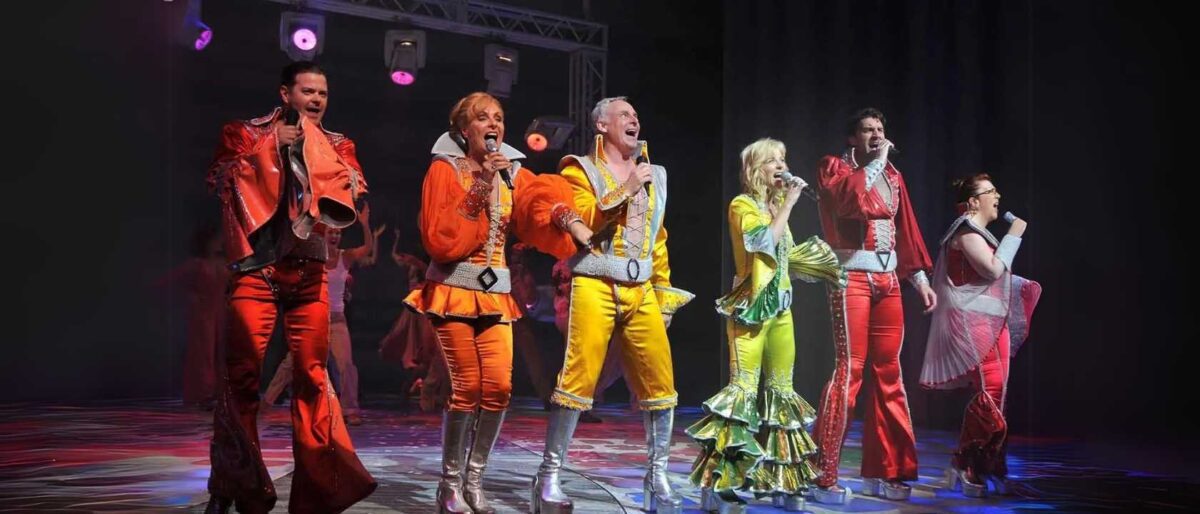
Biographical jukebox musicals, or “bio-musicals,” turn the real lives of music legends into dramatic, song-filled stage stories. These shows follow the rise, struggles, and triumphs of iconic performers, using their own music to underscore the journey. When done well, they’re part documentary, part drama, and part greatest-hits concert—all wrapped into one emotional ride.
What makes this format powerful is its blend of fact and feeling. Audiences aren’t just hearing the hits—they’re seeing the moments that inspired them. Whether it’s a backstage betrayal, a breakthrough album, or a defiant comeback, the music becomes the heartbeat of the story, reconnecting fans to the artist’s legacy in a whole new way.
Some of Broadway’s most successful examples include:
- Jersey Boys – Tells the story of Frankie Valli and The Four Seasons, tracing their rise from New Jersey street corners to worldwide fame with songs like “Sherry,” “Walk Like a Man,” and “Can’t Take My Eyes Off You.”
- Beautiful: The Carole King Musical – Chronicles Carole King’s journey from teenage songwriter to Grammy-winning solo artist. Hits like “You’ve Got a Friend” and “(You Make Me Feel Like) A Natural Woman” take center stage.
- Ain’t Too Proud – The Life and Times of The Temptations – Brings the Motown legends to life with dazzling choreography and powerhouse vocals. Songs like “My Girl” and “Papa Was a Rollin’ Stone” carry the weight of personal and political upheaval.
- TINA: The Tina Turner Musical – Follows Tina Turner’s electrifying and turbulent career, from abuse and reinvention to global superstardom, backed by hits like “Proud Mary” and “What’s Love Got to Do with It.”
These shows prove that when real life meets iconic music, the result can be unforgettable theatre.
3. Fictional Story, Famous Songs
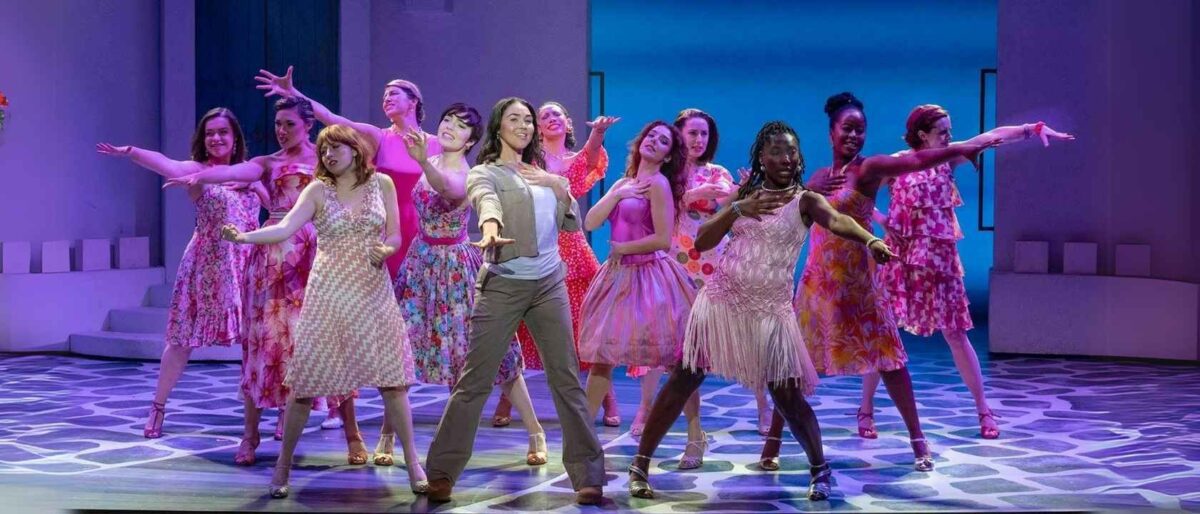
Not all jukebox musicals are rooted in real-life fame—some take the opposite approach, using well-known songs to tell entirely original, fictional stories. These musicals build new plots, invent characters, and twist the lyrics of familiar hits into fresh emotional contexts. It’s like crafting a movie soundtrack first, then writing the script around it.
In these productions, the songs aren’t there to reflect a singer’s biography—they’re chosen for their emotional punch, popularity, or thematic resonance. The trick is to make the music feel like it was always meant to be part of this new world.
Some standout examples include:
- Mamma Mia! – Built around the music of ABBA, this global smash follows a bride-to-be trying to discover her father’s identity before her Greek island wedding. Songs like “Dancing Queen” and “The Winner Takes It All” drive the plot and fuel the show’s signature feel-good energy.
- & Juliet – A reimagined Shakespearean story where Juliet doesn’t die, backed by the songbook of pop hitmaker Max Martin. Featuring tracks like “Since U Been Gone,” “Roar,” and “Oops!… I Did It Again,” it’s a bold, feminist remix of a classic tragedy.
- Rock of Ages – Set in 1980s Los Angeles, this love letter to glam rock features power ballads and anthems by Journey, Bon Jovi, Styx, and more. It’s big hair, bigger dreams, and pure rock-and-roll theatre.
- Moulin Rouge! – A sensory overload that weaves together decades of pop hits—from Elton John and Whitney Houston to Lady Gaga—into a lush, romantic tragedy set in turn-of-the-century Paris. The mashups alone are worth the ticket.
These fictional jukebox musicals work because they tap into the emotional muscle memory of the audience. You already know the songs—now you get to hear them in a brand-new light.
4. Musical Revues and Tributes
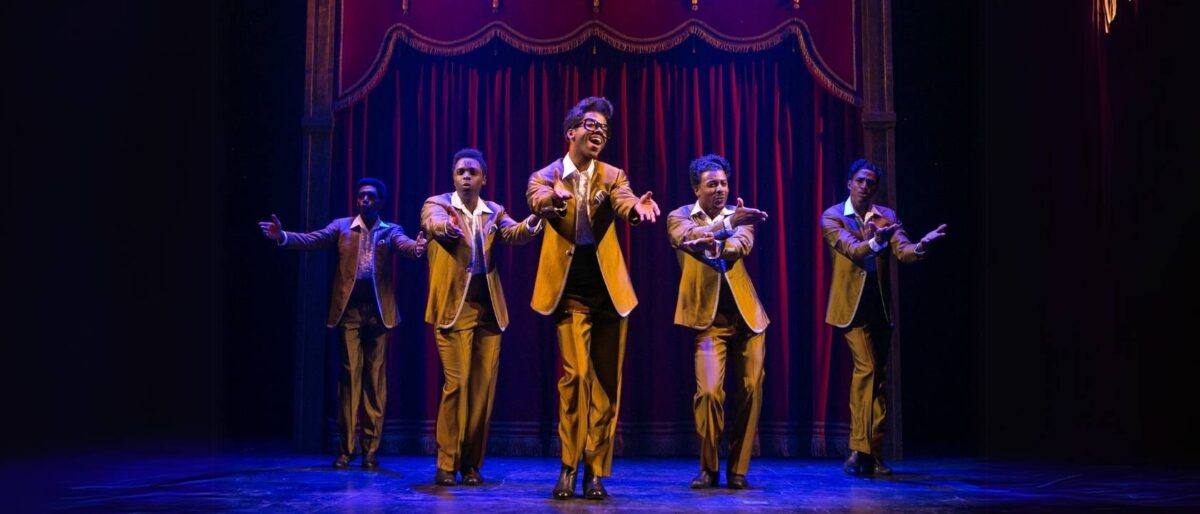
While some jukebox musicals tell stories—either real or imagined—others drop the plot altogether. Musical revues and tribute shows focus entirely on the music, delivering a themed concert experience or retrospective celebration of an artist, era, or genre. There’s no central narrative thread or character arc—just nonstop performances of beloved songs.
These shows are all about the vibe: the harmonies, the choreography, the nostalgia. Sometimes they’re framed by light narration or historical context, but the main attraction is the music itself. If you’re looking for a story-driven musical, this isn’t it—but if you want a high-energy, feel-good showcase of hits, revues are a joyride.
Notable examples include:
- Motown: The Musical – Though technically semi-biographical, it functions more like a revue, highlighting hits from Diana Ross, Stevie Wonder, Marvin Gaye, and more. It’s a celebration of the label’s sound and cultural impact.
- Forever Plaid – A charming, comedic show about a 1950s boy band who return from the afterlife for one last performance. Think tight harmonies, vintage suits, and doo-wop nostalgia.
- Movin’ Out – A groundbreaking collaboration between Billy Joel and choreographer Twyla Tharp. Featuring Joel’s music interpreted entirely through dance and movement, this piece doesn’t use dialogue at all—just piano-driven storytelling in motion.
These musicals are less about character and more about crafting a mood. They honor the music, spotlight the performers, and deliver that concert-meets-theatre experience that leaves audiences humming all the way home.
5. Why Audiences Love Jukebox Musicals
It’s no mystery why jukebox musicals pack the house night after night—they’re designed to hit both the heart and the hips. With built-in familiarity and a playlist of chart-topping hits, these shows deliver comfort, energy, and instant connection from curtain up to final bow.
First, there’s the power of nostalgia. Whether it’s your mom’s favorite Motown tune or a pop anthem from your college years, jukebox musicals tap into musical memory like nothing else. You know the words. You’ve danced to the song. Now, you get to see it come alive onstage in a new way—and that familiarity becomes a shared joy.
They’re also packed with feel-good energy. Most jukebox musicals lean into celebration—love, triumph, resilience, and joy. They’re shows where singalongs happen without shame and standing ovations start before the final number’s done. Whether it’s ABBA’s glitter or Journey’s guitar solos, the vibe is contagious.
Plus, these shows act as a bridge between pop culture and live theatre. For audiences new to musicals, jukebox shows are often the gateway drug. Recognizable music makes the genre feel more accessible and less intimidating.
And let’s not forget the cross-generational appeal. Families flock to these shows because they speak to multiple age groups at once. Grandma knows the lyrics, dad’s tapping his foot, the teens are posting on TikTok—it’s one of the few places where everyone’s dancing to the same beat.
6. The Challenge of Making It Work
As fun and flashy as jukebox musicals can be, crafting a great one is anything but easy. Fitting pre-existing songs into a coherent, emotionally satisfying narrative is like building a puzzle with pieces that weren’t meant to go together. The result can either feel effortless—or forced.
One of the biggest hurdles? Matching song lyrics to the plot. These tunes weren’t written with your characters in mind. That heartbreak ballad might be iconic, but if it doesn’t suit the moment—or worse, if it feels shoehorned in—it breaks the magic. The audience will feel it.
Then there’s the constant tug-of-war between serving the story and delivering the hits. Fans come expecting their favorite tracks, but a musical can’t just be a playlist with choreography. If a show overloads the crowd with songs at the expense of plot, it risks becoming a concert instead of a cohesive piece of theater.
The most successful jukebox musicals pull it off through smart direction, clever writing, and thoughtful song placement. They rearrange melodies, tweak tempos, or change the emotional lens to give songs new meaning—so that the audience hears them as part of the story, not just as background noise.
When it works, it’s seamless. When it doesn’t? You’re left wondering why that breakup scene was set to a dance floor anthem. The challenge is real—but so is the reward.
7. Criticisms and Creative Praise
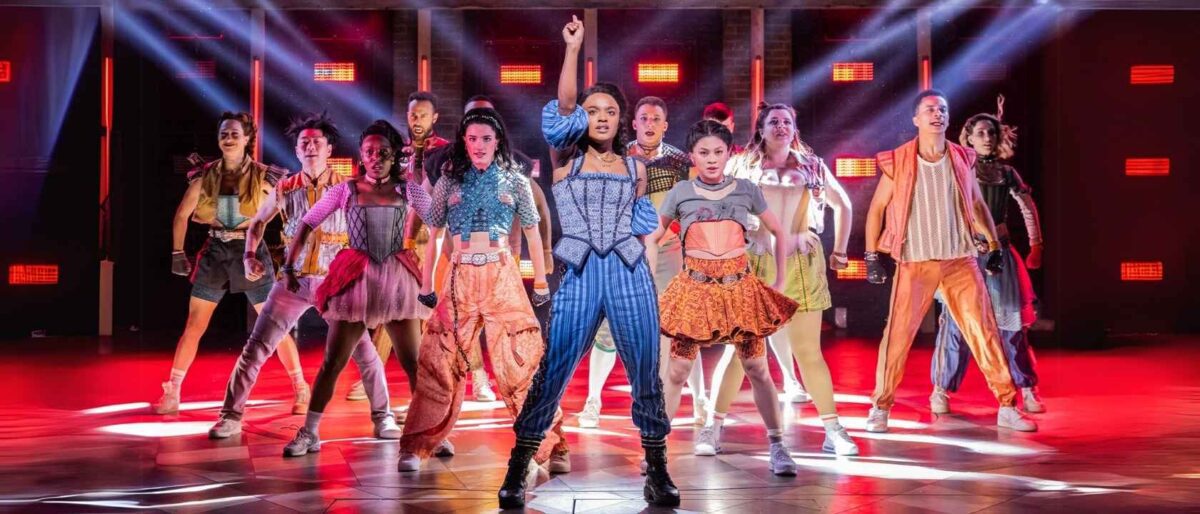
For all their glitz and good vibes, jukebox musicals have long been lightning rods for mixed opinions. Critics often dismiss them as gimmicky, thin on plot, or creatively lazy—accusing them of coasting on nostalgia instead of offering original storytelling. When a jukebox musical leans too hard on the hits and skimps on substance, the backlash can be loud—and not in the fun, standing-ovation kind of way.
Common criticisms include:
- Plotlines that feel contrived or reverse-engineered to squeeze in iconic songs
- Characters who lack depth or emotional arcs
- Moments when lyrics clash with the context and pull viewers out of the scene
But when done right? Jukebox musicals can be pure theatrical electricity. Fans—and even skeptical reviewers—often come away surprised by just how inventive and emotionally resonant these shows can be. They may start with familiar music, but the execution, interpretation, and performance elevate it into something fresh.
Creative praise often goes to productions like:
- Moulin Rouge! – A spectacle that reinvents the jukebox format with elaborate mashups across decades of pop music, creating a surreal, cinematic musical universe all its own.
- & Juliet – A postmodern remix of Shakespearean tragedy and Max Martin’s pop hits, this show flips the genre on its head, using familiar songs in unexpectedly empowering and ironic ways.
In the hands of visionary creators, jukebox musicals become more than nostalgia trips—they’re bold, playful reinventions of how music and story can collide. They prove that even the most recognizable songs still have new stories to tell.
8. Jukebox Musicals Beyond Broadway
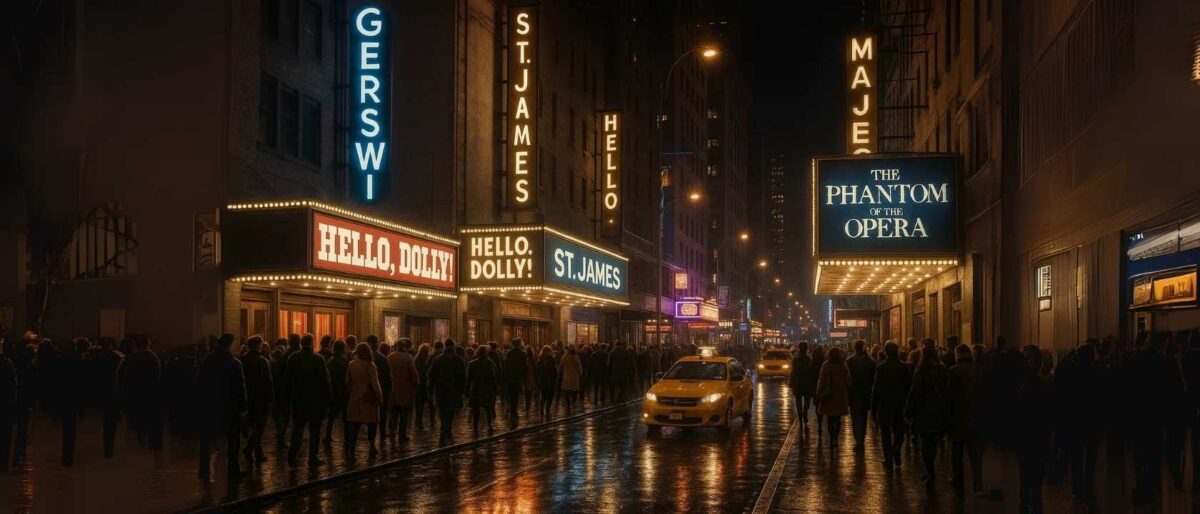
While Broadway may be the genre’s flashiest stage, jukebox musicals have taken root far beyond Times Square. From London’s West End to touring arenas, cruise ships, and community theaters, these shows are a global phenomenon, beloved for their cross-cultural appeal and instantly recognizable soundtracks.
The West End has embraced the genre just as passionately as Broadway, with long-running hits and star-driven premieres. Shows like We Will Rock You, a rock-fueled Queen musical set in a dystopian future, ran for over a decade in London. Thriller Live, a tribute to Michael Jackson’s legacy, became a fan-favorite for its high-energy performances and concert-style staging. And then there’s Bat Out of Hell, a turbo-charged fantasy built around Jim Steinman’s epic catalog, which turned Meat Loaf’s music into a wild theatrical ride.
National tours and cruise lines have also capitalized on the format’s popularity. Jukebox musicals are ideal for touring companies—they don’t require familiarity with Broadway lore, and they often draw larger, more diverse audiences. They travel well because the music already does.
And let’s not forget the screen. Jukebox musicals have inspired some of the most successful movie musicals of the past two decades. Think:
- Mamma Mia! – The ABBA-fueled hit that exploded into a worldwide film franchise
- Rocketman – A dazzling reimagining of Elton John’s life, blending biopic and fantasy
- Bohemian Rhapsody – A Freddie Mercury-centered drama that became a box office and awards-season juggernaut
Jukebox musicals thrive because they translate easily across languages, borders, and mediums. No matter where they go, the music carries them—and the audiences come dancing in behind.
9. New and Upcoming Jukebox Musicals
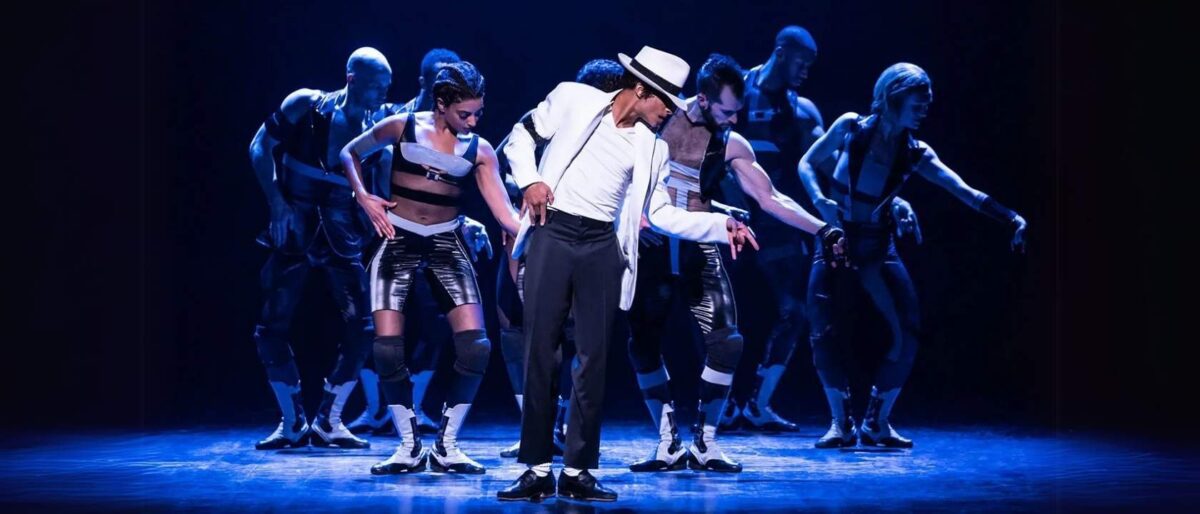
Jukebox musicals aren’t stuck in the past—they’re evolving with the times. Today’s creators are tapping into modern music trends, telling more inclusive stories, and exploring new genres. The latest wave of jukebox shows is younger, bolder, and more diverse, signaling that this format isn’t just surviving—it’s thriving in new directions.
What’s trending now?
- Modern pop and hip-hop catalogs are gaining traction, bringing fresher sounds and younger audiences into the theater.
- Female-centered narratives are finally getting more space, telling stories that go beyond romance to spotlight resilience, fame, and identity.
Recent and upcoming highlights include:
- The Cher Show – A dazzling, time-jumping musical featuring three versions of Cher, with her biggest hits powering the storyline from outsider to icon.
- MJ the Musical – Focused on Michael Jackson’s 1992 Dangerous World Tour, this show uses his music to explore the artistry and complexity of the King of Pop.
- The Bedwetter – Based on Sarah Silverman’s memoir, this Off-Broadway musical blends her biting humor with coming-of-age chaos, set to an original score and comedic edge.
And who’s next? Fans and producers alike have been speculating which artists might be ripe for jukebox treatment:
- Taylor Swift – With her emotionally layered lyrics and eras-based branding, her catalog could become a theatrical event all on its own.
- Beyoncé – From Destiny’s Child to “Renaissance,” her discography offers empowerment anthems, visual flair, and cultural depth perfect for a stage adaptation.
- Rihanna, Lady Gaga, Harry Styles – All artists with devoted followings, rich visuals, and thematic versatility that could translate into compelling musical theatre.
As more artists embrace theatrical storytelling, expect to see jukebox musicals expand into new genres, challenge conventions, and amplify underrepresented voices. The playlist is growing—and so is the audience.
Conclusion
Jukebox musicals are more than just a fun night out—they’re a celebration of music, memory, and storytelling. By remixing familiar tunes with fresh energy, these shows create a unique kind of theatrical magic that resonates with audiences of all ages and tastes. Whether rooted in real lives or fictional fun, they tap into the emotional power of songs we already love.
From Jersey Boys to & Juliet, Beautiful to Moulin Rouge!, these musicals bridge pop culture and live performance, proving that Broadway isn’t just for traditional show tunes—it’s for chart-toppers, power ballads, and timeless anthems too. And in doing so, they make theater more accessible, more vibrant, and more exciting for the next generation of fans.
So whether you’re here for the plot or the playlist, the glam or the grit, one thing’s for sure: jukebox musicals prove that theater doesn’t just sing—it rocks.