Best Ways to Get to Concert Venues: Parking, Transit & Tips
June 3, 2025
Planning Your Broadway Day: Where to Eat, What to Wear & More
June 4, 2025What Makes Broadway Magical? A Look at the Theater Culture
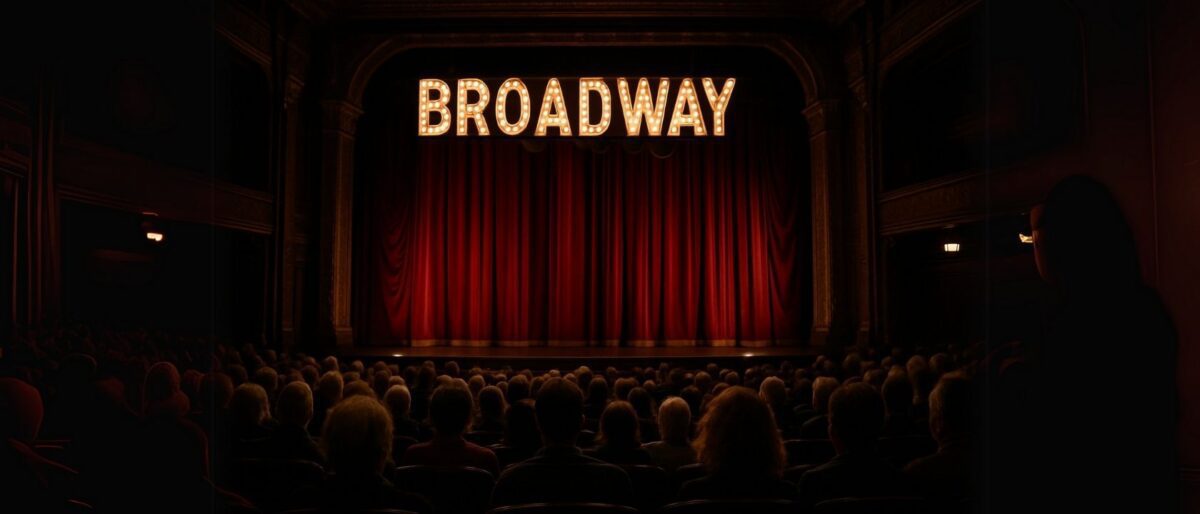
Broadway isn’t just a place—it’s a pulse, a tradition, a shared dream wrapped in velvet curtains and footlight shadows. From the moment the orchestra tunes up, something shifts. You lean in, the lights dim, and suddenly… you believe. But what is it, really, that makes Broadway feel like magic?
It’s Not Just a Stage—It’s Sacred Ground
Broadway began humbly—just a stretch of road running through New York City. But over time, that road became a ribbon tied tightly around America’s theatrical heartbeat. What started with vaudeville shows and makeshift playhouses has grown into a legacy of dazzling marquees, global premieres, and careers launched on the wings of spotlights.
Today, Broadway is more than a location—it’s a litmus test for greatness. The “Olympics” of theater, as many call it. If you’ve made it here, you’ve earned your stripes. Actors dream of it. Playwrights chase it. Directors and designers build toward it like sculptors preparing for marble. It’s where talent is tested, legends are made, and standing ovations echo far beyond the orchestra seats.
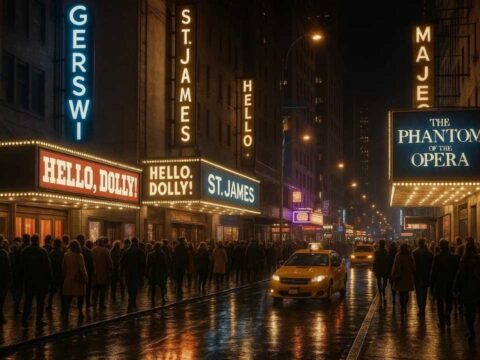
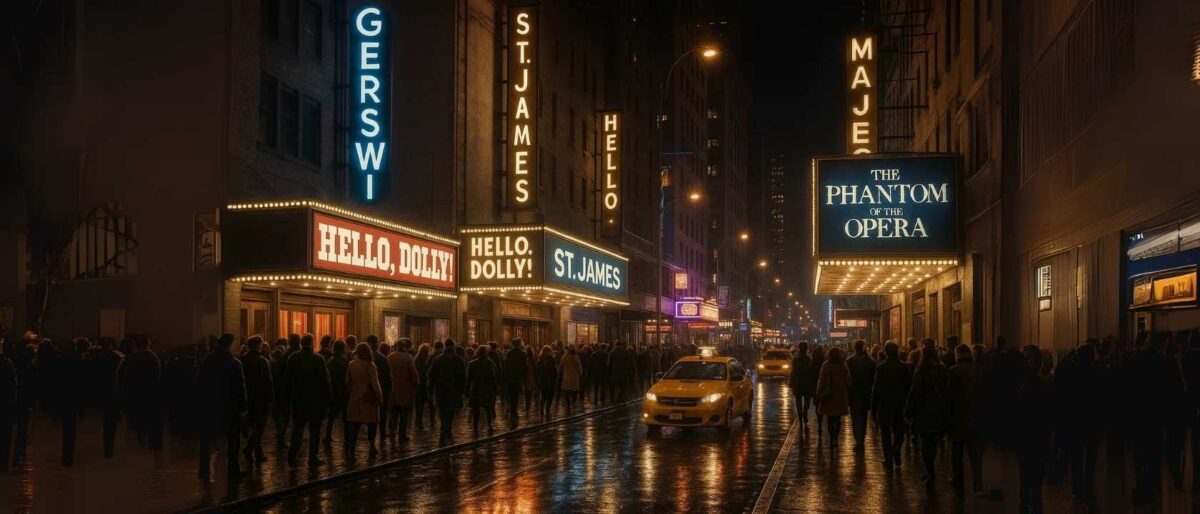
For the audience, the magic starts even earlier. Walking through Times Square toward a Broadway house is its own kind of pre-show. The buzz of yellow taxis, flickering signs, and that first glimpse of a theater entrance feels like being pulled into a dream you didn’t know you had. Goosebumps? Practically guaranteed.
And once inside—oh, it hums. The walls creak not with age, but with stories. Every velvet seat, every stage curtain, every scratch in the wood whispers: something unforgettable happened here. And tonight? It’s your turn to witness it.
The Unwritten Rituals of the Audience
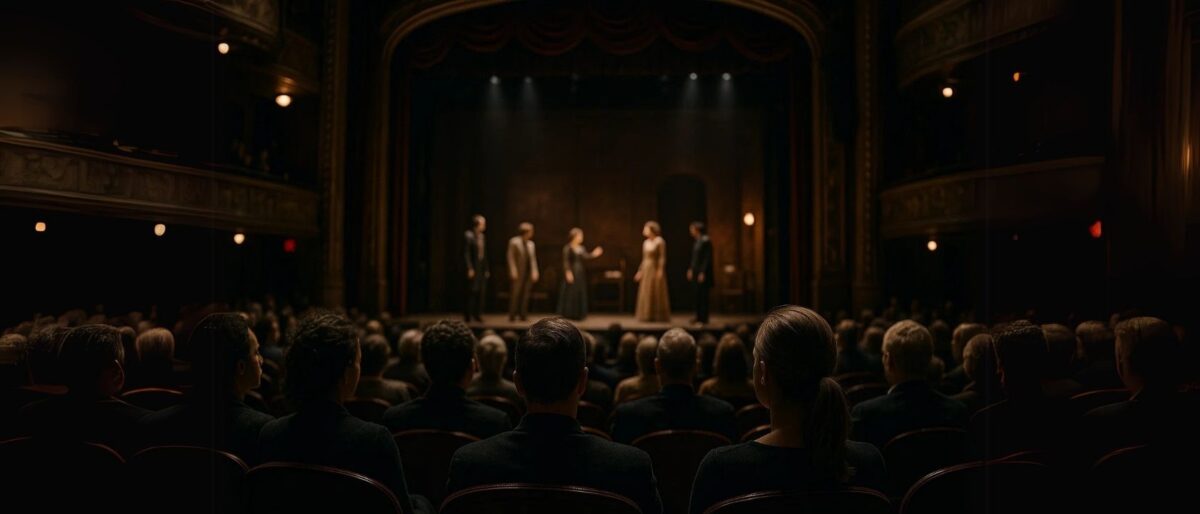
There’s no rulebook handed to you at the door, but somehow, everyone knows: Broadway isn’t just about watching—it’s about respecting the moment. The lights dim, and suddenly the audience becomes part of the performance, a silent partner in every scene, every note, every pause. It’s a collective hush that feels holy.
Etiquette matters here. Phones off—not just silenced, but fully out of sight. Candy wrappers? Forbidden rustling. Late arrivals are frowned upon not just by ushers but by the entire row you’re crawling over. It’s not snobbery—it’s reverence. Broadway demands presence, and for two glorious hours, you give it your full attention.
Then there’s the invisible thread between performer and audience. One exhales, the other inhales. When an actor lands a devastating line or hits a note that rattles the rafters, you feel it in your chest—and so do they. The gasps, the laughter, the mid-show applause, the collective heartbeat during a perfectly timed silence… it’s all part of the symphony.
These rituals aren’t taught—they’re absorbed. By the end of your first show, you’ll know when to clap, when to lean forward, and when to just sit back and feel the room breathe with you.
Behind the Curtain: Passion, Sweat, and Superstition
What you see under the spotlight is polished, precise, and often breathtaking—but what happens backstage? That’s where the real theater lives. It’s sweat-soaked, sleep-deprived, and bursting with heart. Hours before the curtain rises, actors run lines in whispering corners, vocal warm-ups echo down stairwells, and stagehands check props with the focus of surgeons.
Backstage is beautifully chaotic—a labyrinth of quick-changes, whispered cues, and controlled mayhem. Dancers leap through narrow halls, dressers zip zippers in seconds, and understudies pace with script in hand, just in case. It’s a ballet behind the scenes, choreographed to perfection but fueled by nerves and muscle memory.
And yes—superstition runs deep. Every Broadway house keeps a ghost light burning onstage when empty, not just for safety but to appease resident spirits. “Break a leg” is wished instead of “good luck.” And the word “Macbeth”? Never uttered backstage. Call it “the Scottish play” unless you want glares from every direction.
For the cast and crew, Broadway isn’t just work—it’s a bond. A makeshift family built on trust and timing. Dressing rooms hold rituals as sacred as the performances themselves—lucky socks, handwritten notes taped to mirrors, charms hidden in costume pockets. These aren’t just quirks; they’re the threads that hold the nerves together before the music starts.
Timeless Shows & Fresh Faces
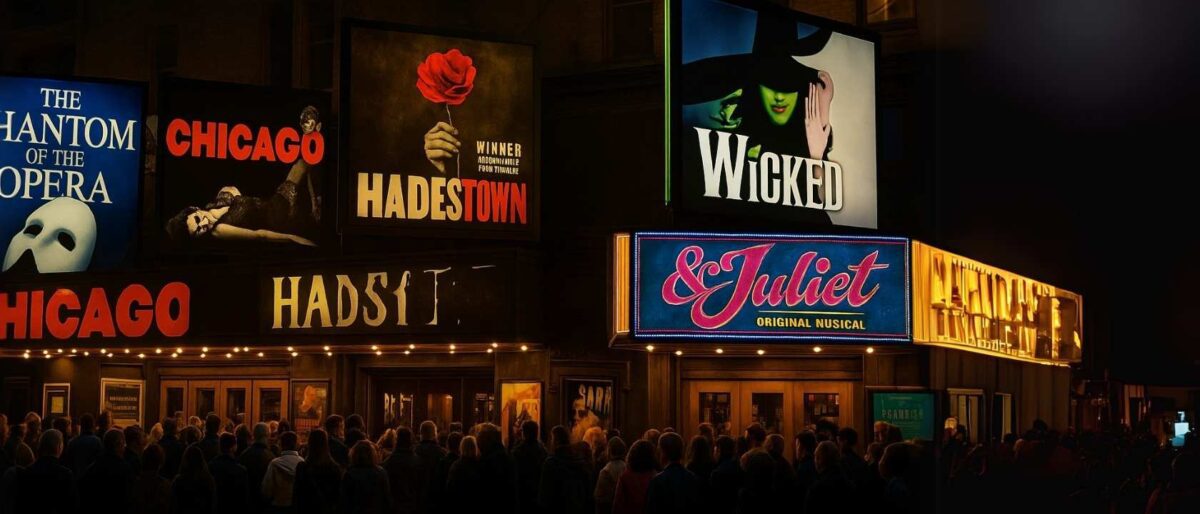
Broadway is where old legends and new voices dance side by side under the same stage lights. Some shows are so iconic, they’re practically stitched into the sidewalks. The Phantom of the Opera, Chicago, Wicked—these aren’t just musicals, they’re institutions. They’ve shaped the culture, trained generations of theater lovers, and proven that some stories never lose their sparkle.
But right next door, there’s buzz—new hits carving their own legacy. Hadestown blends ancient myth with modern grit. Six flips history into a pop concert with bite. & Juliet remixes Shakespeare into a glittery, beat-driven joyride. And Kimberly Akimbo? Quietly revolutionary. These shows prove Broadway isn’t frozen in time—it’s still growing, still surprising, still taking bold leaps.
Then come the revivals. Broadway loves a good comeback. Whether it’s a stripped-down Oklahoma!, a jazzed-up Company, or a soul-stirring Into the Woods, these reimaginings breathe fresh life into beloved material. They honor the past while speaking to the now.
That’s the dual power of Broadway—it’s a time capsule and a trendsetter. It remembers, it reinvents, and it reminds us that while the songs may stay the same, the voices telling them are always evolving.
Stage Door Stories: Where Broadway Meets the Street
When the curtain falls and the final bow is taken, the magic doesn’t just vanish—it spills out onto the sidewalk. That little alley or side street behind the theater? That’s where Broadway meets real life, and where some of the most cherished memories are made.
Fans gather—Playbills in hand, Sharpies at the ready, phones set to selfie mode—hoping to catch a glimpse of the people who just transported them to another world. And more often than not, the cast shows up. Tired, yes. Sweaty? Sometimes. But gracious, kind, and completely human. It’s where the magic strips down and smiles back at you.
There’s a special thrill in seeing your favorite performer just inches away, laughing with fans, signing programs, taking time. For some, it’s a once-in-a-lifetime moment. One fan recalled waiting outside *Dear Evan Hansen* for over an hour just to thank Ben Platt in person. “He looked me in the eyes and said, ‘You matter.’ I still cry thinking about it.”
The stage door is the epilogue to your Broadway night. It’s unscripted, unfiltered, and sometimes unforgettable. You come for the show, but you stay for the connection.
The Global Ripple of a Local Show
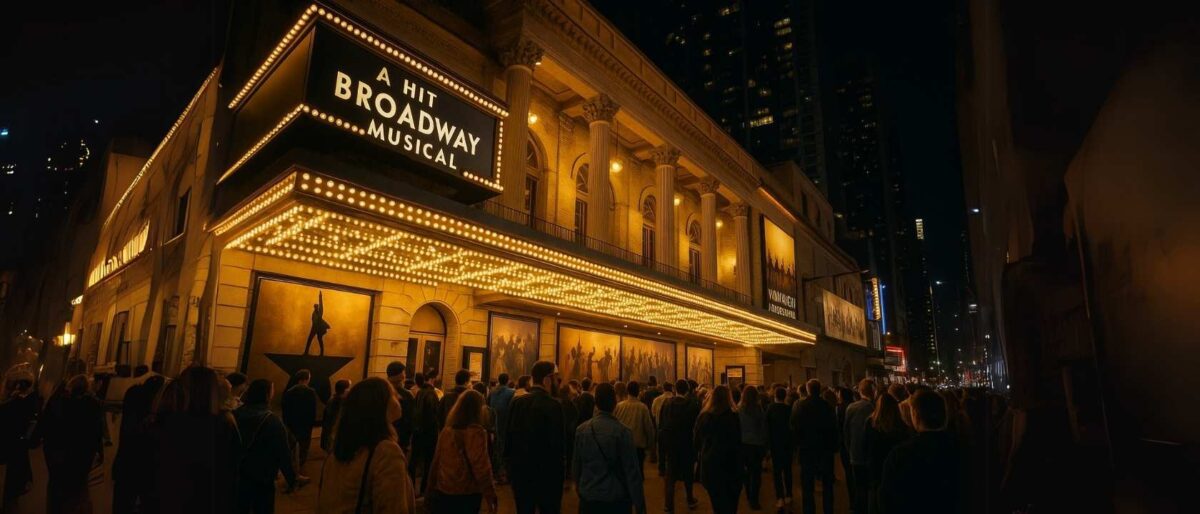
Broadway may call New York home, but its reach stretches far beyond the glowing marquees of Manhattan. What begins on 44th Street can echo across continents—a single show sparking inspiration, conversation, and standing ovations around the world.
Touring productions carry Broadway’s magic to every corner of the U.S. and far beyond. Whether it’s Hamilton lighting up London or Les Misérables bringing its anthem to Seoul, these shows become global ambassadors of theater. Add in cast recordings, filmed performances, and blockbuster movie adaptations, and suddenly Broadway is part of living rooms, classrooms, and playlists worldwide.
Its influence also fuels local stages. High schools, community theaters, and regional playhouses build their seasons around Broadway hits. Scripts and scores licensed for performance help smaller productions thrive, with aspiring stars learning the ropes by singing the same solos once heard at the Imperial or Gershwin Theatre.
And it’s not just about applause. Broadway drives important cultural change. It lifts diverse voices, challenges norms, and brings new stories to center stage. Shows like Fun Home, A Strange Loop, and Parade prove that Broadway isn’t afraid to be bold—and better yet, it’s helping others do the same.
Financially, the impact is massive. Jobs, tourism, restaurants, taxis—it’s all woven into the Broadway ecosystem. But emotionally? That’s priceless. A great show doesn’t just entertain—it ripples outward and leaves people changed.
Conclusion
Broadway isn’t just lights and songs—it’s heartbeat, history, and hope stitched together in every note. It’s the gasp that spreads through a crowd when the curtain rises. It’s the hush that falls before the final bow. It’s every shared moment between strangers, drawn together by the power of story.
What makes it magical isn’t just the sets or the solos—it’s the breath that passes between audience and actor. It’s live, unfiltered, and unrepeatable. A blink, a beat, a line delivered just slightly different that night—and you feel it in your bones.
And whether it’s your first Broadway show or your fiftieth, it never gets old. You’ll leave the theater changed, even if you don’t realize it until the next morning, still humming, still glowing.
That’s Broadway. Not a destination, but an experience that lingers long after the lights fade.